
Kenya’s Junior Secondary School Placements Under Scrutiny Amidst Revision Window
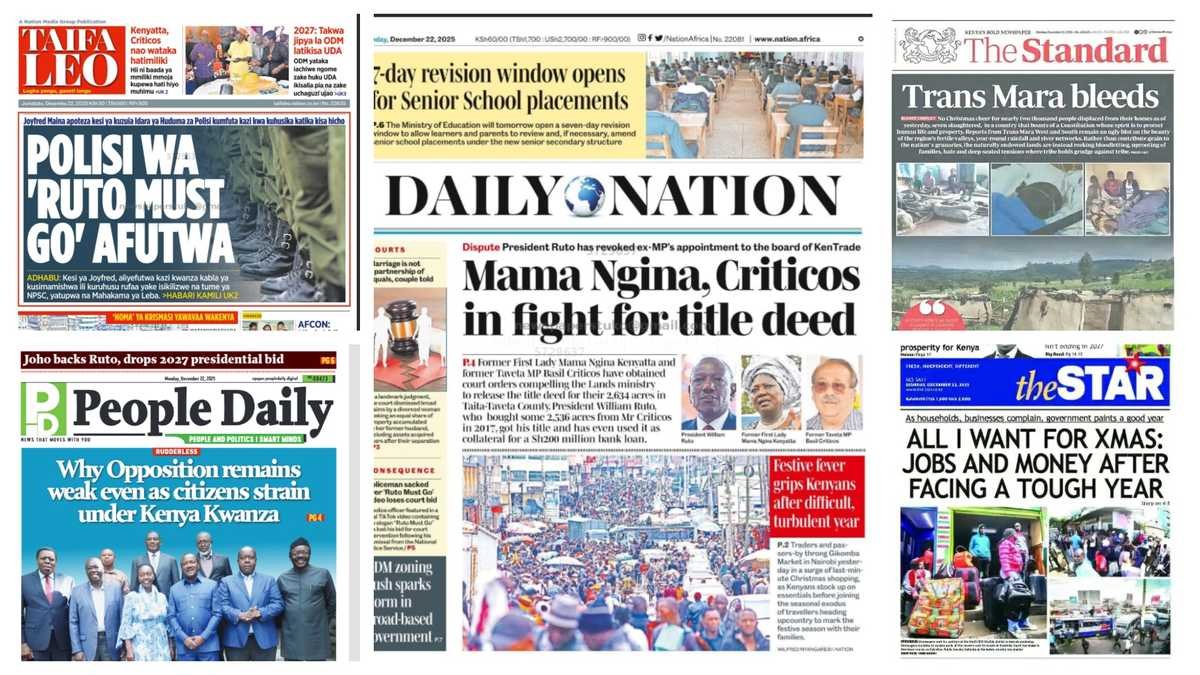
The transition to Kenya’s new senior secondary education structure has been a focal point of national discussion, with recent placements for Junior Secondary Education Assessment (KJSEA) learners drawing significant attention. As the Ministry of Education opened a seven-day revision window, parents and students were given an opportunity to review and amend their school assignments, addressing concerns that have arisen since the initial placements were released.
The government has acknowledged the anxieties surrounding this pioneering undertaking, particularly for candidates allocated to schools far from their homes or to pathways they did not select. Principal Secretary for Basic Education, Professor Julius Bitok, issued a statement emphasizing the commitment to a transparent, fair, and satisfactory placement process. He noted that the system aims to balance learners’ preferences with school capacities and available educational pathways.
“Being a pioneering undertaking, the government appreciates and empathises with parents, learners, and other stakeholders over anxieties and uncertainties around the transition to Grade 10,” stated Prof. Bitok. “We are committed to making the placement process transparent, fair, and satisfactory, considering learners’ preferences alongside school capacities and available pathways. We encourage all parties to engage constructively as we refine and strengthen CBE for learners’ benefit.”
The automated placement system was designed to consider learner performance, preferences, and the availability of slots, with the overarching goal of upholding merit, equity, and fairness. However, Prof. Bitok admitted that despite many learners securing their preferred choices, some dissatisfaction emerged. This was attributed to several factors, including intense competition for limited spots in popular institutions, miscommunication between parents, learners, and school administrations, and mismatches between the pathways chosen by students and their assessment outcomes.
During the designated seven-day revision period, candidates who are unhappy with their assigned school or educational pathway have the option to reapply. These revisions are contingent upon meeting merit criteria and the availability of spaces. The ministry has assured that all revision requests will be processed with transparency and equity, strictly adhering to national placement guidelines.
Prof. Bitok further elaborated on the revision process: “The portal will be open for one week, allowing learners to revise and select their preferred pathways. The system will display schools with available slots, and revisions can be submitted via junior schools. Pathway changes, such as switching from STEM to Social Sciences, will also be possible for eligible learners.” To assist families in this process, the ministry will provide a comprehensive list of senior secondary schools with vacancies, clearly categorized by pathway and educational cluster.
ODM’s New Demands for President Ruto Ahead of 2027 Elections
In parallel to the education sector developments, the Orange Democratic Movement (ODM) party has presented new demands to President William Ruto. Senior party leaders are reportedly seeking a formal documentation of the political understanding between the ODM and President Ruto’s United Democratic Alliance (UDA) party, particularly in anticipation of the 2027 general elections.
Junet Mohamed, the National Assembly Minority Leader, underscored the importance of clearly articulating the party’s terms and conditions before entering any political agreements. He highlighted ODM’s significant influence as a major political force within Kenya, necessitating a formal framework for engagement.
“As the ODM, we are a national party, and we will lay out our demands prior to any deals,” Junet Mohamed stated. “If the Kenya Kwanza government wants us to enter an agreement on the future alliance, we must have a discussion. We are confident the government will fulfill our current demands, but we cannot afford to enter a coalition without formally stating our demands as we head into the electoral year.” This call for a formalized political pact suggests a strategic move by the ODM to solidify its position and secure its interests in future political alignments. The party appears keen on ensuring that any collaboration is based on clearly defined terms, safeguarding its national standing and electoral objectives.

