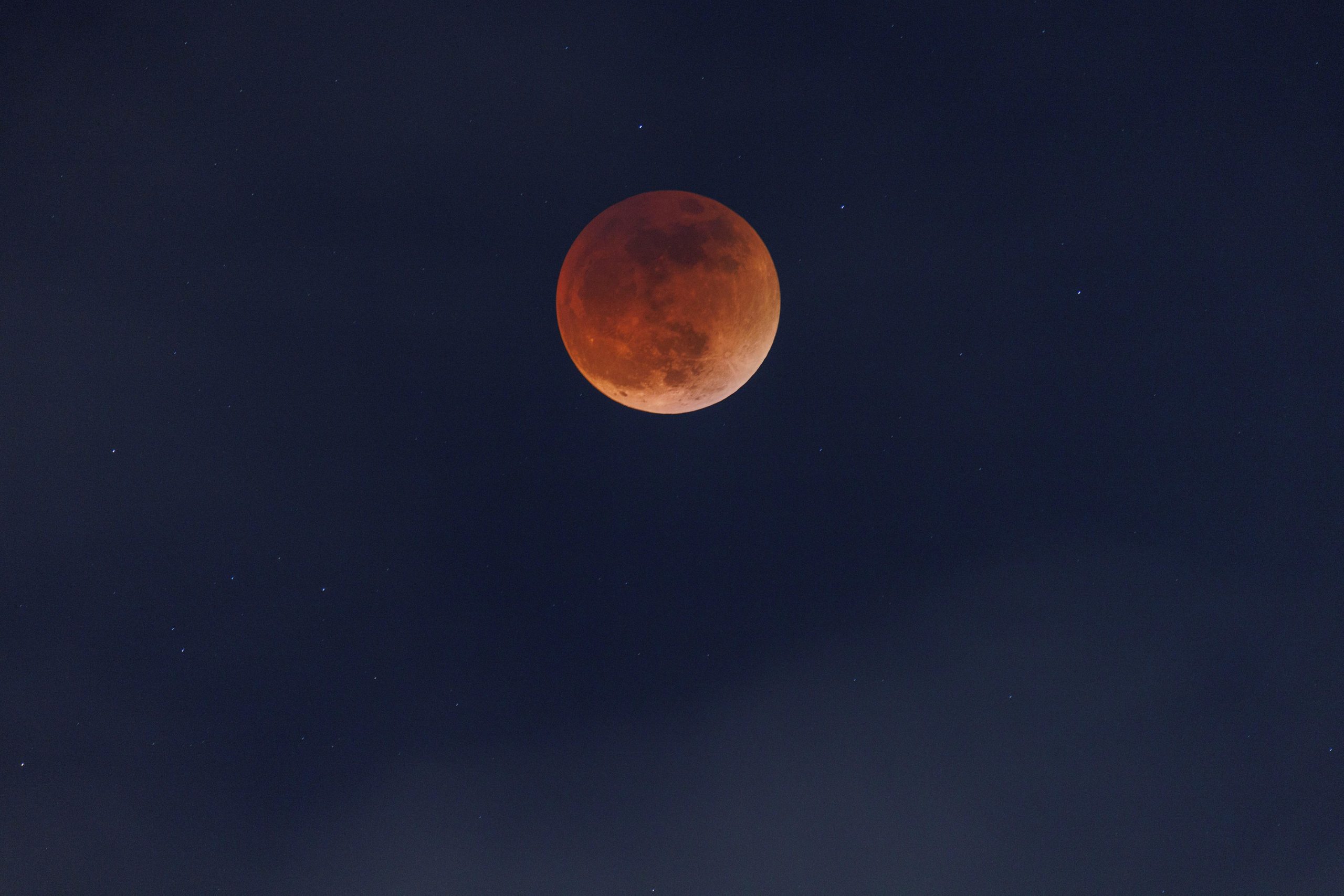
Get ready, Australia! A spectacular celestial event is gracing our skies in the early hours of March 3rd – a total lunar eclipse, often dramatically referred to as a “blood moon.” This isn’t just any lunar eclipse; it’s a total one, meaning the Earth will cast its shadow completely over the moon, transforming our familiar grey satellite into a mesmerising reddish-orange spectacle.
Unveiling the Magic of a Total Lunar Eclipse
So, what exactly causes this breathtaking phenomenon? A lunar eclipse occurs when our planet, Earth, positions itself directly between the sun and the moon. In this alignment, the Earth effectively blocks a significant portion of the sun’s light from reaching the moon. While it might seem like the moon would disappear into darkness, it doesn’t. Instead, the light that does manage to reach the lunar surface is filtered through Earth’s atmosphere. This atmospheric filtering scatters blue light more effectively, allowing the longer, redder wavelengths to pass through and illuminate the moon with its characteristic coppery glow.
The moon typically appears grey because of the way light reflects off its surface. However, during a total lunar eclipse, the subtle dance of light and shadow, orchestrated by our planet’s atmosphere, paints the moon in entirely new colours. For these celestial displays to be visible, the moon must be in its full phase, a time when it is fully illuminated by the sun. The beauty of a lunar eclipse is that it can be observed from any location with a clear, unobstructed view of the moon.
Where to Witness the Celestial Show
For those Down Under, you’re in for a treat! The upcoming total lunar eclipse will be visible across Australia during the evening and into the early morning hours. While North and Central America, along with parts of western South America, will catch it in their early morning sky, and eastern Asia will see it in their evening, Australia is perfectly positioned to witness the entire event unfold.
It’s worth noting that in some regions, like central Asia and much of South America, only a partial eclipse will be observable. Unfortunately, stargazers in Africa and Europe will miss out on this particular lunar spectacle.
Timing is Everything: When to Look Up
Mark your calendars and set your alarms! The total lunar eclipse will be observable on March 3rd. While the exact timings will vary slightly depending on your specific location within Australia, the general window for viewing the most dramatic phase of the eclipse will be from approximately 4 a.m. EST to around 7 a.m. EST. A partial eclipse will continue to be visible for a few more hours, lasting until roughly 9 a.m. EST.
To make the most of your viewing experience, consider stepping away from bright city lights and finding a dark, open space. While the naked eye can certainly appreciate the beauty of a lunar eclipse, for an even more immersive experience, binoculars or a telescope are highly recommended. These tools will allow you to see the finer details of the moon’s surface as it transforms under Earth’s shadow.
For those eager to delve deeper into the world of stargazing and learn more about how to best observe the night sky, NASA offers a wealth of resources, including their “What’s Up” guide.
Beyond the Red Moon: Other Celestial Delights
The magic of a lunar eclipse isn’t limited to the moon itself. As the moon dims during the eclipse, it can actually make other celestial objects more prominent in the night sky. During this particular event, the moon will be situated within the constellation Leo, specifically beneath the lion’s hind paws, according to NASA.
Furthermore, for those with keen eyes or a telescope, the night sky on March 8th promises another fascinating sight: Venus and Saturn will appear remarkably close to each other, creating a beautiful conjunction that will be a delight for any amateur astronomer.
So, prepare yourselves for a night of cosmic wonder. The total lunar eclipse is a reminder of the vast and beautiful universe we inhabit, and an opportunity to connect with the celestial ballet that unfolds above us.