The Great Debate: To Live Forever or Embrace the End?
The concept of ‘longevity’ has become a dominant talking point for 2026, sparking a significant divide within our office. On one side, we have those who dream of an eternal existence, while on the other, a strong contingent who firmly believe that an end is not only inevitable but desirable. Here, two writers present their contrasting viewpoints on this profound question.
Harriet Sim: A Life Lived in Fear of the Inevitable
My fear of death began at the tender age of eight. It wasn’t triggered by a traumatic event or a hushed, fearful conversation at home. In fact, my mother, who lost her own mother at 21, had always spoken about death with a degree of openness. Yet, the sudden, overwhelming realisation that death was an unavoidable and uncontrollable certainty struck me with paralysing force. The thought that one day I would simply cease to exist, becoming “nothing and nowhere on this earth,” was utterly incomprehensible and plunged me into profound existential anxiety.
This revelation marked a significant turning point. Even lighthearted fictional deaths on screen became unbearable. The finality, even in a cinematic context, would leave a heavy pit in my stomach. Jokes about death felt inappropriate, even offensive. Each night, as sleep approached, the same thought-spiral would torment me: “One day, I will not exist.” The inescapable nature of this reality was a burden I struggled to bear, yet I couldn’t shut off the intrusive thoughts. The awareness of death had taken root, growing with each passing year.
As I grew older and experienced the loss of loved ones – my aunt at 13, my grandparents, and most recently, my father to cancer – my fear felt increasingly isolating. I found myself bewildered by how others seemed to accept death so readily. When I probed friends about their own fears of mortality, the responses ranged from flippant jokes and a desire for it to “come soon enough” due to life’s hardships, to dismissing it as a distant problem not worth considering.
I’ve since learned that I suffer from thanatophobia, an intense and irrational fear of death that can trigger a state of sweaty, panicked dread when I dwell on it. While those with phobias like arachnophobia or acrophobia are often encouraged to confront their fears gradually, I’m left in a paradoxical situation: how can I face my fear of death without actually facing death itself?
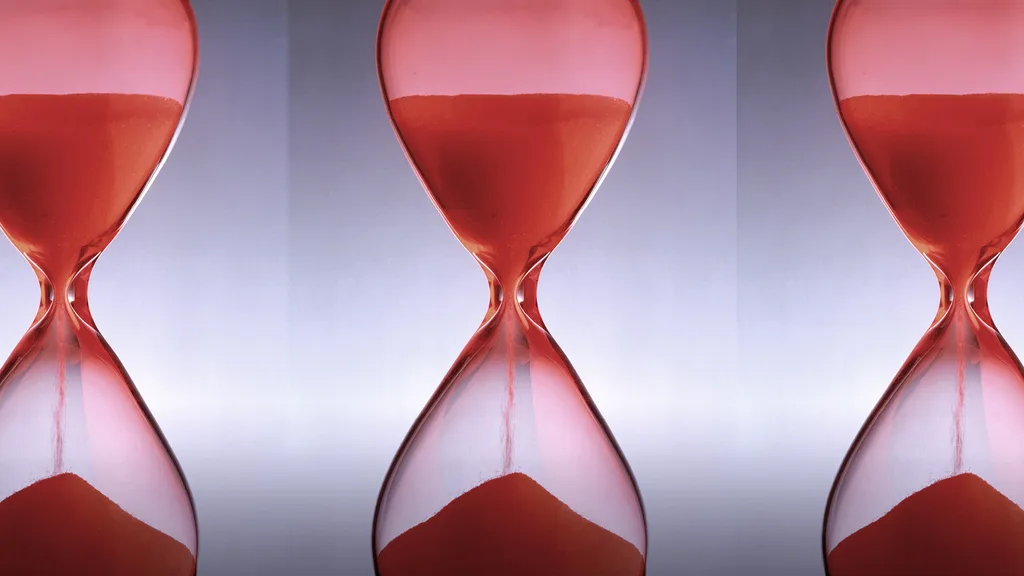
This predicament logically leads me to the conclusion that I must strive to live forever. I acknowledge the practical realities: a world populated by immortals is inherently unsustainable. The logistical challenges of overpopulation, the immense strain on global resources, and the potential for increased conflict are all valid concerns. It sounds like a dystopian nightmare. However, understanding these drawbacks does little to alleviate my deep-seated fear of death, nor my resulting desire for an eternal existence. My ideal scenario for immortality would be akin to that of vampires or witches – a slow, graceful aging process, where I could remain looking youthful even after centuries.
While I hold out hope that advancements in biohacking, perhaps championed by figures like Bryan Johnson, might one day unlock the secret to longevity, I am unwilling to sacrifice my well-being or resort to extreme measures to achieve it. Furthermore, the prospect of facing eternity alone is daunting. The idea of convincing my loved ones to adopt such a radical lifestyle for my own, arguably selfish, desire for immortality seems incredibly challenging.
On a more comforting note, I find solace in the beliefs of the billions who subscribe to religious faiths. The possibility of an afterlife offers a potential resolution to my existential dread. For now, however, I’m trying to find a sliver of positivity in the very concept of death. In moments of embarrassment or stress, I remind myself that ultimately, I will be dead, and therefore, in the grand scheme of things, nothing truly matters. This perspective, surprisingly, has brought me a significant degree of comfort.
Caitlin Napier: The Meaning Found in Mortality
Let me be clear: I am not excited about the prospect of dying. The thought of losing loved ones, of my body inevitably failing with age, or of lying in quiet finality, wishing I had lived more fully, is not something I relish. The current pace of time already feels alarmingly swift, and the knowledge that it will one day cease entirely adds a persistent layer of existential vertigo.
Despite this, I don’t fear death, and the idea of living forever holds absolutely no appeal. For me, death has always been less of a threat and more of a concept to be contemplated. I envision it as akin to the state before birth: a complete absence of awareness, of consciousness, of any sense of self. There will be no version of me left to register what has been lost, no lingering consciousness to grieve. This prospect, paradoxically, brings me a sense of peace. In fact, I am grateful for mortality, for the brevity and preciousness it bestows upon our lives.
If offered immortality or even a significant extension of my lifespan tomorrow, I would decline without hesitation. My reasoning isn’t born from dissatisfaction with life, but from the very meaning it derives from its finiteness. As the saying goes, “Without an ending, everything becomes optional, and optional things are rarely cherished.” Meaning, I believe, is intrinsically linked to limits.
Permanence would inevitably flatten life’s experiences, and endlessness would dilute its significance. The urgency that imbues our choices with weight and our moments with intensity would dissolve into a vague, unpressured existence. We already inhabit an era of remarkable abundance, with opportunities for exploration and experience seemingly boundless. Yet, we are also witnessing a planet under immense strain, its resources finite, its systems faltering, and its future increasingly precarious. The notion of enduring this decline over centuries offers no comfort; rather, I find a sense of relief. There is a certain mercy in not having to witness the long-term consequences of our collective excesses.
This brings me, perhaps unexpectedly, to Miley Cyrus. Her assertion that she doesn’t want children because she doesn’t want to bring them into a world that cannot sustain them resonates with me. While I may not share her specific choice, I understand the underlying logic: capacity and consequence matter, and desire alone is not a sufficient justification. This same reasoning shapes my perspective on mortality.
Furthermore, the emotional calculus of immortality is a facet rarely discussed with any seriousness. I have no desire to outlive everyone I love, accumulating grief as a perpetual companion. I do not wish to become a living archive of people and places that have long since vanished. The fantasy of forever, when juxtaposed with inevitable loss, is deeply unsettling. The stark reality of violence and loss, as tragically highlighted by events like the 2025 Bondi Beach shooting, serves as a potent reminder of how much pain a single moment can contain.
With a burgeoning global population, escalating conflicts, and an increasingly volatile world, the prospect of witnessing centuries of such turmoil offers no solace. Instead, I find relief in the knowledge that I will not have to. I do not believe we are designed for endless experience or infinite accumulation. Our existence is structured around phases, seasons, beginnings and endings, and the quiet dignity of closure. A life devoid of edges would lose its fundamental shape.
I am grateful for death because it compels me to live with intention, rather than succumbing to endless postponement. This life is a fleeting moment in the vast expanse of the universe, and I would rather navigate it with wakefulness, awareness, and a sense of ongoing development than linger indefinitely, waiting for something that never truly needs to arrive.