
University Addresses “Doxxing” Amidst Campus Shooting Aftermath
Brown University and local authorities have issued statements addressing the “doxxing” of a community member following a tragic campus shooting that resulted in two fatalities and nine injuries. The university acknowledged witnessing “harmful doxxing activity” targeting at least one individual within the Brown University community.
A university spokesperson emphasized the detrimental impact of unfounded accusations and speculation circulating on social media and in some media reports. “Accusations, speculation and conspiracies we’re seeing on social media and in some news reports are irresponsible, harmful, and in some cases dangerous for the safety of individuals in our community,” the spokesperson stated. “It is not unusual as a safety measure to take steps to protect an individual’s safety when this kind of activity happens, including in regard to their online presence.” These measures are often implemented to safeguard individuals from harassment and potential harm stemming from online vigilantism.
Authorities Warn Against Premature Speculation on Shooter and Motive
Rhode Island Attorney General Peter Neronha also weighed in on the burgeoning online discourse, specifically addressing a name that had surfaced in connection with the investigation. He cautioned against the dangerous practice of drawing conclusions and assigning motives based on fragmented information.
“It’s easy to jump from someone saying words that were spoken, to what those words are, to a particular name, that reflects a motive targeting a particular person. That’s a really dangerous road to go down,” Neronha explained during a press conference. He stressed that if the individual whose name had been circulating were a person of interest in the investigation, law enforcement would have publicly announced their search. “If that name meant anything to this investigation, we would be out looking for that person, we would let you know we were looking for that person,” he asserted.
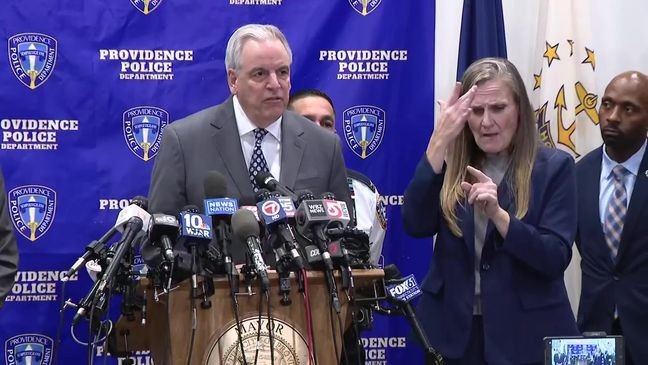
Caption: Rhode Island Attorney General Peter Neronha speaks about speculations on potential shooter. (WJAR)
The Attorney General underscored the unreliability of interpreting information in the current digital age, where a wealth of data can be misinterpreted. “I know, in today’s age, there are lots of things that people read into things, it’s just a dangerous thing to do. And I would leave it to us to identify persons of interest, and let us run them down,” he urged, advocating for patience and trust in the investigative process.
Furthermore, Neronha confirmed that there was no evidence to suggest a specific motive behind the shooting. Even when considering witness accounts of spoken words, which he noted were often contradicted by other witnesses who reported hearing nothing, there was nothing to indicate a motive related to ethnicity, political views, or culture. “Even if, taking at face value, what one or two witnesses may have said about what something was said, and there are many witnesses that say nothing was said. There’s nothing about what we know was perhaps said, that indicates any kind of motive, that is related at all to ethnicity, or political outlook, or culture, there’s nothing at all that we know right now about that. That is a really dangerous road to go down, particularly in today’s environment,” he stated, reinforcing the need for factual accuracy over conjecture.
The university and law enforcement’s statements highlight the critical importance of responsible reporting and social media conduct, especially in the wake of traumatic events. The emphasis is on allowing official investigations to proceed without the interference of unsubstantiated claims and the potential harm caused by online harassment and doxxing. The community is urged to await official findings and to refrain from engaging in speculation that could endanger individuals or impede the pursuit of justice.