
Foreign Investors Shift Tide: From Record Sell-offs to Net Buying on Korean Stock Markets
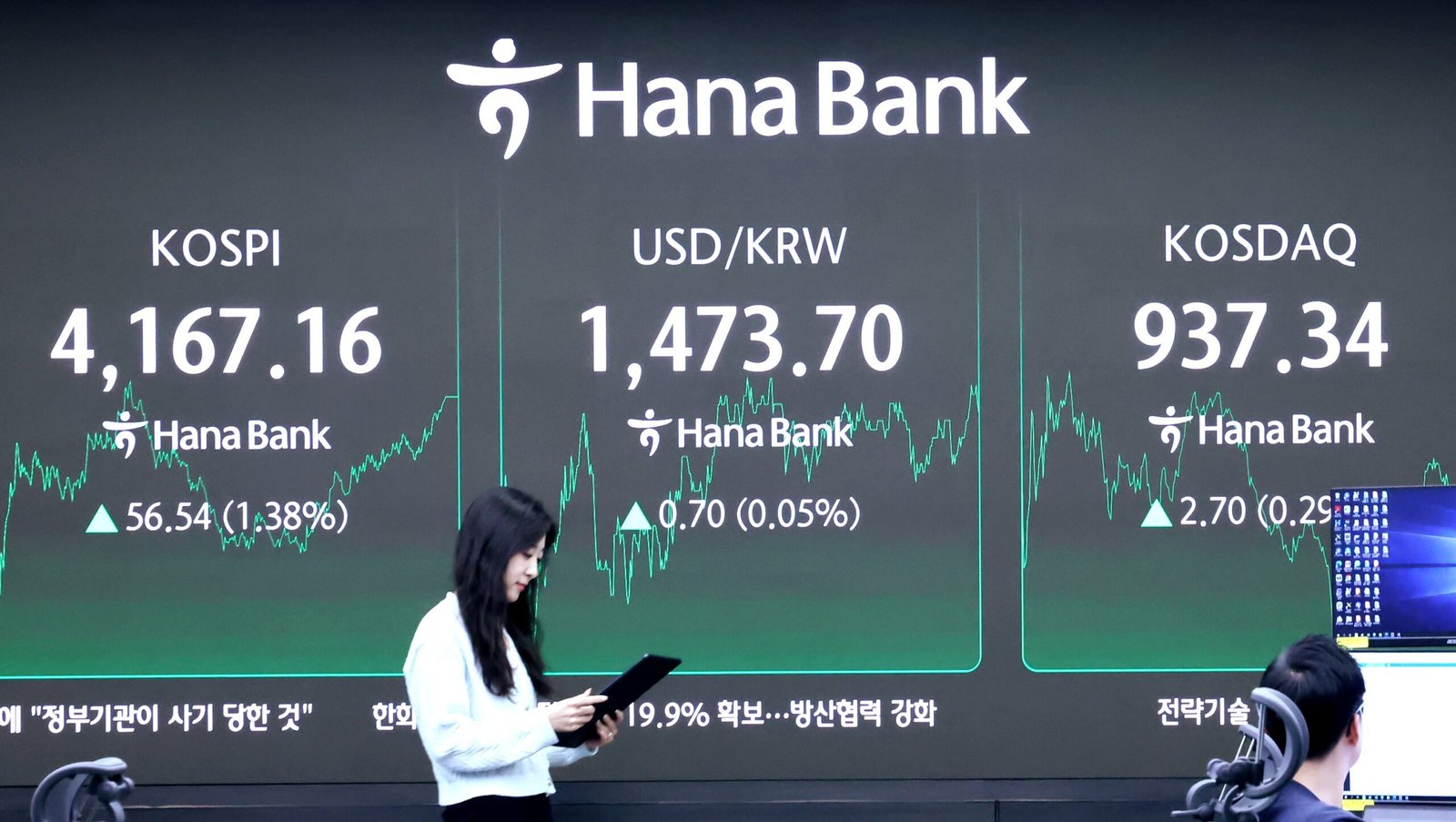
After a period of unprecedented selling pressure, foreign investors have reversed their stance, transitioning from a record-breaking net sell-off in the previous month to a significant net buying spree in the current month on the Korean stock exchanges. This shift in sentiment signals a potential turning point for the KOSPI and KOSDAQ markets, attracting renewed capital from international players.
As of the 12th of this month, foreign investors recorded a net purchase of 3.0471 trillion Korean won on the Korea Composite Stock Price Index (KOSPI). This stands in stark contrast to the preceding month, which witnessed the largest-ever monthly net selling by foreigners, amounting to a staggering 14.4562 trillion Korean won.
The turnaround is particularly evident in the specific stocks that have attracted foreign capital. During the current net buying phase, the most sought-after stocks on the KOSPI by foreign investors were:
- Samsung Electronics: 841.6 billion Korean won
- SK Hynix: 791.4 billion Korean won
- Hyundai Motor Company: 406.2 billion Korean won
- Hanwha Aerospace: 268.0 billion Korean won
This selection of top holdings is a direct reversal of the previous month’s trend. The “artificial intelligence (AI) bubble theory” had previously spooked foreign investors, leading them to offload significant portions of their holdings in key tech companies. In the prior month, SK Hynix and Samsung Electronics were the top two stocks by foreign net selling, with outflows of approximately 8.7309 trillion Korean won and 2.2292 trillion Korean won, respectively.
The positive foreign investment trend has not been confined to the KOSPI. The KOSDAQ market has also experienced a sustained period of foreign net buying. As of the current month, foreigners have recorded a net purchase of 330.1 billion Korean won on the KOSDAQ. This marks the third consecutive month of net inflows into the KOSDAQ, following net purchases of 601.5 billion Korean won in October and 290.1 billion Korean won in November. This upward trajectory follows a net selling of 355.2 billion Korean won in September.
Factors Driving the Foreign Investor Comeback
Several key factors are believed to be contributing to this renewed optimism among foreign investors. Experts suggest that the initial shockwaves from the “AI bubble theory” have begun to subside, allowing for a more rational assessment of market valuations. Furthermore, a notable stabilization in the won-dollar exchange rate, compared to the heightened volatility experienced previously, has likely played a crucial role in easing investor concerns.
Kim Jae-seung, a researcher at Hyundai Motor Securities, elaborated on these points:
- Easing AI Bubble Concerns: The speculative frenzy surrounding AI-related stocks appears to be calming down. Investors are now likely engaging in more fundamental analysis, leading to a less panicked approach to valuations.
- Exchange Rate Stabilization: The significant fluctuations in the won-dollar exchange rate that characterized previous periods have reduced. This predictability in currency movements is a key factor for foreign investors managing their portfolio risk.
- U.S. Federal Reserve Policy Impact: Expectations of interest rate cuts by the U.S. Federal Reserve are anticipated to weaken the U.S. dollar index. This, in turn, is expected to foster a long-term stabilization of exchange rates, making Korean assets more attractive.
Kim further anticipates that this positive trend is likely to continue, with a potential increase in foreign investor participation towards the end of the year and into the early part of the next year.
Domestic Investors Take a Contrasting Path
In contrast to the influx of foreign capital, individual investors in South Korea have exhibited a divergent trend. After being significant net buyers of KOSPI stocks in the previous month, with a net purchase of 9.2875 trillion Korean won, domestic retail investors have shifted to net selling this month, offloading 5.4964 trillion Korean won worth of shares. This reversal by individual investors highlights the differing strategies and risk appetites present in the market.