
Agricultural Ministry’s AI Tool Under Fire Amidst Soybean Production Data Controversy
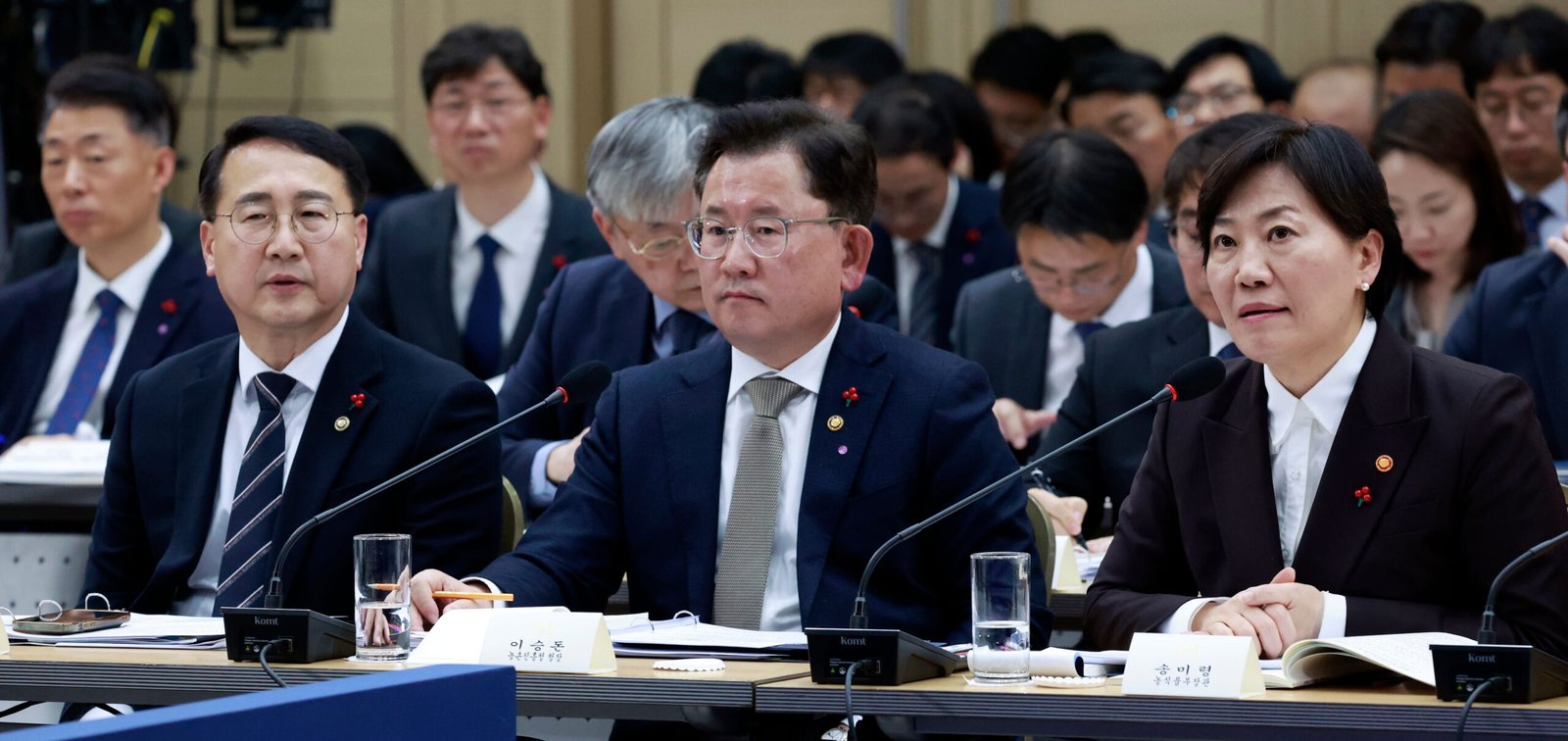
Recent inaccuracies detected within the Ministry of Agriculture, Food and Rural Affairs’ (MAFRA) “KongGPT” system, an AI-powered tool, have ignited significant frustration among the nation’s farming communities. The errors have led to sharp questioning from agricultural organizations, with some vehemently inquiring whether the ministry deliberately understated domestic soybean production figures. This alleged misrepresentation has fueled suspicions that the figures were manipulated to align with the government’s soybean procurement schedule. The situation escalated when Minister Song Mi-ryung personally intervened to correct the erroneous data presented in a report to President Lee Jae-myung. Her subsequent public clarification of the mistake was widely interpreted as a strategic move to assuage the growing discontent among farmers.
An official from MAFRA elaborated on the timeline of events on the 22nd, explaining, “Following a work report session chaired by President Lee Jae-myung on the 11th, farmer groups lodged protests.” The official continued, “The very next day, on the 12th, Minister Song directly corrected the incorrect figures in a face-to-face report to the President.” Reports indicate that the presidential office was the first to identify the discrepancies in the soybean production data and subsequently directed the ministry to present the accurate facts.
The core of the dispute originated from statements made by Byun Sang-mun, the director of MAFRA’s food policy division. During the aforementioned work report, Byun presented an estimate of this year’s soybean production at 83,000 tons. This figure stands in stark contrast to the projections released by the Korea Rural Economic Institute (KREI), which anticipated a production exceeding 150,000 tons. Minister Song later rectified this during her report to the President, providing a revised estimate for domestic soybean production ranging between 160,000 and 170,000 tons.
The controversy gained further traction due to its unfortunate timing, coinciding precisely with the government’s period for procuring soybean reserves. The government commenced its soybean reserve purchases on the 8th. However, reports emerged from various regions, including Jeollabuk-do province, detailing significant shortfalls in the allocated procurement quantities.
Farmers who had transitioned to cultivating soybeans, often encouraged by government initiatives aimed at reducing rice paddy cultivation, are heavily reliant on these government procurement programs. The apprehension among farmers stems from the fear that underreporting production figures could translate into reduced government procurement volumes. Expressing their deep-seated concerns, one prominent farmer group issued a statement: “It is difficult to accept that the responsible director reported reduced production figures while we are actively demanding expanded soybean procurement. There are significant suspicions of intentional misreporting.”
Addressing these accusations, a MAFRA official attempted to de-escalate the situation by stating, “The incorrect figure was a result of a misunderstanding of a question pertaining to domestic soybean consumption in processed food products. There was absolutely no intention to manipulate or reduce soybean reserves.”
While the correction of the data presented to the President occurred promptly after the work report, the subsequent delay in issuing a public clarification for approximately a week drew considerable criticism. Minister Song only addressed the issue publicly on the evening of the 17th, nearly a full week after the initial report, through her official social media channels on Facebook and Instagram. In her public statement, she not only revised the soybean production forecast but also provided clarification on whether imported corn intended for food consumption is non-genetically modified (non-GMO). Furthermore, she adjusted figures related to soybean imports destined for oil production.
A ministry official defended the timeline, explaining, “We determined it was essential to convey accurate information to the public. The delay was attributed to the time required for careful refinement of the wording to ensure clarity and precision.”
Key Issues and Farmer Concerns:
- AI Tool Inaccuracies: The “KongGPT” system, designed to aid the ministry, has exhibited significant errors, leading to a loss of trust.
- Underreported Production Figures: The discrepancy between the initial MAFRA estimate (83,000 tons) and KREI’s projection (over 150,000 tons) for soybean production is a major point of contention.
- Government Procurement Impact: Farmers fear that understated production numbers could lead to reduced government purchases of soybeans, impacting their livelihoods, especially those who switched from rice cultivation.
- Suspicions of Intentional Misrepresentation: The timing of the alleged errors, coinciding with procurement periods, has led to accusations of intentional manipulation to benefit government procurement schedules.
- Delayed Public Clarification: The week-long gap between the correction to the President and the public announcement has fueled further distrust and criticism.
- Specific Concerns Raised:
- Shortages in allocated procurement quantities in certain regions.
- Questions surrounding the accuracy of data related to imported food-grade corn (GMO status).
- Concerns about the accuracy of soybean import figures for oil production.
The incident highlights the critical need for transparency and accuracy in agricultural data reporting, particularly when it directly impacts the economic stability and trust of the farming community. The ministry’s reliance on AI tools, while potentially beneficial, necessitates robust verification processes to prevent such damaging errors in the future.