
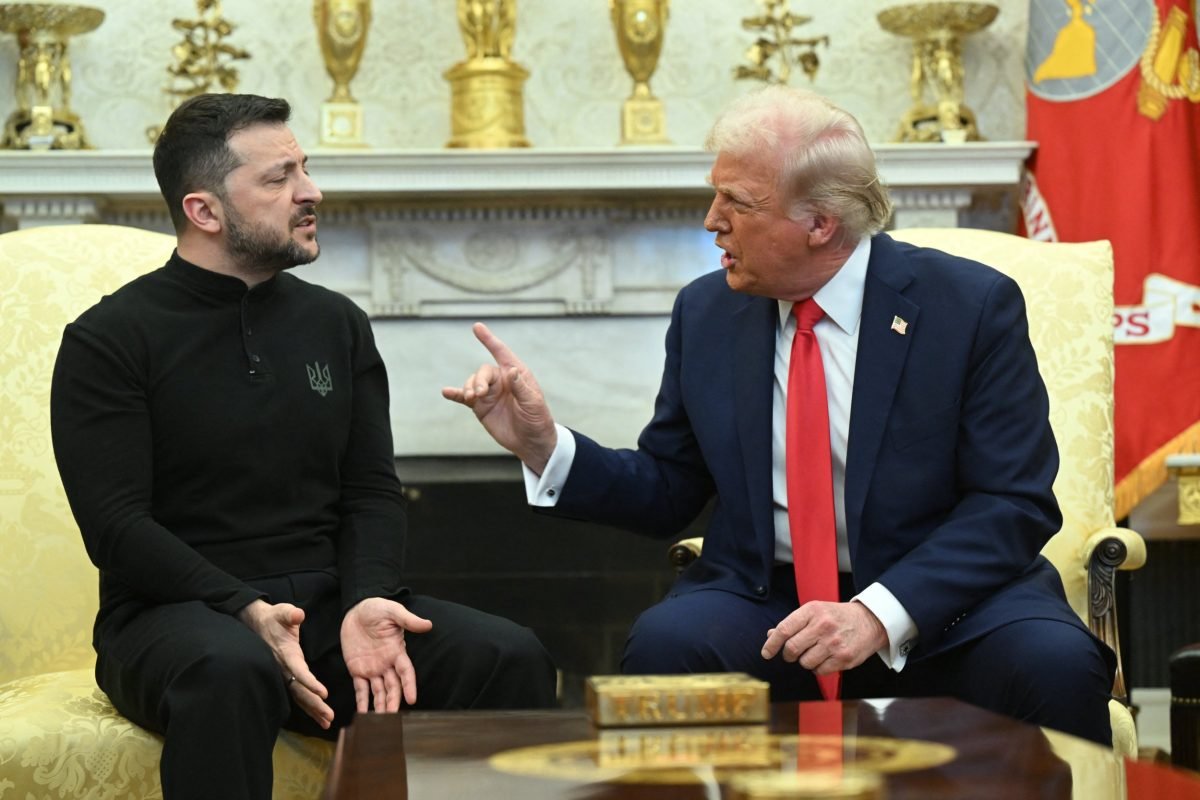
The United Kingdom and Europe are being urged to resist pressure from the White House to accept its proposed peace deal between Ukraine and Russia. This comes after former US President Donald Trump publicly stated that Ukrainian President Volodymyr Zelensky had not yet reviewed the latest American proposals.
Trump’s statement, made on a recent Sunday night, claimed that Ukrainian negotiators were enthusiastic about the plan. He added, “I have to say that I’m a little bit disappointed that President Zelensky hasn’t yet read the proposal, that was as of a few hours ago.”
Zelensky responded by saying he would receive a briefing from his negotiators, emphasizing that “some issues can only be discussed in person.” On Monday, Zelensky met with UK Prime Minister Sir Keir Starmer, French President Emmanuel Macron, and German Chancellor Friedrich Merz at No. 10 Downing Street. Discussions were expected to center on how to respond to the US proposals for resolving the conflict with Russia.
Dr. David Dunn, a professor of international politics at the University of Birmingham, has voiced concerns that the peace plan remains significantly biased in favor of Russia.
Background on the Peace Plan
Trump’s comments followed three days of discussions in Miami involving US officials and Ukrainian representatives, including senior negotiator Rustem Umerov. These talks reportedly resulted in a revised version of the 28-point peace proposal initially put forward by the White House last month.
The original US-backed plan was widely criticized for being advantageous to Russia. It reportedly required Ukraine to:
- Reduce the size of its armed forces.
- Concede more territory to Russia.
- Pledge not to join NATO.
Subsequent talks took place in Geneva between delegations from the US, Ukraine, and its European allies. Reports from these meetings suggested a counterproposal with terms more favorable to Ukraine was being developed.
Earlier this month, Russian President Vladimir Putin held five hours of talks with US envoy Steve Witkoff at the Kremlin, described as “constructive.” However, key aspects of the plan remained unacceptable to Russia, preventing a breakthrough.
Concerns About the US Approach
Dr. Dunn has expressed concern about the US’s approach to the situation. He argues that the White House prioritizes achieving peace above all else, seemingly regardless of the terms. He suggests that Trump’s primary focus is on ending the fighting, without fully considering that a peace settlement favorable to Russia could ultimately undermine European security and potentially encourage further Russian aggression.
“There’s a lot of pressure on Zelensky to accept that, and a lot of European diplomacy aimed at trying to prevent that being the end result,” Dunn stated.
Officials in both Washington and Kyiv have indicated that meaningful progress toward ending the war hinges on Russia demonstrating a genuine commitment to long-term peace.
Trump’s Objectives
The meeting at No. 10 took place after continued Russian airstrikes in Ukraine. It also occurred following Trump’s assertion that Zelensky had not read the latest US proposals.
Trump told reporters that Ukraine’s negotiators “love” the plan and that Russia was “fine with it.” He elaborated, “Russia’s you know, Russia I guess would rather have the whole country when you think of it. But Russia is, I believe, fine with it, but I’m not sure that Zelensky is fine with it.”
Zelensky has stated his determination to continue working in good faith. In his weekly address, he mentioned “substantive discussions” with Trump’s envoys. “The American envoys are aware of Ukraine’s core positions, and the conversation was constructive, though not easy. We continue our work,” he added.
Dunn views Trump’s comments as “partly disingenuous” and “worrying.” He believes Trump often distorts information and deliberately misleads people. He explained that Zelensky’s statement that he was still studying the document is different from Trump’s portrayal of Zelensky as nonchalant and uninterested.
Dunn believes Trump’s description of Zelensky is concerning because it allows Trump to criticize him, portray him as unserious, and justify a potential withdrawal of American support. “The fact he’s doing this suggests he may be inclined to walk away and not support Ukraine, while saying positive things about Russia. Again, we see Trump supporting the aggressor and not the invaded nation. That seems to be the direction of travel of this White House,” Dunn warned. He further stated, “The Russians know how to get the Trump administration to do its bidding in a very transparent way, and the Americans are saying, ‘Yes please, give us some more.’”
The Role of Zelensky and Starmer
Dunn suggests that the main purpose of the meeting at No. 10 is to demonstrate solidarity with Ukraine and symbolically resist the White House’s efforts to impose its peace plan. “They could talk about the weather in that meeting, but it’s the message it sends across the Atlantic of European support for Ukraine, solidarity with Ukraine.”
He anticipates that European leaders will continue to advise Zelensky on how to navigate the situation, balancing the need to avoid conceding to demands while also avoiding upsetting the US and causing them to withdraw support.
“There will obviously be discussions on what more the Europeans collectively can do for Ukraine, perhaps even talking about the next steps regarding the freeing of access to the frozen [Russian] assets in Brussels,” Dunn added.
In future negotiations, Ukraine and its European allies are expected to continue opposing any transfer of Ukrainian territory to Russia and to insist that any ceasefire be accompanied by security guarantees from both the US and a “coalition of the willing” convened by the UK and France.
Starmer, prior to meeting with Zelensky, Macron, and Merz, called for “hard-edged security guarantees” for Ukraine if the fighting ceases. He told reporters: “If there is to be a ceasefire, it needs to be just – because Ukraine has taken heavy, heavy losses and paid a very heavy price for a war which was not of their making – but it’s also got to be lasting, because we know Putin does not respect agreements that don’t have hard-edged security guarantees behind them, so that’s what we’ll be focusing on.”
Despite the US administration suggesting that European leaders have “unrealistic expectations” about the war, Starmer also acknowledged Trump’s efforts.
“You can never get from conflict to peace by an easy, straight route,” the Prime Minister said. “It’s always a complicated business, but I do think that we’re making progress, and I think what President Trump has been able to achieve in the last few weeks, getting it this far, has been the furthest we’ve got in the four years. And I therefore pay tribute to him for that, and hopefully we can make some further progress this afternoon.”