Nikkei Soars on Tech Strength and Shifting Bond Landscape
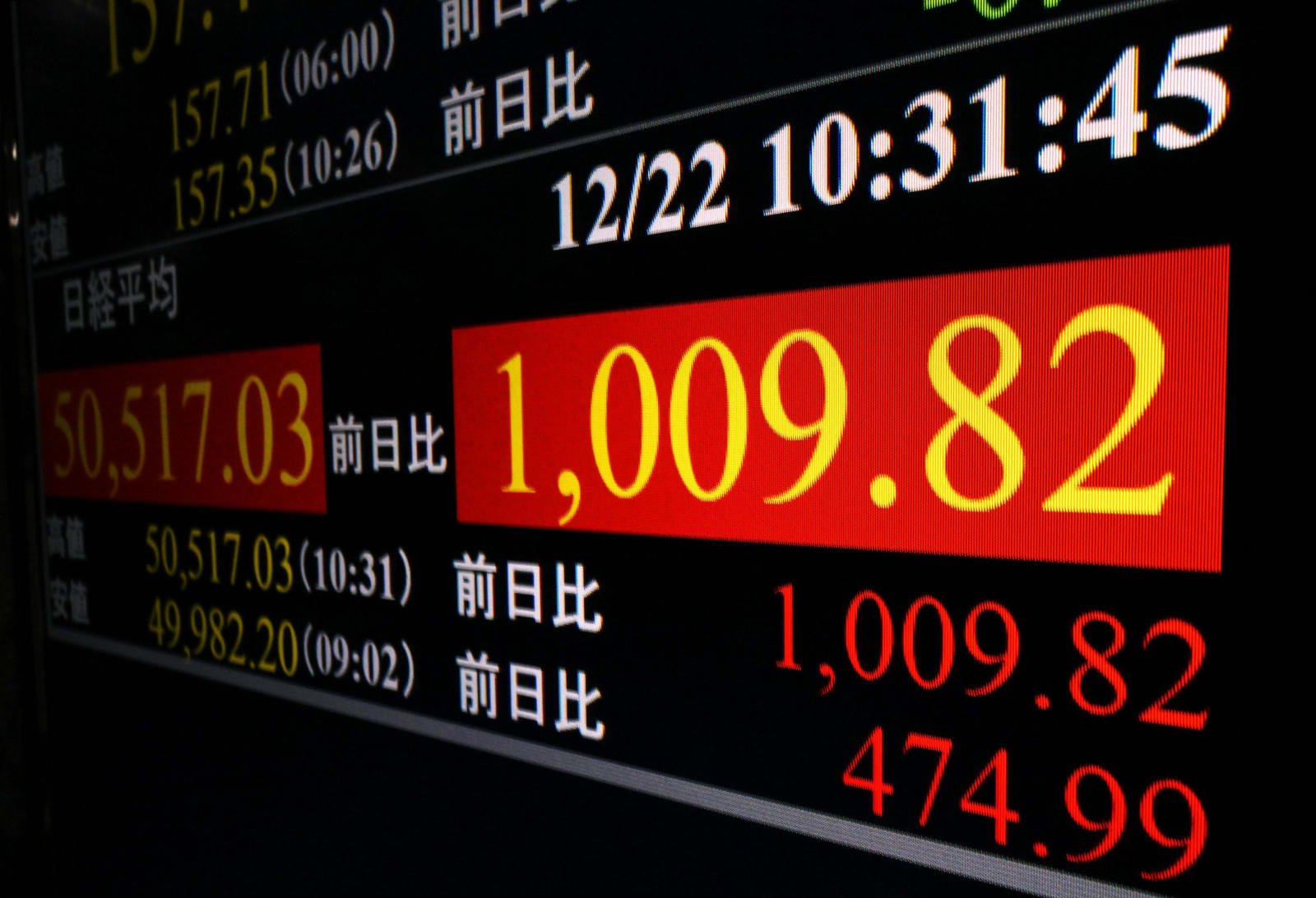
The Tokyo stock market experienced a significant surge on Monday morning, with the benchmark Nikkei 225 index climbing by over 2 percent. This upward momentum was largely fueled by robust gains in major technology companies, mirroring a positive trend observed in their U.S. counterparts during the previous week’s trading sessions.
Simultaneously, the yield on Japan’s 10-year government bond reached a notable peak, touching 2.085 percent. This level represents the highest recorded since 1999, indicating a shift in the bond market. The increase in yield suggests that bonds are facing selling pressure. This phenomenon is attributed to the anticipation that the Bank of Japan may continue its trajectory of raising interest rates. This expectation follows the central bank’s recent decision to elevate its policy rate to approximately 0.75 percent on Friday, a level not seen in three decades. It is important to note the inverse relationship between bond yields and bond prices; as yields rise, bond prices tend to fall.
The positive sentiment extended to specific sectors within the stock market. Semiconductor and artificial intelligence (AI) related stocks, including prominent names like Advantest and SoftBank Group, saw substantial buying interest. This surge in demand was reportedly influenced by a news report indicating that the U.S. government has initiated a review process. This review has the potential to pave the way for the first shipments of advanced AI chips manufactured by Nvidia Corp. to China. Such developments are closely watched as they can significantly impact global supply chains and the competitive landscape for cutting-edge technology.
By 11 a.m. local time, the Nikkei Stock Average, which comprises 225 selected stocks, had advanced by 1,005.07 points, translating to a gain of 2.03 percent compared to its closing figure on Friday. The index stood at 50,512.28 at that time, reflecting the strong performance of the Japanese equity market.
Key Market Drivers and Sector Performance
The recent market movements highlight several critical factors influencing investor sentiment and strategic decisions:
- Global Technology Trends: The performance of U.S. technology giants often sets the tone for global markets. Last week’s gains in the U.S. provided a strong foundation for a positive opening in Tokyo, particularly for companies involved in the semiconductor and AI sectors.
- Nvidia and AI Chip Developments: The potential for Nvidia’s advanced AI chips to reach the Chinese market is a significant development. AI is a rapidly growing field, and access to leading-edge hardware is crucial for research, development, and deployment of AI technologies. Any shifts in the availability and distribution of these chips can have far-reaching implications for both the companies involved and the broader tech ecosystem.
- Bank of Japan’s Monetary Policy: The Bank of Japan’s decision to raise interest rates, and the prospect of further increases, is a key consideration for investors. Higher interest rates can impact corporate borrowing costs, consumer spending, and the attractiveness of different asset classes. The rising bond yields reflect this evolving monetary policy environment.
- Currency Fluctuations: While not explicitly detailed in the initial report, currency exchange rates, particularly between the Japanese Yen and major global currencies like the U.S. Dollar, can also play a role in the performance of Japanese equities, especially for export-oriented companies.
Implications for Investors
The current market dynamics present a mixed outlook for investors:
- Opportunities in Technology: The continued strength in the technology sector, driven by AI advancements and potential new market access for key players, suggests ongoing opportunities for investors in this space. Companies involved in chip manufacturing, AI development, and related services are likely to remain under scrutiny.
- Bond Market Adjustments: The rising yields on Japanese government bonds indicate a recalibration of expectations regarding interest rates. Investors in fixed-income securities will need to consider how these rising yields affect their portfolios and explore potential investment strategies in a higher-interest-rate environment.
- Economic Outlook: The Bank of Japan’s policy stance is a significant indicator of the central bank’s assessment of the Japanese economy. Investors will be closely monitoring economic data and future policy announcements to gauge the broader economic trajectory.
The Nikkei’s performance on Monday morning underscores the interconnectedness of global financial markets and the significant impact of technological innovation and central bank policies on investor confidence and market direction. The coming days and weeks will likely see continued attention paid to the developments in the AI chip market and the Bank of Japan’s monetary policy decisions.