
Autonomous Vehicles Face Scrutiny as Real-World Challenges Emerge
The rapid advancement of autonomous vehicle technology, once hailed as the future of transportation, is encountering significant real-world hurdles. Recent incidents highlight the complex challenges these self-driving systems face in interpreting dynamic and unpredictable environments, raising crucial questions about their safety and readiness for widespread public deployment.
A notable instance involved a driverless car misinterpreting a large-scale advertisement on the side of a bus as a group of pedestrians. The advertisement, for the film The Man from U.N.C.L.E., featured several actors depicted life-size. To the vehicle’s artificial intelligence (AI), these static images were indistinguishable from actual people on the road. This misidentification triggered an emergency stop, a maneuver that could have posed a serious risk to vehicles following behind.
Professor John McDermid, an expert in software and an advisor on government self-driving vehicles, shared this account, emphasizing that while the situation might seem obvious to human observers, the AI’s interpretation was fundamentally flawed. “It was a life-size advert on the side of a bus, but to an AI, it was human beings,” Professor McDermid explained. “That seems very obvious [to us], but actually, to the AI, it’s not.” This incident underscores the limitations of current AI in differentiating between real-world objects and their visual representations, especially when those representations are designed to be highly realistic.
Beyond visual misinterpretations, autonomous vehicles are also proving susceptible to the unpredictable nature of human behaviour, particularly concerning pedestrian movements. In trials conducted in York, UK, driverless cars have reportedly been confused by pedestrians who do not strictly adhere to traffic signals. This is particularly evident at pedestrian crossings where individuals may still attempt to cross even after the “walk” signal has changed and the “don’t walk” signal has begun flashing.
Professor McDermid elaborated on this phenomenon, stating, “It’s seen that there’s a traffic light, so identified the hazard, because the light is red. It changes to green, the vehicle is about to move off. But this is York, so the tourists – although the lights change to green – still walk across the road.” He further noted the limitations of computer vision: “Computer vision doesn’t understand what it doesn’t have models for in the world. It doesn’t know what a roundabout is.” This highlights a critical gap in the AI’s understanding of nuanced, culturally influenced behaviours and real-world infrastructure that deviates from standardized models.
In contrast, the pedestrian culture in the United States, where “jaywalking” is a serious offense, might lead to a greater adherence to crossing instructions, potentially making the transition to autonomous vehicles smoother in that context. However, in the UK, where pedestrians often exhibit more spontaneous behaviour, the current AI systems appear ill-equipped to handle such unpredictability.
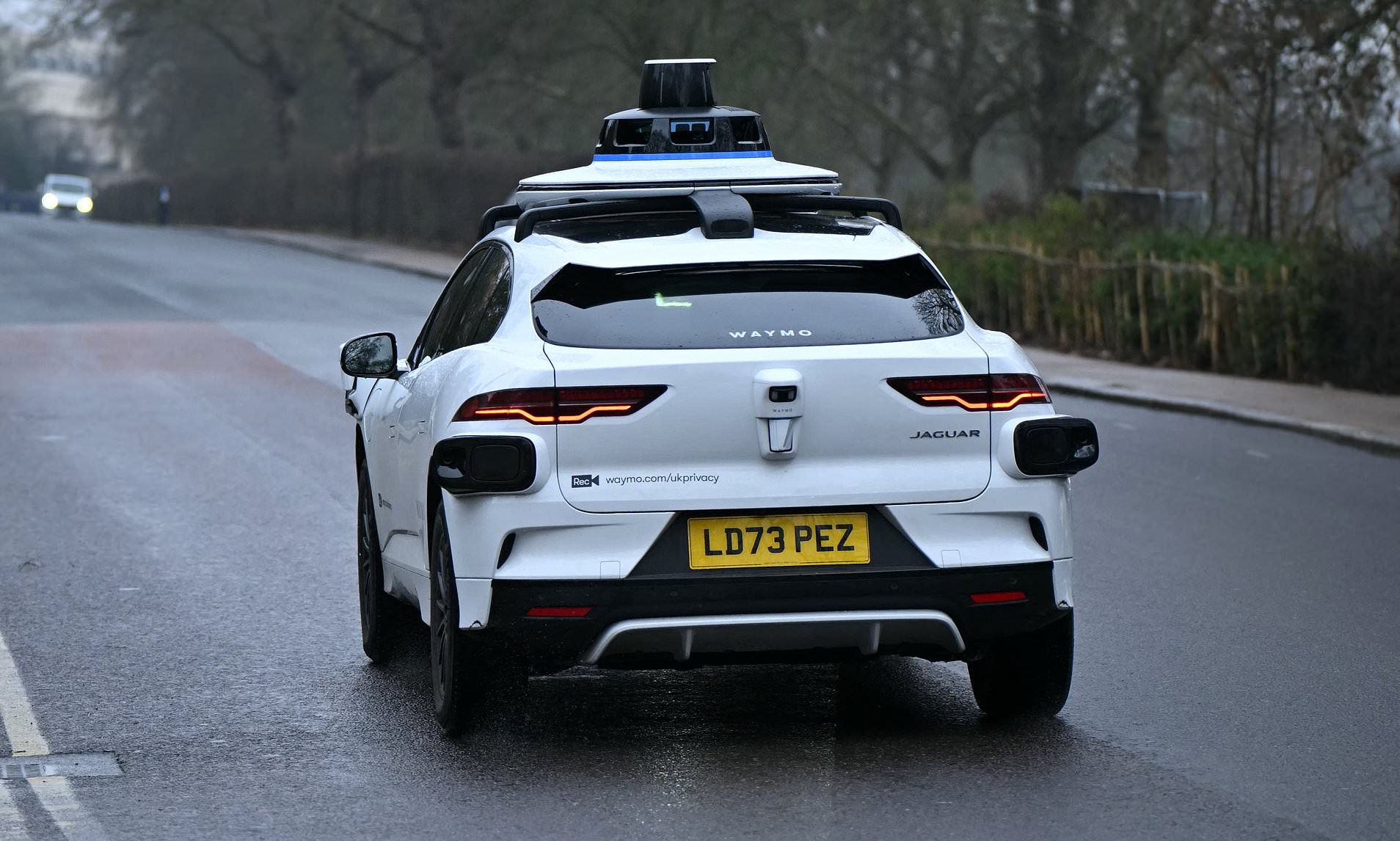
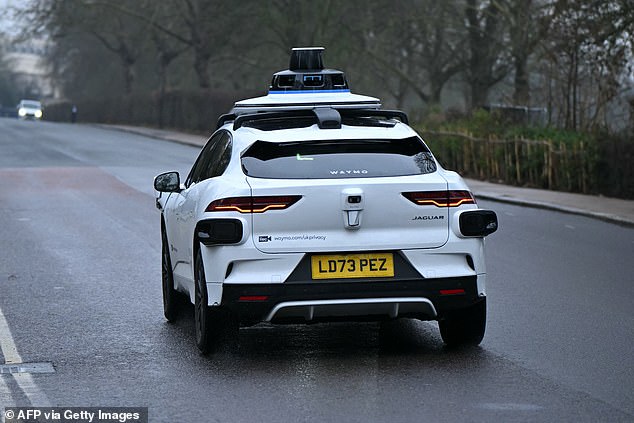
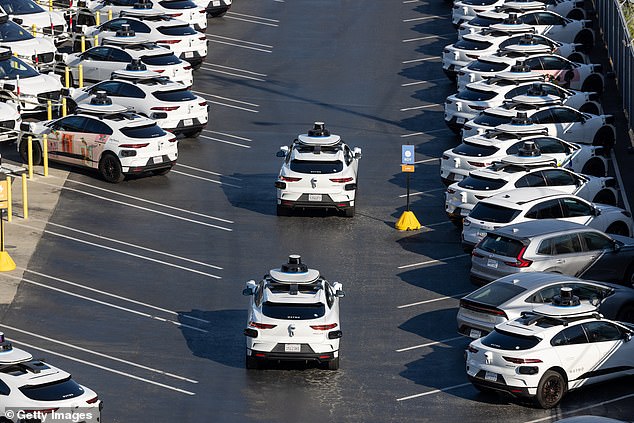
These concerns are particularly pertinent as London prepares for trials of driverless taxis. American company Waymo is slated to commence its autonomous taxi trials in the city from Easter, with plans for integration with ride-sharing services like Uber. However, past incidents in San Francisco involving Waymo vehicles have already raised red flags.
Approximately two years ago, school crossing guards, often referred to as “lollipop ladies,” reported numerous near-misses with Waymo’s driverless vehicles. A survey of 30 such attendants revealed that around a quarter had experienced a “close call” with an autonomous vehicle, with some forced to take evasive action to avoid collision.
One veteran crossing guard, Theresa Dorn, recounted multiple near-misses over a year, including an incident where a parent had to swiftly intervene to protect a child. “The parent grabbed the child, looked at the car – and there was nobody driving it,” she stated, expressing her apprehension: “Why do they have these driverless cars? I think somebody should be driving them.”
The current regulatory framework in the UK mandates that “self-driving vehicles should be held to the same high standard behaviour as that expected of human drivers.” However, public opinion, as indicated by surveys, suggests a sentiment that autonomous vehicles should be held to an even higher standard. This apprehension is rooted in the significant number of road fatalities in the UK, with approximately 1,600 people losing their lives annually.
Professor McDermid has issued a stark warning, urging that pedestrians should not be relegated to a “moral crumple zone” for the advancement of robocars. This statement emphasizes the ethical imperative to ensure that the deployment of autonomous technology does not place vulnerable road users at increased risk. The ongoing challenges in interpreting advertisements and navigating unpredictable pedestrian behaviour underscore the need for continued rigorous testing, robust safety protocols, and a deeper understanding of human-AI interaction before autonomous vehicles can be fully integrated into our daily lives.


