

Political Realignment Looms as Opposition Weighs New Electoral Strategy
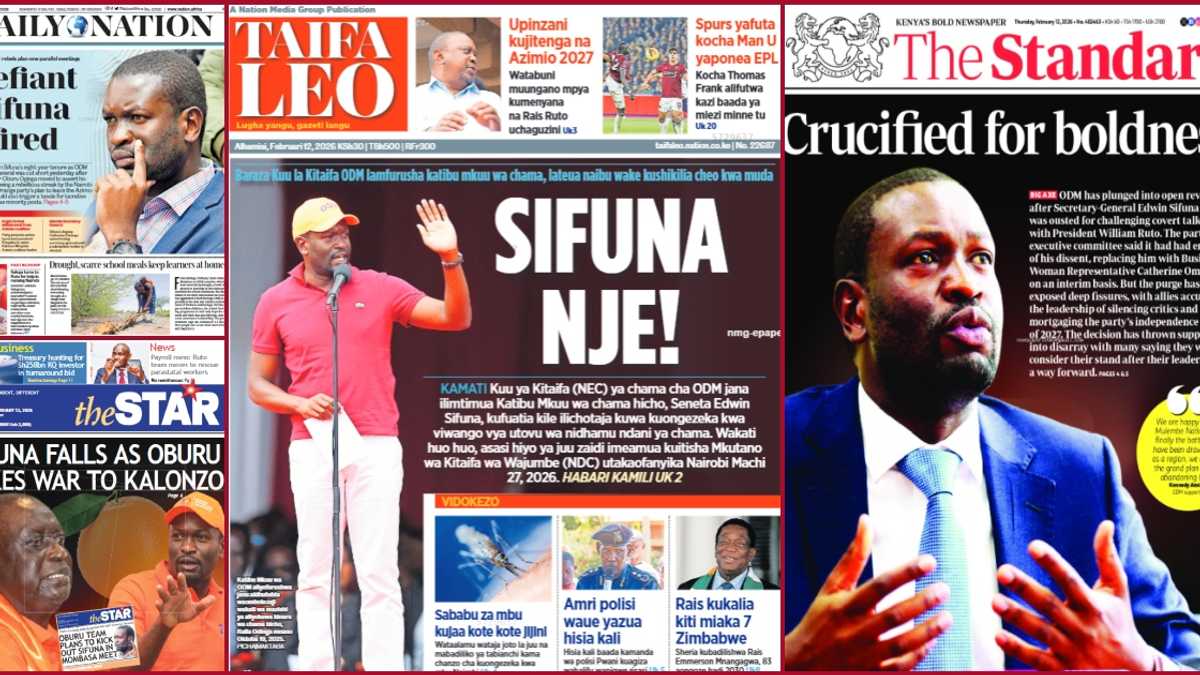
The Kenyan political landscape is abuzz with speculation following significant developments within the opposition coalition, Azimio. Reports indicate a potential shift away from its current structure as leaders strategize for the 2027 general elections, aiming to present a united front against President William Ruto’s bid for a second term. This period of introspection and recalibration follows internal party shifts, including the recent ouster of Nairobi Senator Edwin Sifuna as ODM secretary general.
ODM Internal Dynamics and Sifuna’s Removal
Nairobi Senator Edwin Sifuna’s tenure as the Orange Democratic Movement (ODM) secretary general has come to an end, a move reportedly driven by months of internal friction. The decision, confirmed in a dramatic National Executive Committee (NEC) meeting, highlighted deep divisions within the party’s senior leadership.
- The Vote: In a vote held during the NEC meeting, 25 members supported Sifuna’s removal from the influential position, with only four dissenting voices.
- Announcement: Busia Woman Representative Catherine Omanyo officially announced the decision, which took immediate effect.
- Meeting Atmosphere: The high-stakes meeting, chaired by ODM party leader Oburu Oginga in Mombasa, was described as tense, with a resolute mood prevailing among the majority.
- Dissenting Voices: A minority, including ODM vice chairman Otiende Amolo, treasurer Timothy Bosire, Kisumu woman representative Ruth Odinga, and a member identified as Mike, reportedly argued for Sifuna’s retention. They advocated for the party’s “gather all, scatter none” principle and called for Sifuna to be granted a right of reply, but their pleas were ultimately unsuccessful.
- Sifuna’s Absence: Senator Sifuna did not attend the closed-door session but had submitted his apologies through the executive director, Oduor Ongwen.
- Future Outlook: The NEC also announced that the National Delegates Convention is scheduled for March 27, 2026, in Nairobi. This upcoming convention is anticipated to be pivotal in shaping the future direction of the ODM party.
Azimio’s Future Under Scrutiny
The opposition coalition, Azimio, is reportedly on the verge of a significant overhaul, with discussions centering on abandoning its current form as the primary electoral vehicle for 2027. This potential realignment is a key focus for leaders preparing for a crucial retreat in Naivasha.
- New Framework: Coalition spokesperson Dr. Mukhisa Kituyi indicated that the opposition would deliberate on a new framework, structure, leadership model, and strategy. A comprehensive statement is expected to be released following the two-day meeting.
- Contrasting Signals: Dr. Kituyi’s remarks appear to diverge from recent efforts by former President Uhuru Kenyatta, who had reportedly been positioning Wiper leader Kalonzo Musyoka as the new head of Azimio, particularly in the wake of Raila Odinga’s passing.
- Coalition Survival: Insiders suggest that Azimio, in its current iteration, may not survive as the opposition’s brand for the upcoming general election.
- Legal Standing: Despite potential strategic shifts, Cleophas Malala, deputy leader of the Democracy for the Citizens Party, emphasized that Azimio remains a legally recognized coalition under the Political Parties Act. Any dissolution would necessitate adherence to due process.
- Rallying Call: Malala reaffirmed the coalition’s core objective: the “Wantam” push, aimed at limiting President Ruto to a single term.
- ODM’s Stance: Siaya Senator Oburu Oginga, an ODM leader, has adopted a firm position, asserting that no decisions concerning Azimio can be finalized without the party’s explicit backing.
Legal Disputes Emerge from Community Group Dynamics
In a separate development, a leadership dispute within a Mombasa-based Luo WhatsApp group has escalated to the High Court, revealing internal divisions concerning control, identity, and legitimacy.
- The Group: The group, known as Nyikwa Ramogi Ajwang’, comprises approximately 530 members.
- Court Action: Former Nyali MP Awiti Bolo, John Oucho, Cyrus Nyamita, and Mark Otweyo are seeking court orders to be reinstated as chief administrators.
- Petition Allegations: Oucho and Nyamita filed a petition in Mombasa, asserting their lawful election and subsequent removal without due process, notice, or explanation.
- The Dispute: The core of the conflict revolves around claims that a rival faction, led by Dennis Ombok, Stephen Amayo, Pius Oketch, and the county’s Director of Social Development, allegedly seized administrative control on December 16, 2025.
- Name Change: The petitioners contend that the group’s name was purportedly changed from Nyikwa Ramogi Ajwang’ Mombasa to Oganda Ramogi Ajwang’ without member consultation, which they interpret as an attempted takeover.
- Registration Hurdles: Oucho, serving as vice chair, believes these actions are deliberately aimed at obstructing the group’s registration under the Community Groups Registration Act, 2022.
- Platform Significance: He highlighted the critical role of the WhatsApp platforms, stating they serve as the organization’s primary governance space, functioning as its meeting hall, office, and decision-making forum.
- Constitutional Rights: The petitioners argue that the ongoing interference infringes upon their constitutional rights, including freedom of association and the right to fair administrative action.
Zimbabwe Considers Electoral Reforms with Far-Reaching Implications
In international news, Zimbabwe’s Cabinet has reportedly approved a controversial Bill that could potentially allow President Emmerson Mnangagwa to extend his term in office until at least 2030, setting the stage for a significant constitutional challenge.
- Proposed Legislation: The Bill aims to fundamentally alter the country’s electoral framework. Key proposals include presidential elections being conducted by Members of Parliament and an extension of presidential terms from five to seven years, with a cap of two terms.
- Government Justification: Justice Minister Ziyambi Ziyambi stated that public consultations were conducted prior to the Bill’s tabling in Parliament, where the ruling Zanu-PF party holds a majority in both legislative chambers.
- Constitutional Expert Views: However, constitutional experts argue that any such amendments would necessitate a national referendum and cannot lawfully be applied retroactively to benefit a sitting president.
- President Mnangagwa’s Tenure: President Mnangagwa, aged 83, first came to power in 2017 following a military intervention that led to the ousting of Robert Mugabe. He subsequently won elections in 2018 and 2023, although the latter results faced dispute. His current presidential term is scheduled to conclude in 2028.
- Succession Tensions: The push for constitutional amendments occurs amidst underlying succession anxieties within the ruling Zanu-PF party.
- Internal Opposition: Early indications suggested internal resistance to these reforms. The late Blessed Geza, a liberation war veteran and former central committee member, was notably vocal in his criticism of President Mnangagwa.
- Critique of Power Entrenchment: Prior to his recent death in South Africa, Geza had urged Zimbabweans to resist what he described as attempts to entrench power, accusing the president of undermining the foundational principles of independence.