

A Night Under the Lights: Sabalenka and Osaka Deliver a Roland-Garros Spectacle
Roland-Garros played host to a women’s tennis match of significant consequence, a powerful display of athleticism and skill that saw world No. 1 Aryna Sabalenka overcome four-time major champion Naomi Osaka. This clash, a rare feature in the coveted primetime night slot on Court Philippe-Chatrier, was more than just a quarter-final battle; it was a statement for women’s tennis on the grandest stage.
The tournament, despite having former world No. 1 Amelie Mauresmo as its tournament director, had not scheduled a women’s match in the prime evening slot for three years. This absence had sparked debate, particularly given the WTA Tour’s ongoing efforts to elevate the visibility of its athletes. The decision to place Sabalenka versus Osaka under the lights was widely applauded, and the players more than justified the billing with a compelling contest that Sabalenka ultimately clinched, 7-5, 6-3.
Sabalenka, who is still chasing her maiden Grand Slam title on the Parisian clay, acknowledged the challenge posed by Osaka. “She’s such a great player, and I always have tough battles against her,” Sabalenka commented after the match. “She plays super aggressive tennis, and I’m mostly happy with the way I served, and that I was able to put all of that pressure back on her. I’m happy with the win. It was a very tough one, and it’s amazing to play in the night session in front of you all.”
The timing of this high-profile encounter also coincided with news that American legend Serena Williams would be making her return to the court at Queen’s Club in London the following week, her first appearance since the 2022 US Open.
Sabalenka’s victory extended her remarkable streak of reaching at least the quarter-finals in 14 consecutive majors. During this period, she has cemented her status as a dominant force in women’s tennis. However, her record in finals has seen her win only four out of eight, including a runner-up finish to Coco Gauff at Roland-Garros last year. With several top contenders, including Gauff, four-time champion Iga Swiatek, and Australian Open winner Elena Rybakina, already eliminated, Sabalenka is now considered a strong favourite to finally lift the Coupe Suzanne Lenglen, which would mark her fifth Grand Slam trophy.
The scheduling of night matches at Grand Slams varies. Unlike the Australian and US Opens, which each feature a single night match daily, Roland-Garros’s clay courts adhere to this format. Wimbledon, conversely, does not have any night sessions due to strict curfew regulations.
A Clash of Superstars Under the Parisian Sky
The highly anticipated showdown between Sabalenka and Osaka, two of the sport’s most recognisable and accomplished stars, marked the first time a women’s match had been scheduled for a night session at Roland-Garros since Sabalenka defeated Sloane Stephens in the fourth round in 2023. Osaka had previously expressed that she had almost stopped associating night matches with the clay-court Slam due to their rarity for women.
The rationale behind the previous gender disparity in night session scheduling, as explained by tournament director Amelie Mauresmo, centred on ticket holder expectations and the perceived risk of shorter women’s matches (best-of-three sets) not providing sufficient value. However, this stance drew considerable criticism, particularly after Mauresmo’s 2022 comments suggesting men’s matches held “more attraction and appeal,” for which she later apologised.
In response to these concerns, WTA chair Valerie Camillo met with Mauresmo in Paris to advocate for increased visibility for women’s matches in prime-time slots at Roland-Garros. The universal delight at seeing Sabalenka and Osaka compete under the lights was tempered by some scepticism, with observers noting that the scheduling might have been opportunistic given the significant upsets in the men’s draw earlier in the week. This decision also seemed to contradict Mauresmo’s earlier logic about match length.
Ultimately, Sabalenka’s victory in two sets, lasting 85 minutes, provided ample entertainment. The match was a testament to the quality of women’s tennis, offering a dynamic and engaging spectacle for all in attendance.
The Match Unfolds: Power, Precision, and Grit
Both players demonstrated a strong performance, hitting more winners than unforced errors, and the match featured compelling ebbs and flows, particularly in a highly competitive first set.
Osaka, sporting a striking bronze dress, made an early statement, breaking Sabalenka’s serve in the opening game with a powerful forehand. However, the Belarusian quickly responded, levelling the score with a blistering inside-out forehand winner. The early exchanges were a display of high-octane baseline rallies, with both players showcasing their formidable groundstrokes. Sabalenka’s evolving game was evident in her adept use of exquisite drop shots, which complemented her raw power.
A pivotal moment in the first set occurred in the ninth game on Osaka’s serve. The rally showcased the intensity required to win points, featuring an enormous backhand winner from Sabalenka after Osaka had pressed forward. Moments later, Osaka responded with a brilliant backhand drive volley winner, followed by an equally impressive inside-out forehand. Despite her efforts, Osaka’s serve faltered in the subsequent game, allowing Sabalenka to clinch the first set.
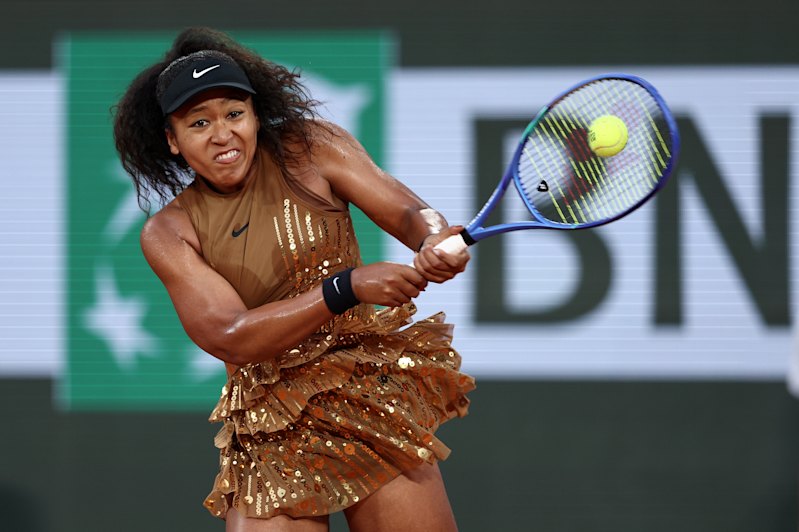
As the second set began, Sabalenka maintained her momentum. Osaka fought hard to hold serve, saving a break point in the third game and another two games later, but the match was gradually slipping away. Her final significant opportunity to break Sabalenka’s resolve came in the following game. The top seed was forced to dig deep, facing deuce twice, once after a spectacular Osaka backhand return that kissed the sideline.
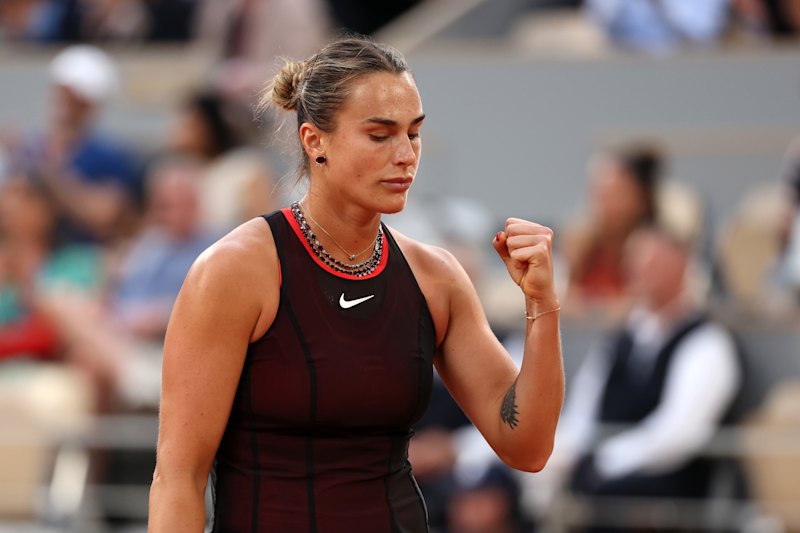
Sabalenka managed to survive the pressure and then capitalised. In what was arguably the most crucial point of the match, she unleashed consecutive thunderous backhands in opposite directions before stepping in to hammer a forehand. Osaka responded with a tenacious low volley, which Sabalenka retrieved with remarkable skill, securing the decisive break. From that point, Osaka was unable to mount a comeback.
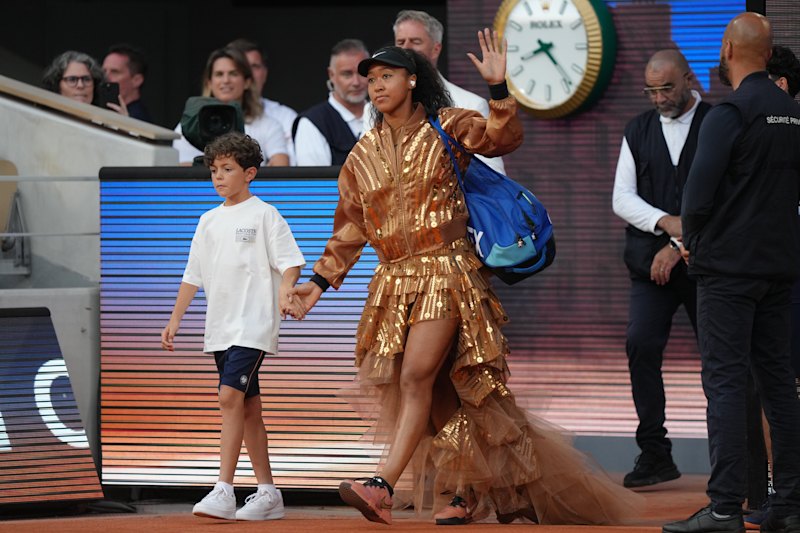
Sabalenka now advances to a quarter-final clash against Russian Diana Shnaider, who defeated Madison Keys in a three-set encounter. In other notable women’s results, Anna Kalinskaya of Russia outlasted Anastasia Potapova of Austria in a marathon three-setter to book her spot in the last eight. She will face Polish qualifier Maja Chwalinska, who ended the hopes of the last French player in the draw, Diane Parry.
On the men’s side, Matteo Berrettini secured a significant victory over Juan Manuel Cerundolo, avenging a previous loss for his compatriot Jannik Sinner. Berrettini will meet Matteo Arnaldi in an all-Italian quarter-final after Arnaldi completed a gruelling five-and-a-half-hour comeback win over Frances Tiafoe. Fourth seed Felix Auger-Aliassime, the highest-ranked player remaining in the top half of the draw, advanced smoothly and will face Italian Flavio Cobolli in his quarter-final.


