

Sabalenka Triumphs in Historic Roland-Garros Night Match Against Osaka
In a clash that transcended mere qualification for the quarter-finals, world No. 1 Aryna Sabalenka faced off against four-time Grand Slam champion Naomi Osaka in a significant women’s night match at Roland-Garros. This encounter, held under the Parisian lights, represented a pivotal moment for women’s tennis at the French Open, a Grand Slam notably helmed by former world No. 1 Amelie Mauresmo as tournament director. The tournament had, for three years, shied away from showcasing women’s matches in this coveted primetime slot.
Sabalenka and Osaka, two of the sport’s most prominent figures, more than lived up to the hype, delivering a high-octane display of power hitting. Sabalenka ultimately emerged victorious with a commanding 7-5, 6-3 scoreline, keeping her aspirations for a maiden Grand Slam title on the clay firmly alive.
“She’s such a great player, and I always have tough battles against her,” Sabalenka commented after the match. “She plays super aggressive tennis, and I’m mostly happy with the way I served, and that I was able to put all of that pressure back on her. I’m happy with the win. It was a very tough one, and it’s amazing to play in the night session in front of you all.”
This significant match occurred on the same day the WTA Tour announced the highly anticipated comeback of American legend Serena Williams, who is set to return to the court at Queen’s Club in London the following week, having last competed at the 2022 US Open.
Sabalenka’s consistent performance is undeniable, having reached at least the quarter-finals in her last 14 consecutive majors. During this period, she has cemented her status as a dominant force in women’s tennis. However, she has converted only four of her eight final appearances into titles, including a runner-up finish to Coco Gauff at Roland-Garros last year. With several top contenders, including Gauff, four-time champion Iga Swiatek, and Australian Open winner Elena Rybakina, already eliminated from the tournament, Sabalenka is now considered a strong favourite to finally claim the Coupe Suzanne Lenglen, which would mark her fifth Grand Slam trophy.
Unlike the Australian and US Opens, the claycourt major traditionally schedules only one night match per day. Wimbledon, on the other hand, does not feature any night sessions due to a strict curfew.
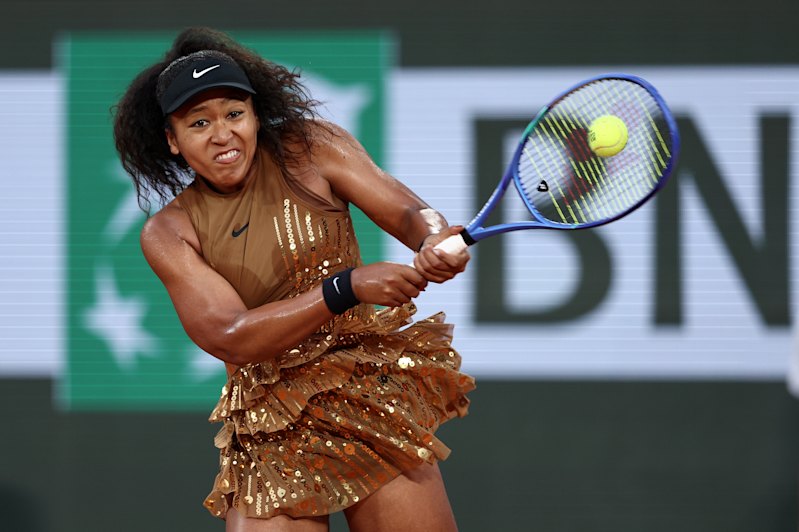
The eagerly awaited showdown between Sabalenka and Osaka, two genuine superstars of the game by both their on-court achievements and public profiles, marked the first women’s night match in Paris since Sabalenka defeated American Sloane Stephens in the fourth round in 2023. Osaka had previously expressed that she had ceased to associate night matches with the claycourt Grand Slam due to the rarity of women being granted such a platform.
Tournament director Amelie Mauresmo had previously cited the shorter, best-of-three-sets format for women’s matches as a factor, suggesting it posed a heightened risk of fewer sets being played, potentially not offering the same value to ticket holders compared to the men’s best-of-five format. This argument had drawn considerable criticism, particularly after Mauresmo’s initial comments in 2022 where she suggested men’s matches held “more attraction and appeal,” remarks for which she later apologised, stating they were taken out of context.
In a positive development, WTA chair Valerie Camillo met with Mauresmo in Paris recently to advocate for increased visibility for women’s matches in night sessions at Roland-Garros. The decision to schedule the Sabalenka-Osaka encounter under the lights was met with widespread approval, although some scepticism lingered. The scheduling was also seen as opportunistic, given the significant upsets in the men’s draw during the first week, which left Monday’s remaining schedule lacking a prominent male figure. Furthermore, it seemed to contradict Mauresmo’s earlier reasoning regarding match length.
Ultimately, Sabalenka’s victory came in two sets, lasting 85 minutes. Any spectator leaving the court feeling dissatisfied would have had exceptionally high expectations.
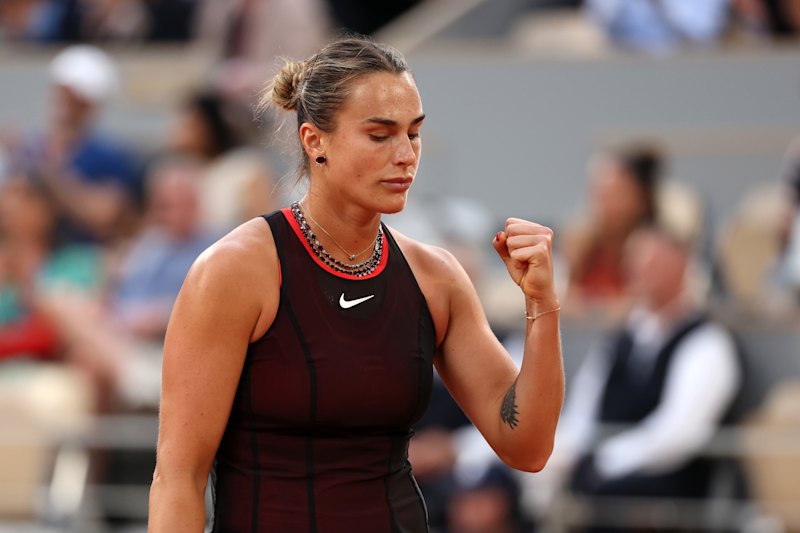
Both players demonstrated impressive statistics, hitting more winners than unforced errors. The match featured distinct periods of momentum shifts and compelling rallies, with the first set, in particular, being a fiercely contested affair.
Osaka, sporting a striking bronze dress as a follow-up to her distinctive jellyfish-inspired outfit at the Australian Open, initially took a 2-0 lead after Sabalenka committed a double fault on a crucial break point. However, the 28-year-old Belarusian quickly responded, levelling the score with a powerful inside-out forehand winner in the subsequent game.
The match evolved into a captivating baseline duel, with both players exchanging powerful groundstrokes and showcasing highlight-reel shots. Sabalenka’s development as a player was evident in her strategic use of exquisite drop shots, which effectively complemented her formidable power game.
The ninth game of the match, played on Osaka’s serve, encapsulated the intensity and skill required to win points on this memorable evening. A spectacular Sabalenka backhand winner followed a period where Osaka had stepped into the court and struck a forceful forehand. Just two points later, Osaka responded with a blistering backhand drive volley winner, followed by an equally impressive inside-out forehand winner. Osaka managed to hold serve after a couple of deuces, but her serve faltered in the following game, a lapse that Sabalenka capitalised on to secure the first set.
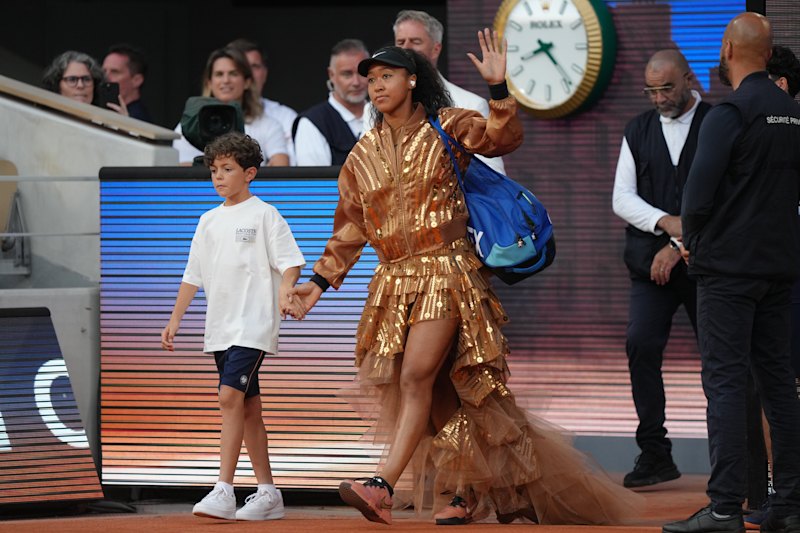
With the first set in hand, Sabalenka appeared to gain further momentum. In the third game of the second set, Osaka managed to navigate out of a 0-30 deficit and fend off a break point two games later, but the tide of the match was gradually turning against her.
Her final significant opportunity to break Sabalenka’s serve came in the ensuing game. The top seed was forced to dig deep, reaching deuce twice, including once after a stunning Osaka backhand return that narrowly kissed the sideline.
Sabalenka ultimately held firm and then seized her opportunity. In what was arguably the point of the match, she unleashed a barrage of two thunderous backhands in opposite directions before stepping in to hammer a forehand. Osaka responded with a challenging low volley, which Sabalenka expertly retrieved with aplomb. This crucial break of serve put Sabalenka in a commanding position, and Osaka was unable to find a way back into the match.
Sabalenka now advances to a quarter-final clash against the unseeded Russian Diana Shnaider, who impressively defeated Madison Keys in three sets. In another notable upset, another Russian player, Anna Kalinskaya, outlasted Austria’s Anastasia Potapova in a gruelling three-set encounter, securing her spot in the last eight. She will face Polish qualifier Maja Chwalinska, who eliminated the last remaining French hope, Diane Parry.
On the men’s side of the draw, Matteo Berrettini secured a significant victory over Argentine Juan Manuel Cerundolo, exacting a form of revenge for his compatriot Jannik Sinner. Berrettini’s win sets up an all-Italian quarter-final against Matteo Arnaldi, who completed a remarkable comeback victory in a five-and-a-half-hour epic against American Frances Tiafoe. Fourth-seeded Canadian Felix Auger-Aliassime, the highest-ranked player remaining in the top half of the draw, comfortably advanced and will face Italian Flavio Cobolli in his quarter-final match.


