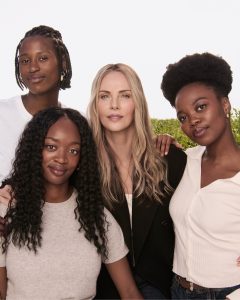
Charlize Theron: Championing Change and Empowering Futures in South Africa
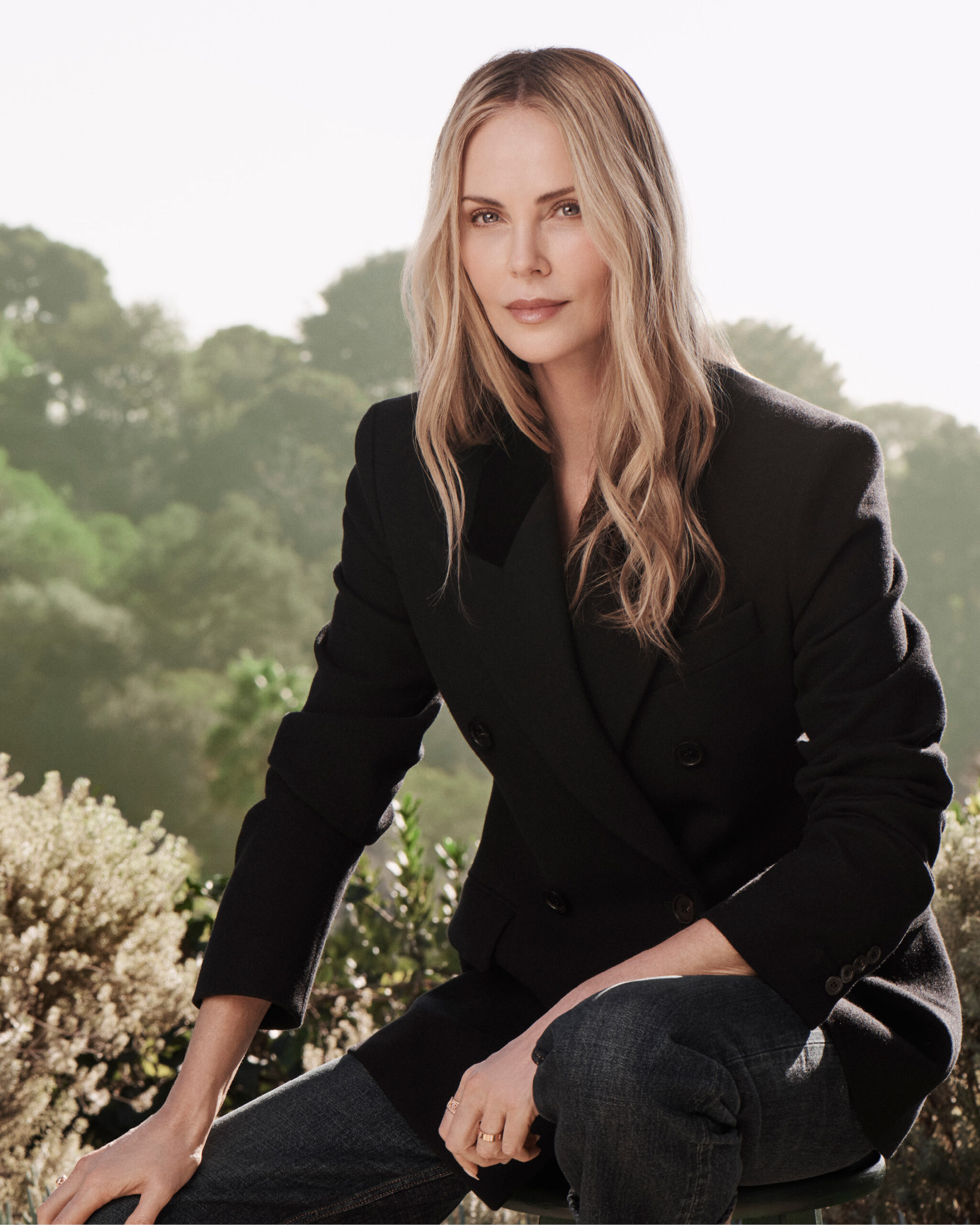
South Africa, a land of breathtaking beauty and stark contrasts, grapples with deeply entrenched social challenges. From the vibrant arts scenes and bustling waterfronts of Cape Town to the sprawling informal settlements and townships, the nation is a tapestry woven with threads of progress and persistent struggle. It is within this complex landscape that Academy Award-winning actress and Dior Beauty Ambassador Charlize Theron has dedicated herself to championing the most vulnerable populations, particularly women and girls.
Theron, a proud daughter of South Africa, understands the nation’s complexities intimately. Witnessing the dire realities faced by many, including alarmingly high rates of femicide – five times the global average – and a pervasive rise in gender-based violence, she felt a profound calling to action. This deeply personal commitment led to the establishment of the Charlize Theron Africa Outreach Project (CTAOP) in 2007.
“We wanted to do something that we really felt was needed, instead of getting in the way of what other people were already doing,” Theron explains, reflecting on the organisation’s genesis. Initially focused on HIV and AIDS prevention, CTAOP has evolved significantly, forging vital partnerships with grassroots organisations across the continent. The project’s core mission is to identify critical needs and support existing initiatives that are already making a difference. By providing crucial funding and additional support, CTAOP empowers local leaders to drive meaningful change and cultivate the next generation of change-makers.
Nurturing Future Leaders Through Education
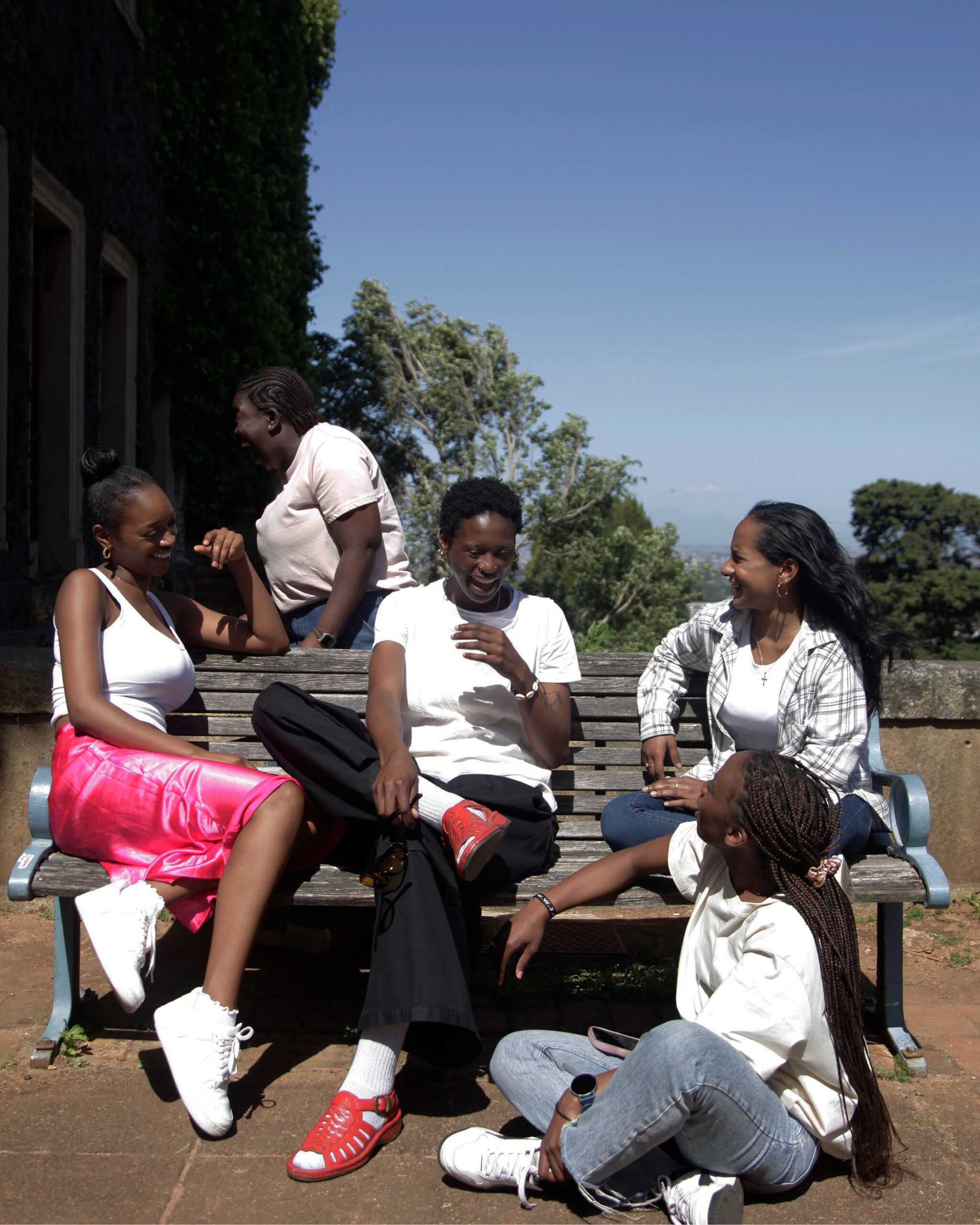
A cornerstone of CTAOP’s work is its scholarship program, which offers a lifeline to bright young minds eager to pursue higher education. Visiting the University of Cape Town, Theron expressed her deep affection for the initiative: “I love this program! Because I have personally seen what powerful young people are capable of.”
These scholarships are awarded to young women identified by various local programmes and associations, enabling them to cover their university tuition and living expenses. For students like Onesimo, the impact has been transformative. “I was always worried about school fees, and now throughout my studies, I’ve never had to worry about tuition, or whether I would go to bed hungry,” she shares.
The criteria for qualification are rigorous, demanding not only academic excellence and dedication to completing a degree but also strong leadership qualities and a genuine passion for giving back to their communities. The students are required to submit essays that often reveal the depth of their lived experiences. Miché recalls the opening lines of her essay: “I come from shootings in my neighborhood. I come from little girls and little kids running in the streets barefoot. I come from young mothers tirelessly working for their families. I come from hardworking black women.”
The students’ journeys from challenging beginnings to radiating confidence are a testament to the program’s success. They arrive with a goal, but the scholarship provides them with the invaluable respite from mere survival, offering the time and space to explore their identities and aspirations. Onesimo, who once dreamed of opening a library to offer an alternative to crime for children in her community, now also aspires to become a pathologist, contributing to disease diagnosis and treatment.
Siphosihle’s story highlights another critical issue: the vulnerability of children without birth certificates, which are essential for accessing education, healthcare, and employment. Their initial goal was to advocate for identification papers for children in townships, preventing them from ending up on the streets. Having successfully helped their own “little brother” obtain his documents and enroll in school, Siphosihle has now shifted their focus to their studies in gender and transformation, undertaking advocacy and research on marginalised identities. They aim to return to schools and equip queer youth with self-advocacy skills, creating safe spaces and combating the stigma and violence they face.
Miché, a budding storyteller, is inspired by the rich narratives of her community, particularly the stories of those who lived through apartheid. Her ambition is to break into the film industry as a writer and director, and then use her platform to empower young people from her community to pursue their own creative aspirations. This mirrors Theron’s own journey of achieving success and returning to uplift her community.
Dior Beauty’s Global Partnership for Impact
The scholarship program is one of two initiatives supported by Dior Beauty, reflecting a deep-seated commitment to CTAOP’s mission. Theron’s consistent advocacy for her foundation led Dior Beauty to explore ways to expand their support. Cécile Lochard, Sustainability Director at Dior Beauty, recalls their immersive experience: “It gave us the opportunity to go on the ground in South Africa, to explore and get a better understanding of the remarkable real-life impact that CTAOP was having on local organisations.”
Ashlee George, Executive Director of CTAOP, emphasises the organisation’s long-term commitment and collaborative approach. “For Charlize and the team, this has always been a long-term commitment. A core piece of our work is that we always knew we wanted to work with community leaders. They know the needs and challenges better than anyone. Our role is to figure out how we can best support them as they envision and execute the dream they have for their community.”
Philisa Abafazi Bethu: A Beacon of Hope
During their visit, representatives from Dior Beauty and CTAOP explored Philisa Abafazi Bethu (PAB), an organisation led by the formidable Lucinda Evans. PAB operates a remarkable sanctuary offering a safe haven for children and women in the heart of a township.
Cécile Lochard describes the visit as a “revelation,” highlighting Lucinda Evans as “a powerful woman and one of the strongest voices in her country.” The presence of a functional therapeutic garden, the Mandala garden, further solidified their commitment to support. Lucinda explains that the garden, with its medicinal plants, embodies the organisation’s name, which translates to “Heal Our Women.”
CTAOP first partnered with PAB during the COVID-19 pandemic, when the township’s already dire situation was exacerbated. Lucinda’s immediate need was for food to bring peace to families facing the heightened risk of domestic violence. CTAOP responded by supporting PAB’s efforts to feed three thousand people daily for nineteen months.
The PAB compound, a striking contrast to its impoverished surroundings, features brightly coloured repurposed shipping containers that serve as safe spaces for children and the elderly. A unique “Baby Box,” resembling an oversized mailbox, offers a lifeline for mothers who cannot keep their newborns, anonymously placing them for care. This initiative, though facing opposition from local authorities, has already saved multiple lives.
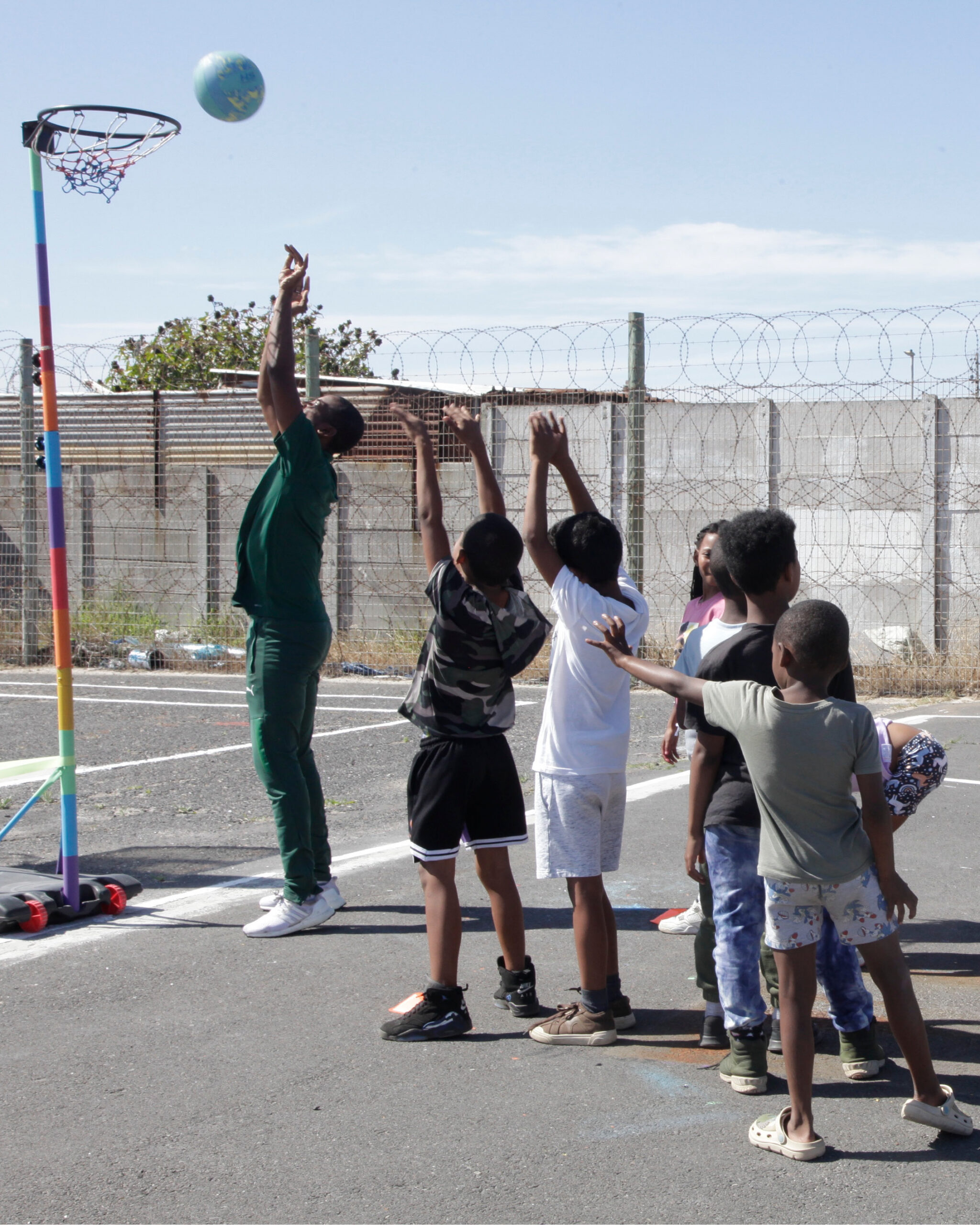
PAB runs two primary programs: an after-school program providing meals, safe play, and crucial group therapy for children to process trauma and develop self-regulation skills. Lucinda stresses the importance of art and music therapy in helping children cope with violence, build resilience, and learn to identify and report abuse.
Additionally, PAB offers an emergency refuge for LGBTQIA+ youth, who often face rejection and violence in their homes. The program also includes a day centre for the elderly, providing social engagement and opportunities for supplementary income through crafts and gardening. This initiative addresses the vulnerability of older individuals who may be abused by family members and are often reluctant to report it. Theron notes that a generation was lost to AIDS, leaving many children to be raised by grandparents ill-equipped for the task.
The centre hosts approximately 140 elderly individuals daily, primarily single women, who find solace and community, escaping the greater risks of isolation. The joy of a dance class, a testament to South Africa’s vibrant spirit, exemplifies the lively atmosphere.
Lucinda’s vision for PAB is to serve as a blueprint for other communities, an organisation known for its inclusive approach to healing, one household at a time.
Charlize Theron on Her Advocacy and South Africa’s Future
In an interview with Marie Claire, Charlize Theron elaborated on her motivations and the impact of CTAOP.
Marie Claire: How did you start the Charlize Theron Africa Outreach Program (CTAOP)?
Charlize Theron: We first got involved in the HIV and AIDS space in 2007. South Africa, unfortunately, is still at the centre of the disease. And back then, we knew so little, it caused so much fear. Once I was in America, I saw that there were so many solutions that were simply not reaching places like Africa. There were some emergency measures, people who were already HIV positive were kind of cared for. But nobody was really investing any time, energy or finances towards prevention. A whole generation was wiped out with AIDS. We had a clear vision: step in and give young people information and resources to help them save their own lives.
MC: What pushed you to take that first step towards action?
CT: I think I just found myself in a position where I could do this in an effective way. When you set out to do something, it’s not always what you thought it was going to be. We went in with all these great aspirations of wanting to effect change. And then you realize that you’re just a drop in the bucket.
MC: What made you keep going?
CT: I remember very vividly going back eight months later after we launched this program and we were in a tent outside, where an older lady was doing an educational class on prevention: she was showing the difference between a male and a female condom. And a 16-year-old boy raised his hand and asked if a female condom can be used for gay sex. And I almost fell off my chair. In that moment, I realized that if we save that young man’s life, then this does matter. Because I know for a fact that five years ago, he would have never stood up and asked that question. I was raised in South Africa, I understand how conservative it is. So, if that’s what we were doing, building confidence in young people to take agency, then we were doing something real. That’s what out emblem stands for: the drop and the ripple effect.
MC: How does your fame factor into the work that you do with CTAOP?
CT: I think it’s both negative and positive. Anytime celebrities attach themselves to something, people tend to not take it very seriously. But I look at it as a glass half full. I use the stages that are given to me to amplify the stories and the voices that I hear through CTAOP. Advocacy is key. There’s the work on the ground that these female leaders are accomplishing, and it’s really hard, so they need advocates. It’s a huge reason why I decided to be a UN Messenger of Peace. I knew that that would be important. You want as many allies as you can get.
MC: Was this advocacy work something you’d always wanted to do?
CT: I’ve been part of that world since I was 19 years old. It’s really hard to grow up in a place like South Africa, to see the unnecessary suffering around you and not feel like you have to try and do something. Like, you can’t ignore it: it’s right there. I started out in women’s rights. 30 years ago, South Africa was the rape capital of the world. It’s not something to be proud of, not something you want to be number one at. I was part of an anti-rape campaign that caused quite an uproar. It became an international story, which was great, because then it had a real effect. And when I saw that, I realized how I could do something without getting in the way, by putting an amplifier on what we were already trying to do.
MC: How do you feel that South Africa has evolved since then?
CT: You know, we take four steps forward and then sometimes 10 steps back. And right now, we’re about 20 steps back. Look at statistics, the femicide rate in South Africa is five times higher than any other country globally. That’s shocking. And that isn’t even an accurate number because I know of so many cases that go undocumented, women who just disappear and nobody cares. Women’s lives are not valued as much as other lives. And women of color tend to be valued even less. That’s global, but it’s very prevalent in South Africa right now. Apartheid was incredibly damaging. But everyone thought that there was a silver bullet: this amazing man, Nelson Mandela, who was going to be freed and finally be the leader South Africa had always needed and solve all its problems. So, the international powers moved out just after the election and left us to our own demise. The violence that started then never fully stopped.
MC: Why did CTAOP create the Youth Leadership Program?
CT: It’s one of my favorite programs. Great potential lies everywhere, but in the places where our partners work, that potential is not given opportunity. If you really want to change the cornerstone of a lot of the issues, you have to start with the people who are willing to fight. That’s the future.
MC: Lucinda’s safe space brought down crime statistics in that area, just by being there…
CT: Yes, because it shows that people are caring. A lot of violence keeps happening because people think there are no consequences, which means nobody cares. But when you see safe spaces and people advocating for these girls, you realize that people are paying attention. It’s a comprehensive care structure that affects entire communities.
MC: Has your continued involvement in CTAOP changed you as a person?
CT: I’ve never lived in a bubble. And I think when you live a life like that, you can be very overwhelmed by the problems that you see. CTAOP has given me a way to not feel that way, to feel like: sure, there’s a lot of shitty things happening in the world right now, but I can do something that I know is effective. To me that’s incredibly hopeful. Because I think we all need hope. Without hope, we die.
MC: What are your hopes for South Africa and for CTAOP?
CT: My hope for South Africa is to be able to live up to the potential that the country naturally has. It’s one of the most beautiful places that you’ll ever go to. And South Africans are a stunning people. They’re special in the sense that they have endured so much and yet there is still this light, this resilience, this hope in some of the darkest moments. And my hope is that those people get what they deserve because they’ve endured a lot, and that it happens fast.
MC: And empowering female leadership and sisterhood is part of that?
CT: Obviously! We’re the majority of the population. We’re incredibly powerful if we come together. I think it’s important for us to talk about it, because it can give a lot of women who have all the right intentions a direction. You can go online, read about CTAOP and now you have access to a place where you can help. You can become part of that sisterhood. You can do this.
charlizeafricaoutreach.org