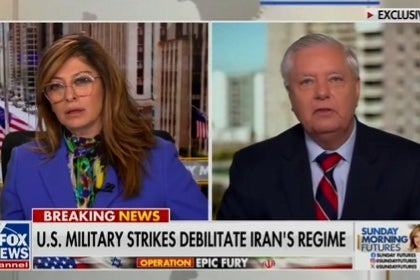
Senator Lindsay Graham has issued a stark warning to the Iranian government, predicting a dire two weeks ahead and suggesting the U.S. is poised for significant military action. Speaking on Fox News, Graham asserted that the U.S. would “blow the hell out of these people” and described the current Iranian regime as being in a “death spiral.” He implied that both Israel and the United States are preparing for actions that will bring about the downfall of the regime.
“You just wait to see what comes the next two weeks,” Graham told host Maria Bartiromo. When pressed for clarification, he elaborated, “We’re going to blow the hell out of these people. This regime is in a death throe now, it is gonna be on its knees, it’s going to fall, and when it falls we’re going to have peace like no other time, we’re going to have prosperity unlike anyone could ever imagine. Peace brings prosperity. You can’t do it by talking.” He also took a jab at Democrats, stating they “didn’t do a damn thing” while commending the service members.
Escalation and Regional Conflict
Graham’s forceful statements have been interpreted by some as an indication that the Trump administration is planning a military escalation against Iran in the immediate future. This could also signal a confirmation of the White House’s consideration of further military actions initiated by President Trump.
Adding to the intensity of his pronouncements, Graham also alluded to other potential U.S. foreign policy moves. He pointed to a “Free Cuba” hat he was wearing and declared, “The liberation of Cuba is upon us. We’re marching through the world. We’re clearing out the bad guys. Cuba is next.”
The current conflict has already had devastating consequences across the region. Reports indicate that strikes in Iran have resulted in over 1,000 fatalities. The death toll continues to rise as more nations become involved in what has evolved into a regional war. Iranian strikes have targeted countries hosting U.S. forces and diplomatic missions. Furthermore, hostilities between Israel and Hezbollah have reignited, with significant rocket fire from Lebanon and retaliatory Israeli strikes causing hundreds of casualties in that area.
The U.S. military has also sustained losses. The Pentagon has confirmed the deaths of six service members in a strike on an operations center in Kuwait, with a seventh service member’s death in the region confirmed shortly thereafter.
Senator Graham’s Influence and the Justification for War
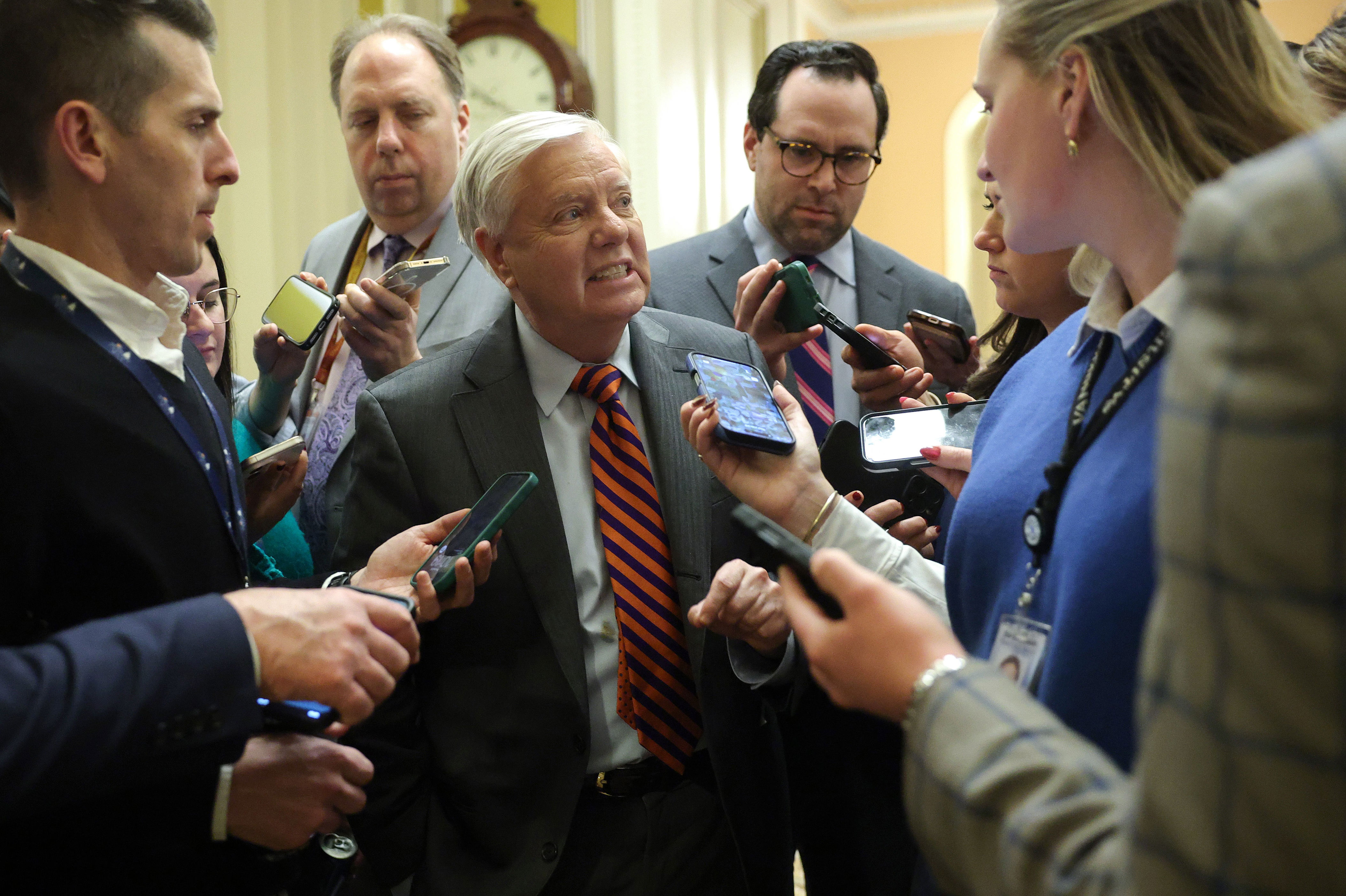
Senator Graham, a vocal critic of the Iranian regime, has consistently advocated for the use of military force to oust its leadership. His involvement in the current conflict appears to be more profound, with reports suggesting he played a role in convincing the White House to pursue military action, both directly and through advice offered to Israeli officials, including Prime Minister Benjamin Netanyahu during his visit to Mar-a-Lago in December.
To bolster his arguments, Graham reportedly held numerous meetings with members of Israel’s intelligence services. He shared with The Wall Street Journal that these meetings provided him with information not disclosed by his own government. This level of influence, coupled with claims that the Trump administration was prompted to initiate attacks based on intelligence about imminent Israeli military plans, has led to questions from both sides of the political spectrum regarding the administration’s evolving justifications for engaging in what it sometimes still denies is a war.
Shifting Explanations for Military Action
Administration officials have presented a variety of reasons for the necessity of the strikes. These actions were reportedly ordered just one day after negotiations between Iran and the U.S. in Geneva, Switzerland, where both sides publicly agreed to further talks.
The justifications offered have varied widely. Some explanations have centered on the perceived imminent threat of Iran developing nuclear weapons or acquiring nuclear materials. Others have suggested that Iran’s non-nuclear ballistic missile program was nearing a “point of no return,” making future action against its nuclear program infeasible. Still other rationales have focused on Iran’s refusal to negotiate its non-nuclear weapon stockpiles and its continued support for regional militant groups like the Houthis and Hezbollah.
President Trump has not outlined any clear endgame for the conflict with Iran. He has consistently rejected proposals to resume diplomatic talks, and the prevailing U.S. rhetoric has focused on demanding “unconditional surrender” from the Iranian leadership.
In a recent public statement on Saturday, President Trump criticized U.K. leader Keir Starmer regarding the conflict, asserting that it was largely resolved and questioning the ally’s belated support. Trump posted on Truth Social, “The United Kingdom, our once Great Ally, maybe the Greatest of them all, is finally giving serious thought to sending two aircraft carriers to the Middle East. That’s OK, Prime Minister Starmer, we don’t need them any longer – But we will remember. We don’t need people that join Wars after we’ve already won!”