

Minimum Wage Hike: Government Defends Decision Amid Inflation Fears
The federal government has firmly dismissed concerns that a recent increase to Australia’s minimum wage could exacerbate inflation and potentially trigger further interest rate hikes. The Fair Work Commission’s decision to boost the minimum wage by 4.75 per cent, pushing it above $1000 per week for the first time, has been met with both support and apprehension.
Effective from July 1st, the new national minimum wage will stand at $1004.90 per week, equating to $26.44 per hour. This adjustment aims to provide much-needed relief to low-income earners grappling with the escalating cost of living.
Economic Concerns and Expert Opinions
However, some economic analysts have voiced apprehension, suggesting that the wage increase could inject further momentum into inflationary pressures. This, they argue, might necessitate earlier and steeper interest rate rises from the Reserve Bank of Australia.
Financial services provider AMP, for instance, warned that “wage pressures will add to already sticky services inflation, as businesses pass on higher labour and input costs, which have remained elevated amid rising goods prices.” AMP projected a potential additional rate hike in November, which could see the peak cash rate reach 4.85 per cent. They also suggested the possibility of a rate rise occurring in June rather than August.
Government Reassurance and Rationale
The government has countered these concerns, expressing strong support for the Fair Work Commission’s ruling. Treasurer Jim Chalmers stated, “This is the pay rise that millions of Australian workers need and deserve. This is the sustainable wage increase that the government has called for, and we are pleased to see it delivered.” He emphasised the government’s view that “decent pay as part of the solution and not part of the problem.”
Minister for Employment and Workplace Relations, Amanda Rishworth, highlighted that under the current Labor government, the minimum wage has seen a significant annual increase of $12,000. She commended the Fair Work Commission for its thorough consideration of various economic factors, including current business conditions and global uncertainties, such as events in the Middle East.
Major Australian banks have also weighed in, largely reassuring the public that the minimum wage hike is unlikely to significantly alter the trajectory of interest rates. Westpac indicated that their preliminary calculations suggest “only a very small direct impact… and so it will not substantially add to the inflationary impulse.” Similarly, Commonwealth Bank stated that the decision “does not shift our broader view on the outlook for inflation and interest rates.” Both banks had previously anticipated a series of rate increases by the end of the year.
Unions and Business: A Divided Response
The Australian Council of Trade Unions (ACTU) welcomed the wage increase, acknowledging it as a positive step for low-paid workers. ACTU Secretary Sally McManus described it as a “great outcome” that would help workers keep pace with the cost of living and begin to get ahead. The new annual minimum wage now stands at $52,254.80, an increase of nearly $3000 per annum from the previous $49,296. The hourly rate has risen by $1.49.
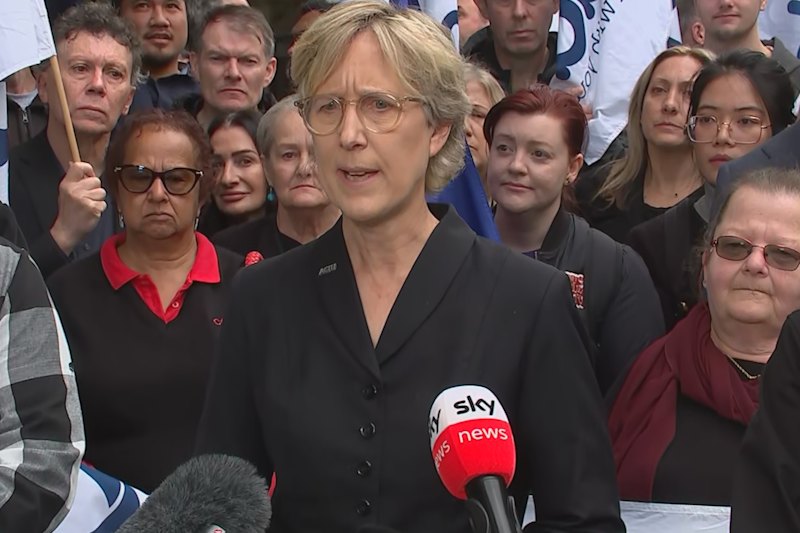
However, the ACTU had advocated for a larger increase of 6 per cent, which they believe would have more effectively addressed the erosion of real wages due to inflation. McManus expressed a desire for the Fair Work Commission to implement changes that would allow workers to “catch everyone up immediately,” acknowledging that the commission’s approach is more gradual.
Conversely, business groups have expressed strong reservations. The Australian Industry Group had proposed a more modest increase of 3.8 per cent, arguing that the 4.75 per cent rise is “significantly higher than expected inflation, and risks disemployment by driving higher wage costs into businesses already under strain from the crisis.” They acknowledged the cost-of-living pressures but cautioned that matching wages to what they perceive as a temporary inflation spike could have detrimental long-term effects on an already weakening economy.
Australia’s Minimum Wage in a Global Context
Australia’s minimum wage is notably high on a global scale. The new rate of $26.44 per hour is approximately $16 higher than the federally mandated minimum wage in the United States, which stands at $US7.25 ($10.12) per hour. It’s worth noting that several US states have significantly higher minimum wages than the federal rate, with California’s currently at $US16.90 ($23.59) per hour.
Globally, Luxembourg offers the highest minimum wage, at €791.25 per week, which translates to approximately $1284.99 per week. New Zealand’s minimum wage is set at $NZ23.50 per hour, or $19.45 in Australian dollars, allowing New Zealanders on the minimum wage to earn around $NZ1017.50 ($842.01) weekly.


