
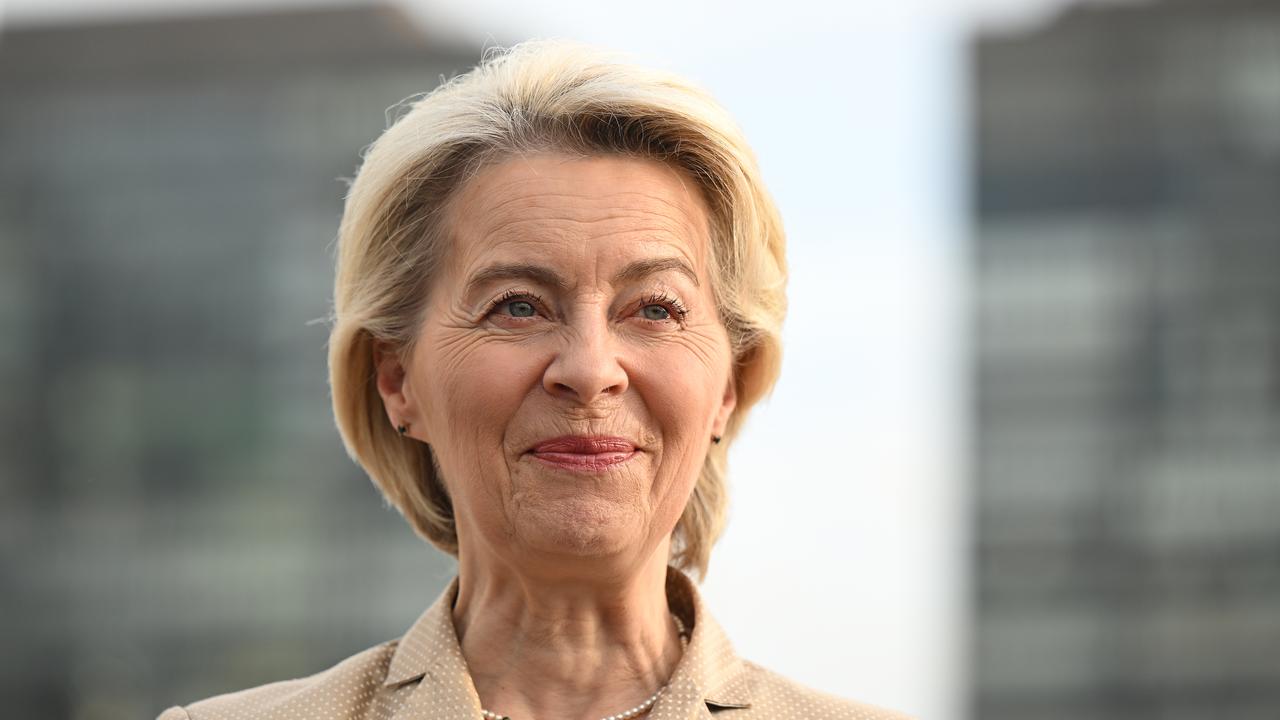
EU President’s Landmark Australian Visit: Security and Trade on the Agenda
The European Commission President, Ursula von der Leyen, is set to embark on a significant three-day visit to Australia, a trip widely anticipated to culminate in the signing of a pivotal security agreement and a long-awaited free trade deal. Arriving on Monday, President von der Leyen will engage in high-level discussions with Australian Prime Minister Anthony Albanese in Canberra on Tuesday, marking her inaugural official visit to the nation in her current capacity. This encounter will also represent the seventh meeting between the two leaders, underscoring the strengthening diplomatic ties between Australia and the European Union.

Accompanying President von der Leyen will be EU Trade Commissioner Maros Sefcovic, a clear indication of the imminent finalisation of a free trade agreement. This development follows a period of protracted negotiations, with previous talks having encountered significant hurdles. Mr Sefcovic’s presence is noteworthy, as he has previously accompanied the President for the signing of other major international trade pacts, including a significant deal with India earlier this year. The President’s initial itinerary for Australia was scheduled for March, but was regrettably postponed due to the ongoing conflict in Iran, highlighting the complex geopolitical landscape influencing international diplomacy.
Unpacking the Free Trade Agreement: Key Sticking Points and Potential Resolutions
Discussions surrounding the free trade agreement have, in the past, centred on several key areas of contention. A primary focus has been the quota for Australian beef exports to Europe that would be exempt from tariffs. Simultaneously, the conditions applied to European imports into Australia have also been a significant point of negotiation, with concerns raised by some Australian producers regarding their ability to meet stringent regulatory requirements.
Australia had initially sought a substantial quota of 30,000 tonnes of beef for tariff-free export. However, European negotiators reportedly attempted to reduce this figure, facing resistance from domestic farming lobbies within Brussels. This pushback from European farmers underscores the delicate balance required to forge such comprehensive trade agreements.
In parallel, Australia has been reviewing its luxury car tax. This tax imposes a significant levy of 33 per cent on vehicles exceeding a certain price threshold – $80,000 for conventional vehicles and $91,000 for fuel-efficient models. The European Union has voiced concerns that this tax may be disadvantaging its automotive manufacturers, particularly as the Australian market faces increasing competition from more affordable vehicles originating from China.
The potential resolutions to the luxury car tax debate are varied. Options being considered range from a reduction in the tax rate to its complete abolition. Each of these scenarios carries distinct implications for Australia’s budget.
A Partnership for Peace and Prosperity
Prime Minister Anthony Albanese articulated the significance of the visit in a statement released on Wednesday, emphasising the shared values and collaborative spirit between Australia and the European Union. “Australia and Europe are friends and partners, working together to advance peace, security and economic prosperity,” Mr Albanese stated. He further highlighted that President von der Leyen’s visit presents a “vital opportunity to continue that important work.”
The upcoming discussions are expected to not only solidify economic cooperation but also to deepen strategic alignment on critical global issues. The potential for a new security agreement signals a commitment to enhanced collaboration in areas such as regional stability, defence capabilities, and the promotion of democratic values. This visit by President von der Leyen is poised to be a defining moment in the ongoing evolution of the Australia-EU relationship, paving the way for a more integrated and robust partnership in the years to come. The prospect of concluding both a trade deal and a security pact within a single visit underscores the high level of diplomatic engagement and the mutual desire to strengthen bilateral ties.


