

Australia, a land Down Under, is renowned for its unique and often formidable wildlife. Among its most fascinating, and at times feared, inhabitants are its snakes. While the continent is home to a significant number of snake species, the reality is that most encounters are harmless, and fatalities are exceedingly rare. In fact, you’re more likely to be stung by a bee than bitten by a deadly snake.
Australia boasts approximately 140 snake species, with a substantial portion of these being venomous. The most dangerous are generally found within the front-fanged group, a category that includes iconic and highly potent species like the tiger snake, brown snake, death adder, and the mulga or king brown snake, alongside certain sea snakes. However, it’s crucial to remember that not all Australian snakes possess venom, and many are vital contributors to the health of our diverse ecosystems.
Ranking Australia’s Most Dangerous Snakes
While snake bites are uncommon, and deaths even rarer, understanding the potential risks associated with certain species is important for safety and awareness. Here’s a look at six of Australia’s most formidable snakes, ranked from most to least dangerous based on their venom potency and potential threat:
1. Eastern Brown Snake (Pseudonaja textilis)
The Eastern brown snake is widely regarded as one of Australia’s most venomous snakes. Despite its potent venom, it possesses relatively small fangs compared to other venomous snakes on the continent. This slender serpent typically exhibits a glossy appearance, with colours ranging from light to dark brown. Some individuals may also sport subtle light stripes along their bodies. Its head is notably small and distinct from its neck, featuring medium-sized eyes with a characteristic brow bridge, and an iris that often appears orange.
The venom of the Eastern brown snake is exceptionally fast-acting, capable of causing death in less than half an hour. Tragically, this species is responsible for the highest number of snakebite fatalities in Australia, underscoring its significant threat.
2. Inland Taipan (Oxyuranus microlepidotus)
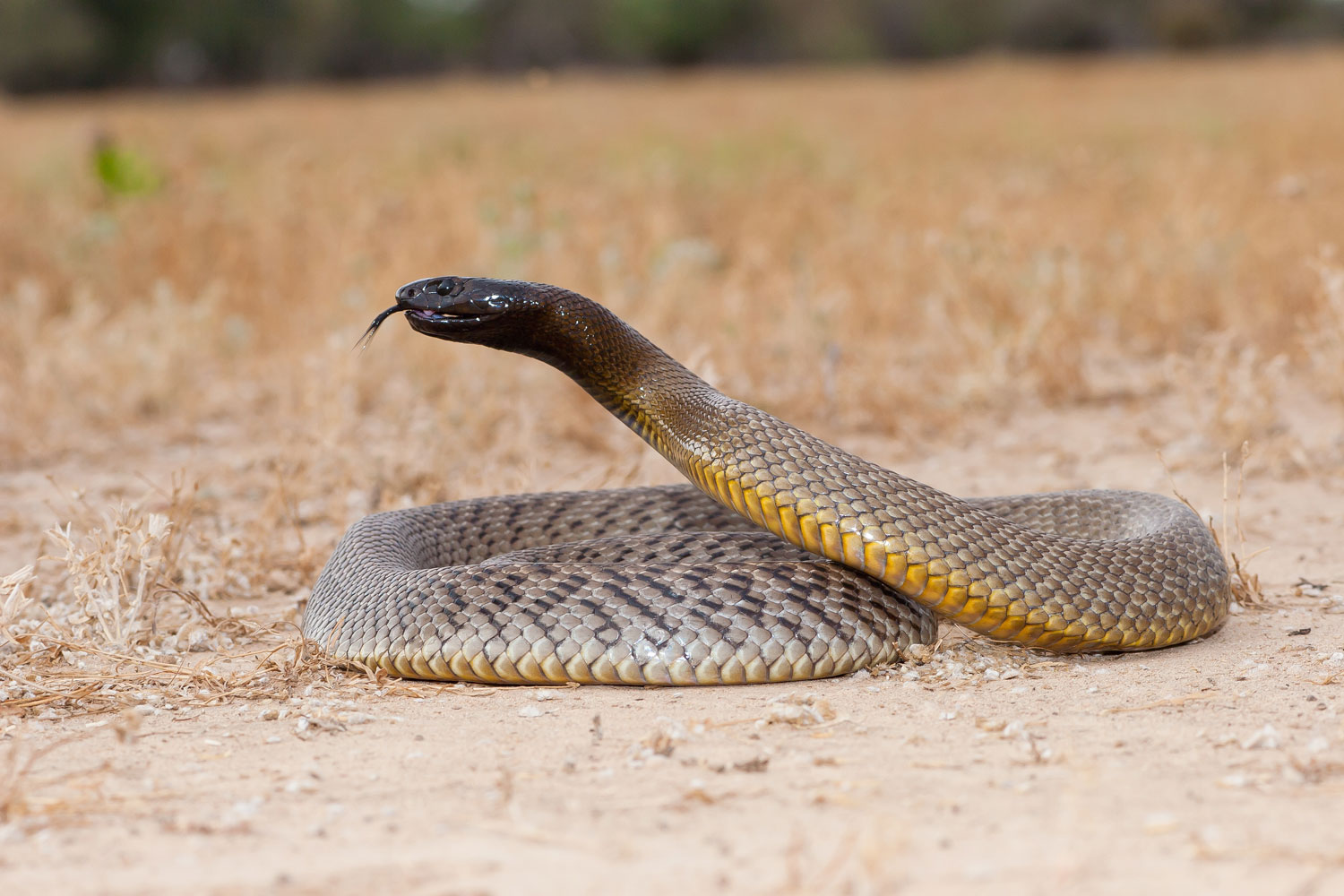
Known scientifically as Oxyuranus microlepidotus, the Inland Taipan is a slender snake that can reach lengths of up to 1.8 metres. Its scales are smooth, and its upper body typically displays colours from olive to light brown, with a paler underside. This highly venomous snake is also known for its ability to change colour seasonally. The Inland Taipan’s head is almost rectangular and often darker than its body.
The venom of the Inland Taipan is considered the most poisonous in the world. It’s a complex cocktail that includes potent neurotoxins and a hyaluronidase enzyme, which accelerates venom absorption. This combination makes a bite from an Inland Taipan an immediate life-threatening emergency. Despite its fearsome venom, this snake is known for its generally docile nature and rarely poses a threat to humans. Thankfully, there are very few documented cases of bites, and all have been successfully treated due to rapid first aid and medical intervention.
3. Common Death Adder (Acanthophis antarcticus)
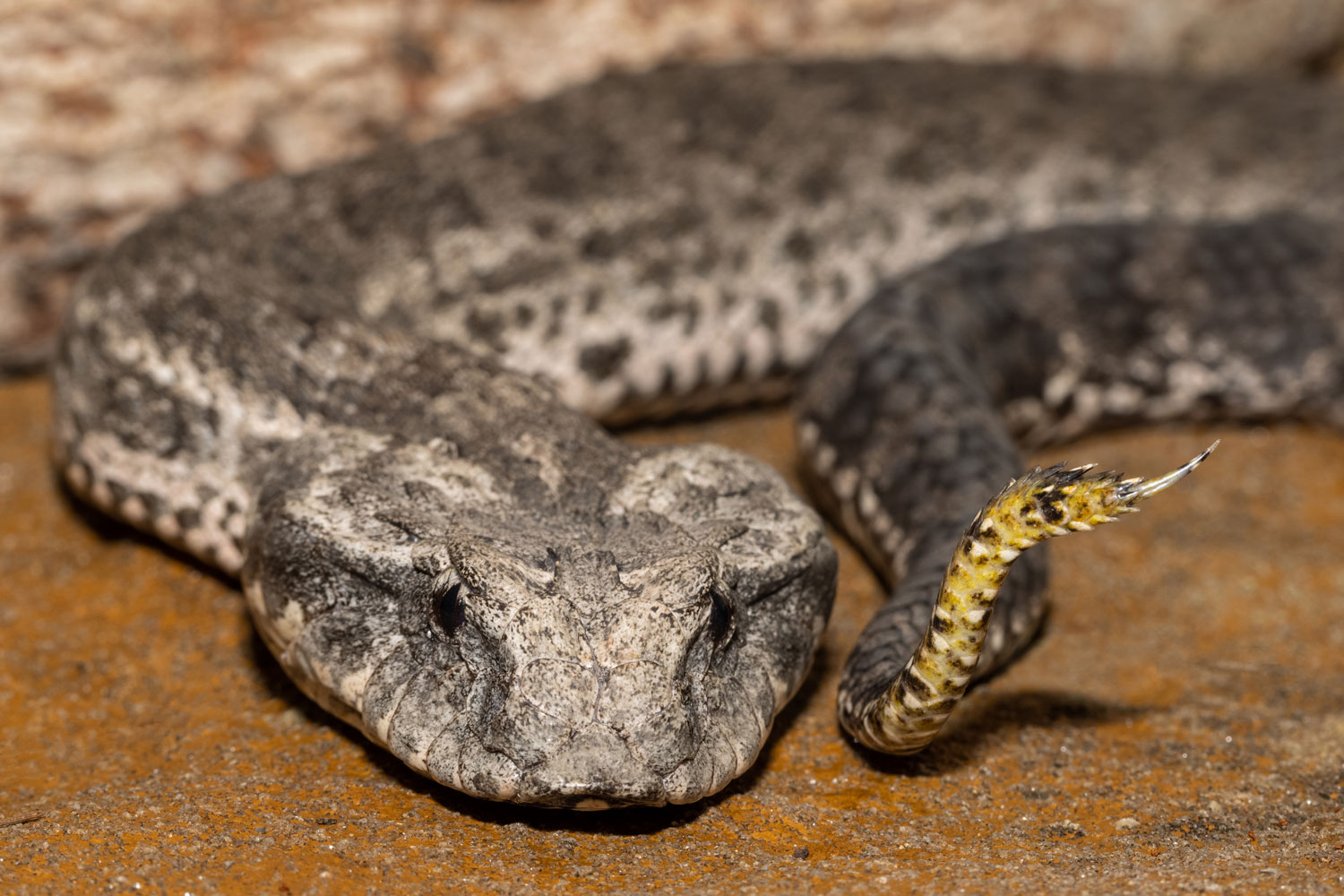
The Common death adder (Acanthophis antarcticus) is easily identifiable by its short, stout body and broad, triangular head, which helps distinguish it from other snake species. Its colouration varies widely, often mimicking its surroundings, and can range from reddish-brown to grey or black. Distinctive bands or crossbands, which can be pale, reddish, or cream-coloured, run along its body. A notable feature is that the tip of its tail is usually a different colour from the rest of its body. Despite its relatively short stature, the Common death adder possesses the longest fangs of any Australian snake, allowing for more potent and faster venom delivery.
4. Coastal Taipan (Oxyuranus scutellatus)
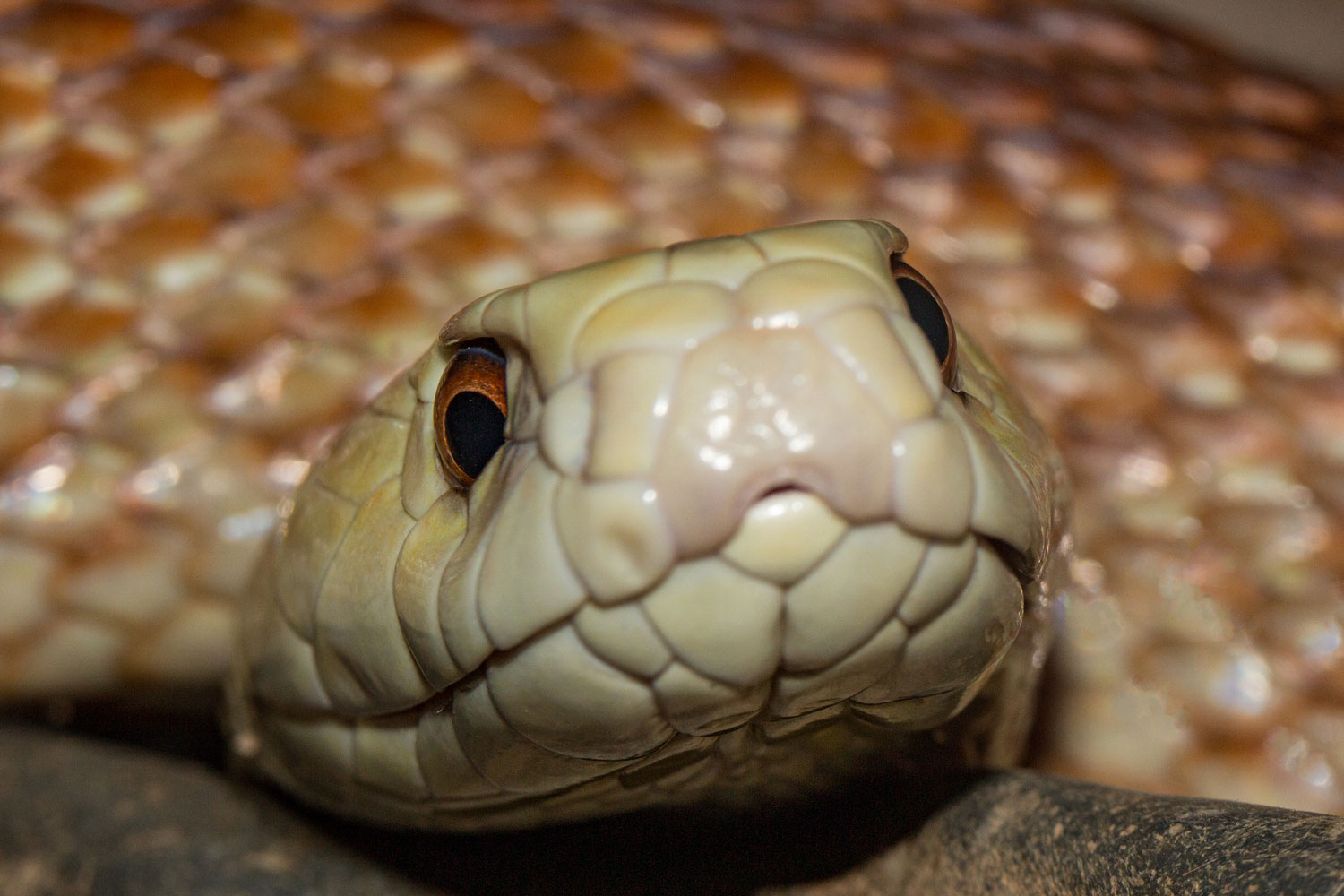
The Coastal Taipan (Oxyuranus scutellatus) is a medium to large snake with a robust build and a distinct, deep, rectangular-shaped head that stands out from its slender neck. Juvenile Coastal Taipans often have a paler head than their body, which darkens with age, although the snout typically retains a lighter colour. The body colour can vary significantly, from yellowish to reddish-brown, dark brown, or even almost black. This species also exhibits seasonal colour changes, appearing darker in winter and lighter in summer.
5. King Brown Snake or Mulga Snake (Pseudechis australis)
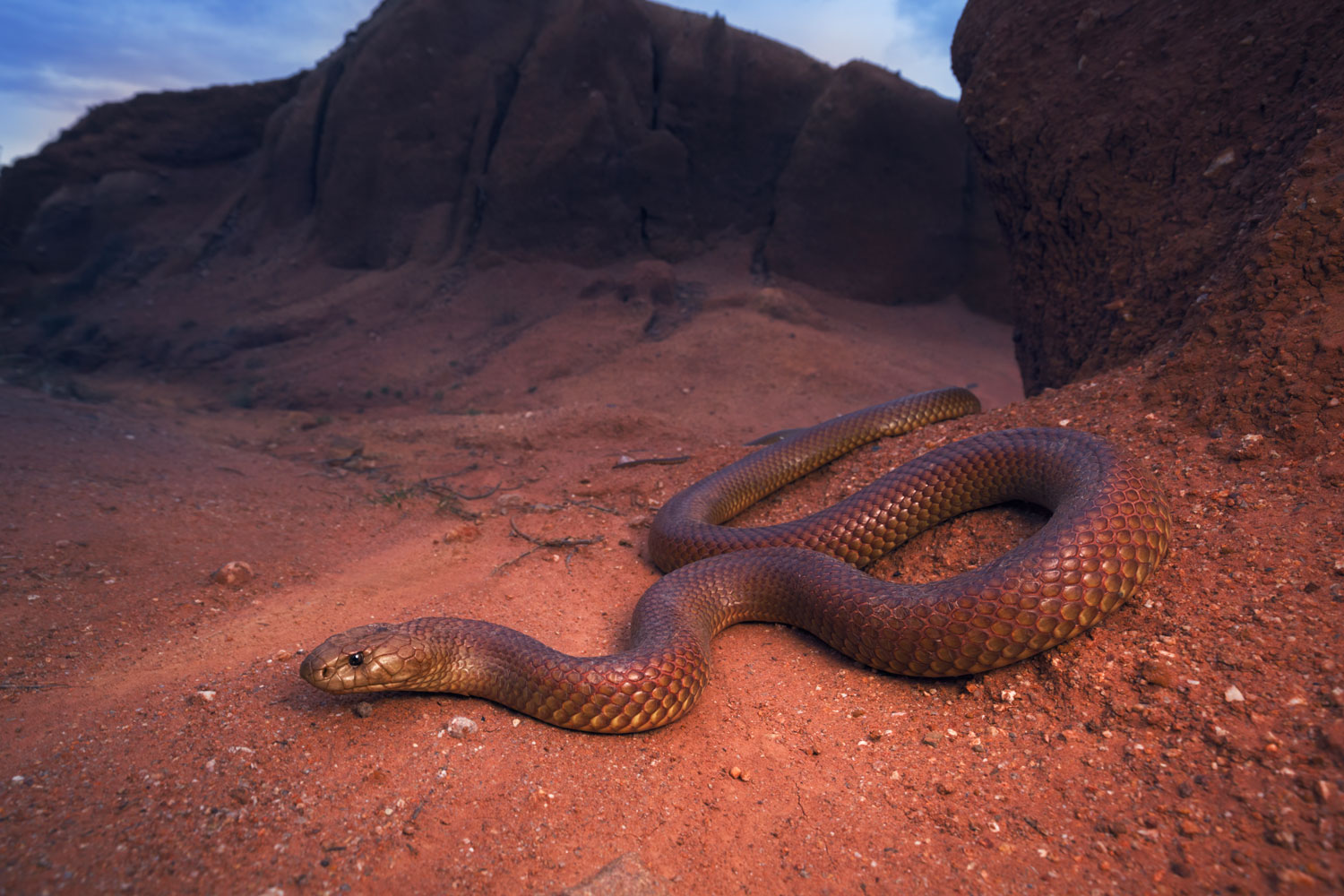
The King brown snake, also known as the Mulga snake (Pseudechis australis), is a large and highly venomous reptile native to Australia. Despite its common name, it belongs to the black snake family. These snakes are impressively long, often reaching up to 2.5 metres. They have a cylindrical body with smooth scales and typically display a colour palette of various shades of brown, tan, olive, or grey, with a lighter underside. The head is distinct from the body, often appearing wider with rounded or swollen cheeks. The tail can sometimes be darker than the head.
6. Eastern Tiger Snake (Notechis scutatus)
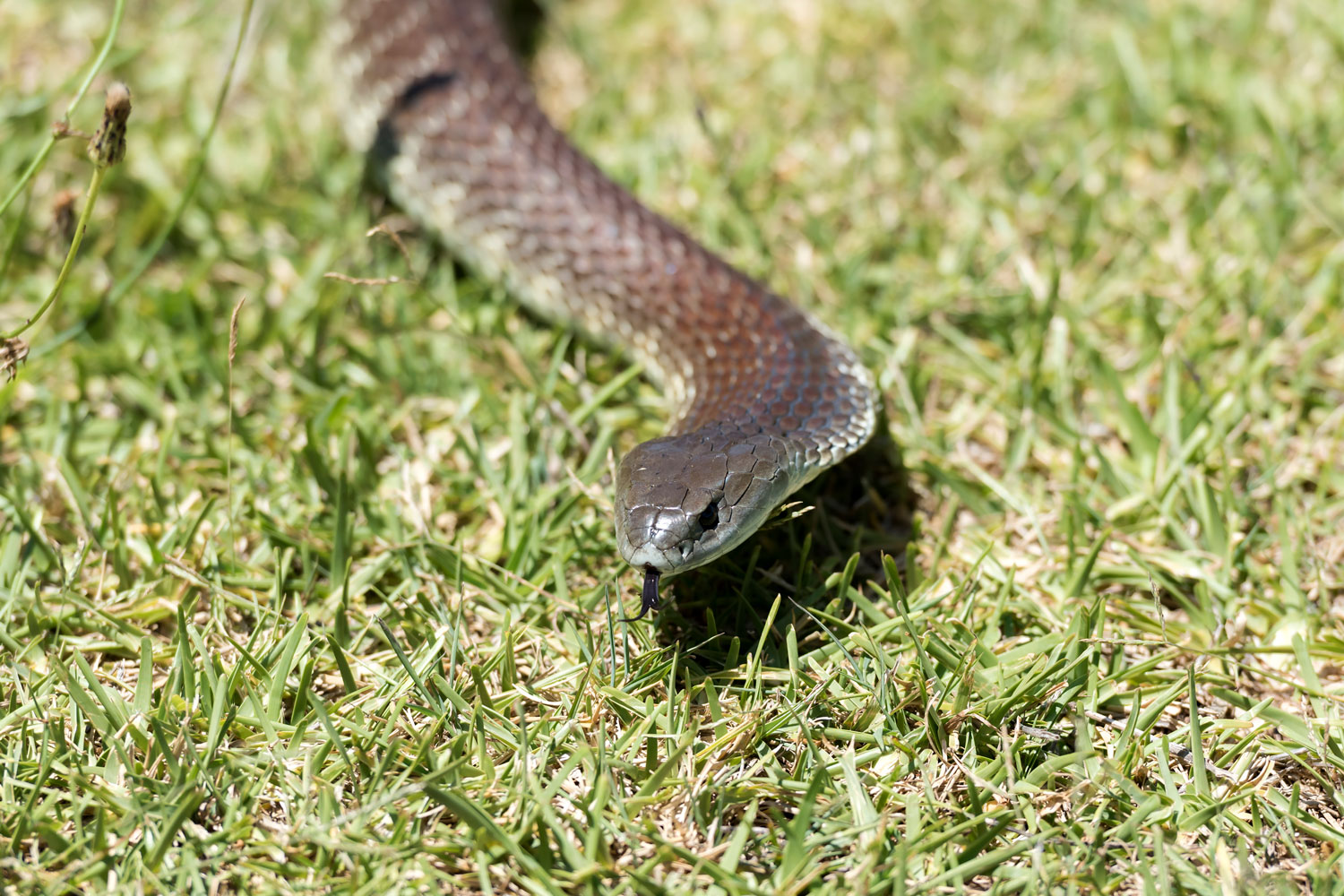
The Eastern tiger snake (Notechis scutatus) is characterised by its robust body and a distinctive pattern that varies among individuals, contributing to its tiger-like appearance. It often features alternating bands of yellow, olive, or brown. The belly is typically cream or yellowish, sometimes marked with dark spots. It possesses a broad, flattened head that is clearly distinct from its neck, and its eyes have round pupils. The venom of the Eastern tiger snake is potent and can be harmful if a person is bitten. While generally shy and preferring to avoid confrontation, they can become defensive and aggressive if threatened or cornered.
Identifying Venomous Snakes: A Complex Task
Distinguishing between venomous and non-venomous snakes in Australia is not always straightforward, and there are no universally applicable rules. However, some general indicators can be observed:
- Head Shape: Venomous snakes typically possess venom glands, which can contribute to a more squared-off head shape. While non-venomous pythons often have large, prominent heads, this is not a definitive rule.
- Size and Movement: In Australia, larger, slow-moving snakes that are often found in trees are generally non-venomous. However, exceptions exist, and some venomous species not typically known for climbing have been observed doing so.
- Fangs: Identifying fangs at a glance can be difficult. It’s important to know that all Australian elapids (venomous snakes) have front fangs, and the potency of their venom varies significantly, from mildly harmful to potentially lethal.
Understanding these characteristics can aid in awareness, but the safest approach when encountering any snake is to maintain a safe distance and avoid direct contact.


