
The Struggle of Kuta Beach: A Changing Landscape
Bali, a destination that has long held a special place in the hearts of Australians, is now facing an unexpected challenge. Kuta Beach, once a vibrant hub of activity and a symbol of tropical paradise, is now grappling with environmental changes that have left it looking desolate. While many attribute the decline to over-tourism, the reality is more complex.
Recent storms have caused significant damage to the beachfront, particularly to the jogging path that once lined the shore. This has resulted in steep, loose mounds of white rock, and the tides are steadily eroding the sand. The transformation has left locals and visitors alike in disbelief.
A New Reality for Local Surfers
Sandro, a 24-year-old surf instructor, has witnessed the changes firsthand. He points to the altered shoreline, where the once-pristine sand is now reduced to a thin strip. “People come, and then they just walk away,” he says.
Despite the challenges, there are still waves to ride. Sandro manages to attract a few customers on rented boards, though his income has dropped significantly compared to a few years ago. “The people who sell the drinks are worse off than me,” he adds, highlighting the broader economic impact on the community.
Memories of a bygone era

Australians David and Natalie Ritter, who have visited Kuta Beach for 34 years, recall a time when the beach was much different. “When we first came here, the beach extended out to that back break,” David explains, pointing to the sea. “There were big, beautiful trees here. People had weddings.”
Natalie speaks with local vendors, some of whom have been friends for decades. Their children join in via video call, sharing in the conversation. “These poor buggers,” David says, referring to the struggling vendors. “These ladies, they’re struggling.”
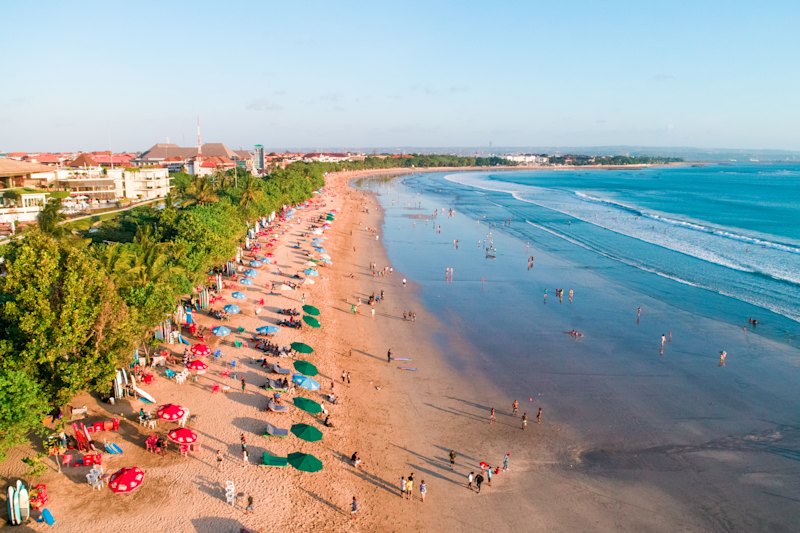
As the tide recedes, a small amount of sand returns, allowing vendors to set up a few tables and chairs. It’s a faint reminder of the beach’s former glory.
A Life Dependent on the Beach

Suzy, a bracelet seller known to Australian friends by that nickname, recalls the days when the beach was clean and full of tourists. “This was all sand, clean white sand,” she says. “We had community groups to clean it up. You can’t even sweep the beach now because of the rocks.”
She admits she earned zero money that day, contrasting it with her past earnings of Rp500,000 ($42) easily. “I’ve started losing hair now. This is all I can do. This is how I earn my living.”
Although the nearby Legian Beach is bustling with tourists, Suzy cannot afford to move there due to the higher fees.
A Shift in Tourism Dynamics

Surfers made their way to Kuta Beach in the 1960s and 70s, drawn by the waves, friendly locals, and affordable Bintangs. Bali quickly became Australia’s most popular foreign holiday destination, thanks to its affordability and proximity.
In 2025, tourism to Bali reached record levels, with 7 million foreign visitors. However, Kuta Beach is not benefiting from this surge. The erosion of the beach, combined with a shift in tourist focus towards areas like Canggu, has left vendors struggling.
Environmental Challenges and Responses

According to Balai Wilayah Sungai (BWS), the primary cause of the erosion is the West Monsoon, which occurs between October and April. While the monsoon has always affected the area, the recent storms have worsened the situation. Some blame climate change, while others point to the airport and coastal expansions as factors.
The BWS spokesman states that the airport’s extended runway only affects smaller, southerly waves, which are less impactful for Kuta Beach. The airport did not respond to requests for comment.
Vendors suggest that the erosion worsened after the construction of the now-gone jogging path, following the pandemic. Despite these challenges, efforts are underway to restore the beach. The government is replacing lost sand, and in some areas, rocks have been placed to reduce wave impact. Break walls are also planned.
Environmental Concerns
The replacement sand is being sourced from Jimbaran, south of the airport, at a depth that avoids ecological disruption, according to BWS. However, Made Krisna Dinata, head of the environmental NGO Wahana Lingkungan, expresses concerns about the impact on fish breeding grounds. “For the sake of more tourists, the environment has been sacrificed, and it will continue to happen,” he warns.
Kuta Beach remains an iconic symbol of Bali, and it is unlikely the government will stand by as it declines. Yet, nature presents an ongoing challenge.