
Generational Divides Emerge in South Korean Consumers’ AI Perceptions
South Korean consumers are exhibiting a notable divergence in their understanding and anticipation of Artificial Intelligence (AI) based on their age. While younger demographics, encompassing teenagers and those in their twenties, who are more immersed in the daily use of AI technologies, tend to harbor more tempered expectations regarding AI’s effectiveness and the tangible benefits of its integration, older generations, specifically those in their forties through sixties, have demonstrated a more optimistic outlook on the introduction of AI.
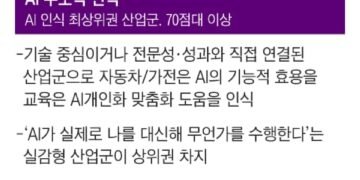
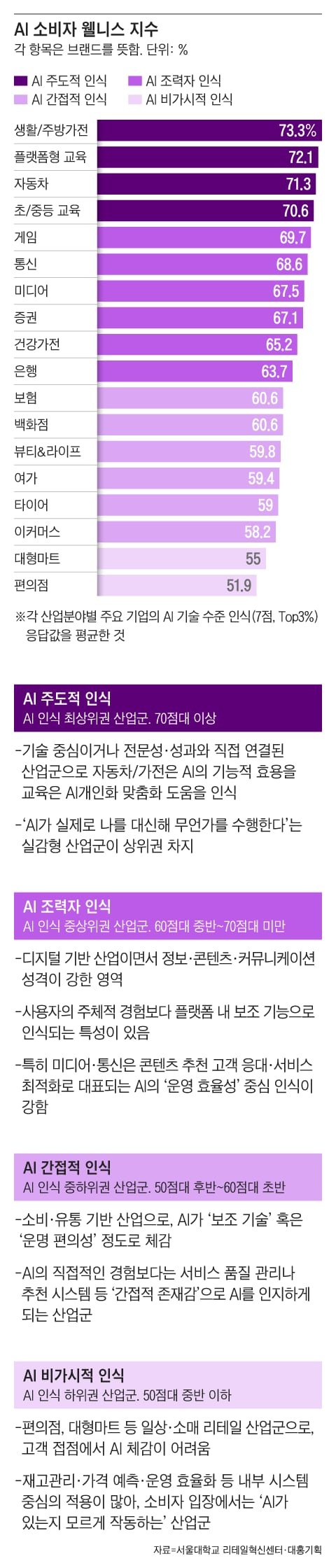
This nuanced landscape of consumer sentiment towards AI has been illuminated by recent research. Daehong Planning, in collaboration with the Retail Innovation Center affiliated with Seoul National University’s College of Human Ecology, jointly developed the ‘AI Consumer Wellness Index (AIWI)’. This innovative index is designed to quantify South Korean consumers’ receptiveness to AI technology and their overall life satisfaction. The AIWI is meticulously calculated by amalgamating four key dimensions: ‘positive emotions,’ ‘negative emotions,’ ‘self-actualization,’ and ‘ethical awareness.’
The inaugural findings of this research indicate that the AI Consumer Wellness Index for the South Korean populace stands at 62.8 out of a possible 100. A spokesperson for Daehong Planning highlighted the index’s strategic importance, stating, “We intend to systematically monitor shifts in Korean consumers’ AI acceptance levels over time, utilizing this index as a foundational benchmark.”
Beyond the overarching wellness score, the survey delved into specific consumer attitudes, including their interest in AI and their perceived value derived from its implementation. The results reveal a widespread engagement with the technology, with a significant 60.4% of all respondents indicating a high level of interest in AI, underscoring that a majority of consumers are actively curious about its potential.
However, the most striking revelations emerged when analyzing generational disparities in these perceptions. When asked about their preference for products or services offered by companies leveraging AI, a mere 43.2% of teenagers expressed such a preference. This figure saw a considerable increase among older demographics, rising to 56.6% for individuals in their fifties and further to 61.5% for those in their sixties.
This discernible trend suggests that younger generations, thoroughly acclimatized to the digital realm, may perceive AI less as a revolutionary innovation and more as a natural evolution of existing technologies. Consequently, they might be less inclined to recognize a distinct, transformative value proposition offered by AI compared to their middle-aged and older counterparts.
Further supporting this observation, older age groups also exhibited a relatively more proactive stance in their interest and engagement with AI. The proportion of respondents who reported actively seeking information about AI and expressing interest in its various services was notably higher among those in their fifties (61.9%) and sixties (62.3%) when contrasted with teenagers (59.7%) and those in their twenties (55.8%).
Daehong Planning offered insights into the implications of these generational differences, explaining, “These generational perception gaps will provide crucial insights for companies developing their AI brand communication strategies. For teenagers and individuals in their twenties, it would be more effective to highlight AI’s capacity for novel experiences, personalized value, and emotional fulfillment.”
Kim Deok-hee, a representative of Daehong Planning, emphasized the strategic imperative of understanding these consumer sentiments. “In an era where all citizens are increasingly interacting with AI in their everyday lives,” Kim stated, “brand strategies must be grounded in objective indicators that accurately reflect consumers’ trust and acceptance of AI. Strategic marketing communication that effectively utilizes the AI Consumer Wellness Index presents a significant opportunity for enterprises to emerge as leading innovators in the AI space.”