


Australian Family’s Terrifying Mid-Air Ordeal Amidst Middle East Conflict
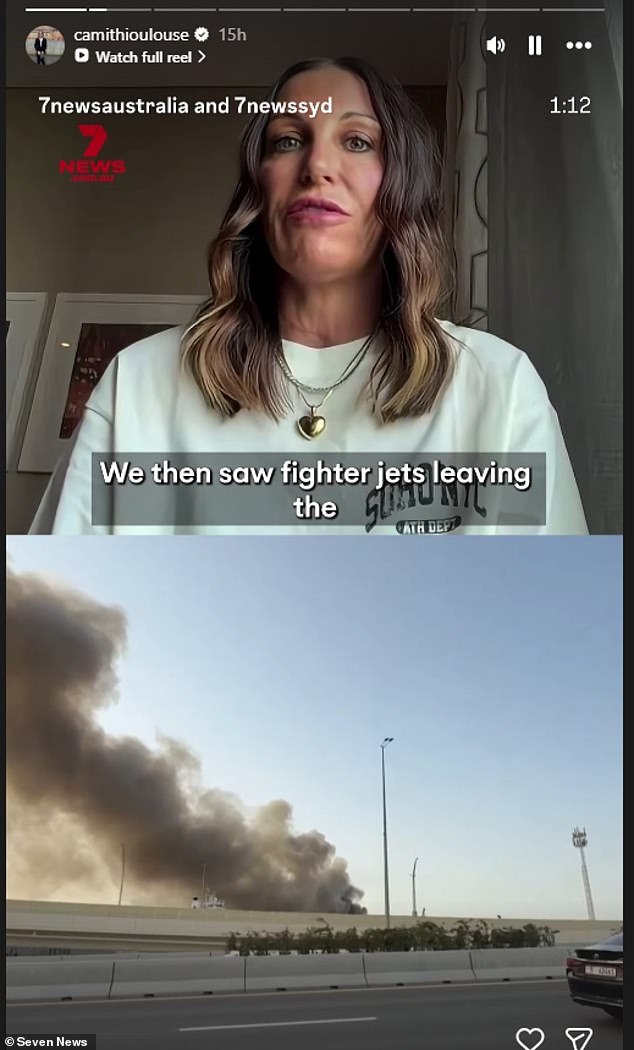
An Australian mother-of-two has recounted the harrowing experience of her family flying directly into the heart of a severe bombing and missile attack while en route home. Camille Thioulouse, along with her French husband and two young children, landed in Abu Dhabi, the capital of the United Arab Emirates, amidst intense Iranian bombardment, on their journey back to Riyadh, Saudi Arabia.
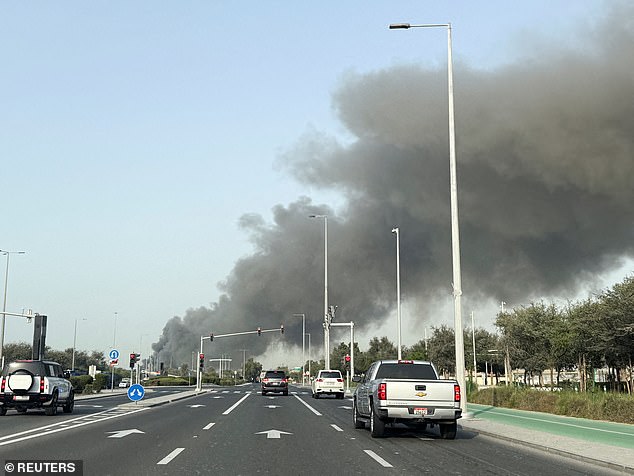
The flight’s touchdown coincided with a significant escalation of hostilities, with the aircraft shaking from the impact of what was reported to be 137 ballistic missiles and over 200 drones. The violent tremors were accompanied by “loud bangs and explosions,” creating a scene of palpable fear and uncertainty for the passengers.
Unfolding Chaos and Urgent Warnings
Ms. Thioulouse described the terrifying moments as the flight progressed. “We started receiving text messages in the air warning of missile threats and telling us to move away from the window and take shelter,” she shared. The unsettling experience was amplified by the sight of fighter jets departing the airspace and flying past their plane. These alerts, a constant reminder of the imminent danger, continued to sound every 15 minutes, exacerbating the anxiety onboard.
Upon landing, the situation devolved into chaos. Passengers were informed to disembark the plane and evacuate the airport, with instructions to retrieve their luggage if possible. “It was absolute pandemonium,” Ms. Thioulouse recounted. “We had to get outside onto the streets and into taxis and Ubers, and again, it was absolute chaos on the streets.”

A Night of Unease in Abu Dhabi
Having recently relocated from Australia to Riyadh in December with her children to join her husband, architect Nicolas Thioulouse, Ms. Thioulouse found their first night in a hotel to be “a lot calmer” by comparison. However, the atmosphere remained charged with palpable apprehension. “There was a lot of unease, a lot of tension; everyone feels on edge,” she observed.
Despite reports indicating that approximately 90 per cent of the Iranian missiles and drones were intercepted, the threat persisted. Throughout the night, the family was repeatedly awakened by alerts and alarms, warning of potential new attacks and urging them to seek cover.

Uncertainty and Stranded Australians
While the family was “safe for now” in a nation that prioritises the safety of its citizens during times of conflict, Ms. Thioulouse expressed uncertainty about their next steps and when they might be able to return home. Navigating the flow of information proved challenging, with conflicting reports about airport reopenings, flight resumptions, road closures, and border controls.
She noted that the government was covering all hotel accommodations and meals for those stranded, providing a sense of security and care. However, they were unable to register on the Department of Foreign Affairs and Trade (DFAT) crisis registration portal. The DFAT portal for Australians in Iran, Israel, Qatar, and the UAE has since been closed for new registrations.
Global Aviation Disruption and Repatriation Challenges
The escalating conflict has plunged global aviation into significant turmoil. Air traffic was suspended on Saturday following a major international incident, which triggered retaliatory missile attacks across the Middle East. Seven key airports in the region were forced to close, though major airlines like Etihad Airways and Emirates have since recommenced select flights.
Ms. Thioulouse’s husband, Nicolas Thioulouse, a former design director at Mirvac in Sydney, had relocated to Saudi Arabia earlier. The family was returning from a holiday in the Maldives when they found themselves caught in the unfolding crisis. They are part of an estimated 115,000 Australians currently stranded in the Middle East.
The Australian government has acknowledged the limited options available for repatriating its citizens. It has cautioned that commercial flights remain the only feasible avenue for large-scale evacuations, highlighting the complex logistical challenges involved in bringing such a large number of citizens home amidst regional instability.