Queen Charlotte’s Heritage: A Bridgerton Star’s Bold Claim Sparks Historical Debate
A prominent star from the hit Netflix series Bridgerton has reignited a long-standing debate about the heritage of Queen Charlotte, the historical figure who inspired the Regency-era drama. Adjoa Andoh, who portrays Lady Danbury in the popular show, has asserted with conviction that Queen Charlotte was indeed a woman of colour, challenging conventional historical narratives.
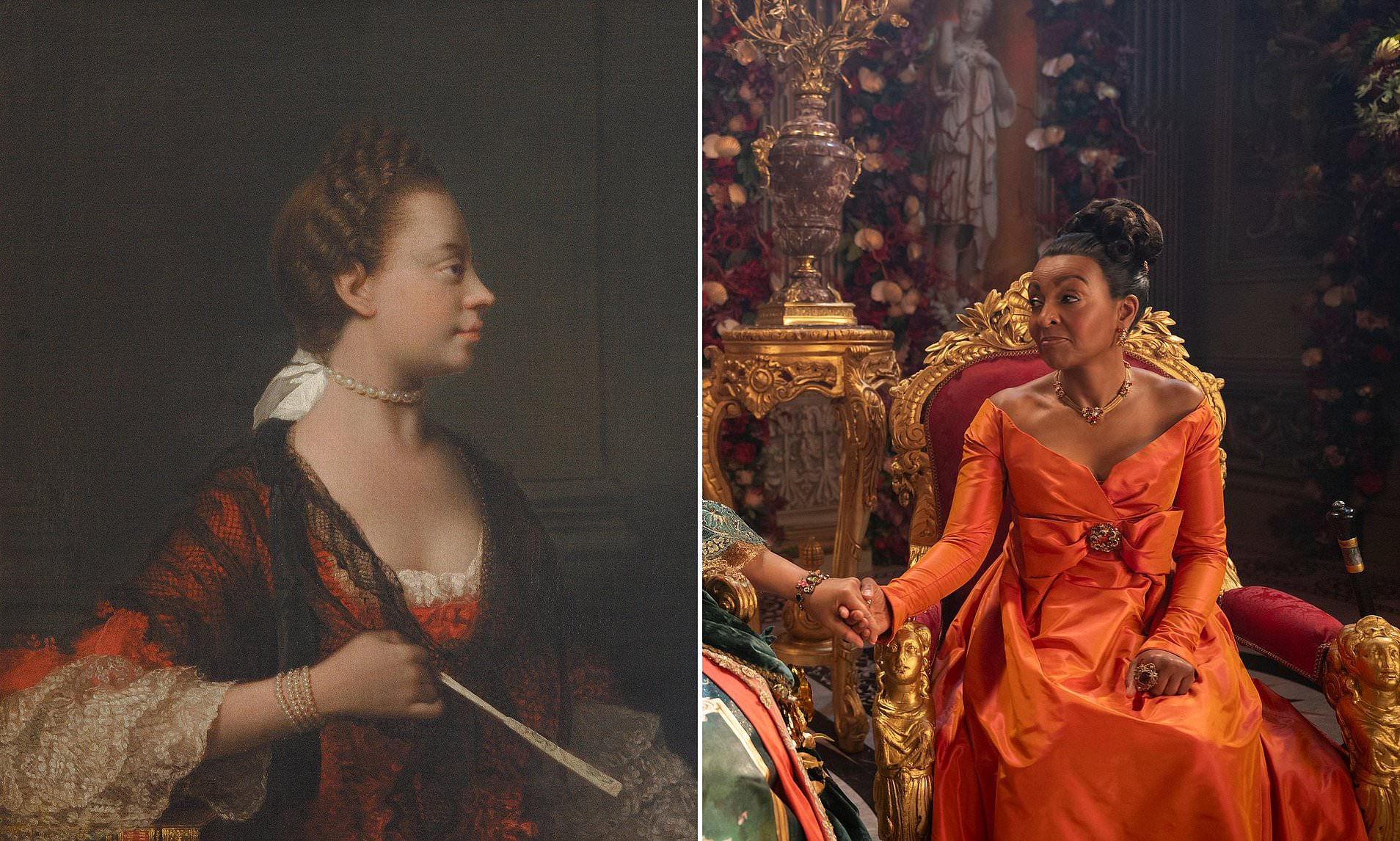
Andoh, known for her outspoken views on diversity in the arts, stated that the Queen, as portrayed by fellow black actress Golda Rosheuvel, was not a fictionalised representation but a historical figure with a demonstrable lineage that included African ancestry. “Queen Charlotte wasn’t fictionalised as a woman of colour, she was a woman of colour,” Andoh declared. “You just have to do your historical research.”
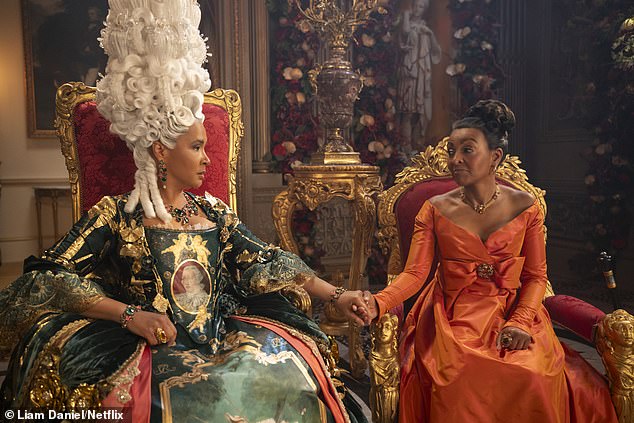
This assertion places Bridgerton in a unique position, with Andoh suggesting the series offers “a more realistic version of history” than often presented. While the historical Queen Charlotte was born in Germany, genealogical research has indeed traced her lineage back to a relative of Moorish ancestry, albeit approximately 500 years before her birth.
The actress’s comments echo sentiments she expressed previously, notably her observation that the line-up of royals on the Buckingham Palace balcony during King Charles’ coronation in 2023 appeared “terribly white.” Her remarks during ITV’s coverage of the coronation, specifically her observation of the “rich diversity of the Abbey” contrasted with the “terribly white balcony,” drew significant public reaction. This particular comment alone prompted over 4,000 complaints in the immediate aftermath of the ceremony, with an additional thousands following in the subsequent week.
Andoh’s stance on Queen Charlotte’s heritage has not been without its critics. Some argue that the historical evidence is not conclusive enough to support such a definitive claim. One commentator expressed scepticism, noting, “The chances of me having black ancestry are way bigger than that and I’m not a woman of colour.” This perspective suggests that focusing on speculative or distant ancestral links may detract from the importance of acknowledging and celebrating other “really interesting actual women of colour” whose histories are well-documented. The argument is made that if historical accuracy were the sole aim, the narrative would also need to encompass the brutal realities of the transatlantic slave trade, a period Queen Charlotte did not actively campaign against as an abolitionist.
Examining the Historical Threads
The debate centres on the intricate tapestry of Queen Charlotte’s ancestry. Born Princess Sophia Charlotte of Mecklenburg-Strelitz, she married King George III of Great Britain in 1761. While her direct lineage is well-documented, the exploration into her more distant roots has unearthed connections that fuel the current discussion.
Moorish Ancestry: The most frequently cited piece of evidence points to a distant ancestor, Margarita de Castro y Sousa, who was a descendant of the House of Sousa, a Portuguese noble family. This family, in turn, has been linked to the Moors, who inhabited the Iberian Peninsula for centuries. The connection is often described as being through a “black branch” of the Portuguese nobility.
Artistic Depictions: Some historians and enthusiasts point to contemporary portraits of Queen Charlotte, suggesting that her features, particularly her complexion and facial structure, bear a resemblance to individuals of African descent. However, the interpretation of historical art can be subjective, and the fashion and artistic conventions of the era play a significant role.
Royal Lineage: The argument posits that the presence of Moorish ancestry in the royal line, however distant, is a verifiable fact that has been historically overlooked or downplayed. This perspective suggests that the “woman of colour” description is not an embellishment but a reflection of a complex and multicultural heritage that has been part of the British monarchy’s history.
The Bridgerton Effect and Historical Representation
The Bridgerton series, with its colour-conscious casting and reimagining of the Regency era, has undeniably brought this historical debate to a wider audience. The show’s creators have often spoken about their intention to create a more inclusive and diverse vision of British history, a sentiment echoed by Adjoa Andoh.
The series’ approach, while celebrated by many for its progressive casting, also raises questions about the balance between historical accuracy and creative interpretation. The inclusion of black characters in prominent aristocratic roles, while visually striking, prompts discussions about the extent to which this reflects actual historical demographics and social structures of the time.
The controversy surrounding Queen Charlotte’s heritage highlights the ongoing process of re-examining and reinterpreting history. As new research emerges and societal perspectives evolve, historical figures and their legacies are continually being viewed through fresh lenses. Adjoa Andoh’s powerful assertion serves as a catalyst for deeper engagement with these complex historical narratives, encouraging a broader understanding of the diverse influences that have shaped our past. The debate, it seems, is far from over, and the historical record continues to be a subject of passionate discussion and scholarly inquiry.