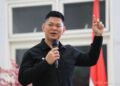

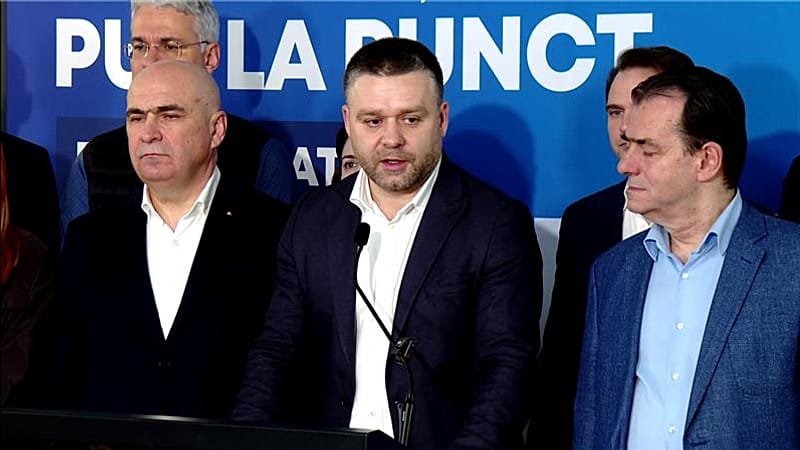
Bucharest has a new mayor: Ciprian Ciucu, a liberal politician who secured victory with 36.16% of the vote. Ciucu, affiliated with the National Liberal Party and a key associate of Romania’s Prime Minister Ilie Bolojan, expressed awareness of the challenges ahead following his win, particularly concerning the city’s budget.
Ciucu stated that one of the most significant hurdles this year will be drafting the budget. He noted the tight timeframe, explaining that mayors typically have 45 days to prepare the budget for the city hall and local council after the Government approves the budget law. He acknowledged the existing financial difficulties within the Bucharest City Hall, suggesting a potentially challenging period ahead.
In this election, Ciucu, often described as a pro-Western candidate, triumphed over Anca Alexandrescu, who garnered 22% of the vote. Alexandrescu had the support of the hard-right Alliance for Romanian Unity (AUR). The Social Democratic Party’s candidate, Daniel Băluță, finished third, while Cătălin Drulă, representing the Save Romania Union (USR), came in fourth in what was described as a closely contested race among the top contenders.
The mayoral election was triggered by the vacancy created when former Mayor Nicușor Dan won the presidential election held in May.
Dan’s election itself followed a period of political turmoil that involved the withdrawal of Călin Georgescu, a controversial nationalist figure.
Georgescu dramatically altered Romania’s political scene last November. Running as an independent, he unexpectedly became the frontrunner in the initial round of the presidential election, surpassing the incumbent prime minister despite being a relatively unknown candidate beforehand.
However, the Constitutional Court annulled that election after allegations of Russian interference aimed at promoting Georgescu surfaced. Consequently, he was disqualified from participating in the subsequent election rerun.
To further clarify the sequence of events:
- Initial Presidential Election: Călin Georgescu unexpectedly becomes the frontrunner.
- Annulment: The Constitutional Court annuls the election due to alleged Russian meddling.
- Rerun: Georgescu is barred from participating.
- Nicușor Dan’s Victory: Nicușor Dan wins the rerun, becoming President.
- Mayoral Vacancy: Dan’s presidential win creates a vacancy for the position of Bucharest mayor.
- Ciucu’s Election: Ciprian Ciucu wins the subsequent mayoral election.
In the presidential rerun, Dan defeated George Simion, who also represented AUR. The position of Bucharest mayor is considered influential, having served as a stepping stone to the presidency for two former city leaders: Dan himself and Traian Băsescu in 2004.
The challenges facing the new mayor are considerable. Bucharest, like many capital cities, grapples with issues ranging from infrastructure development and traffic congestion to environmental concerns and social inequalities. Ciucu’s stated priority of addressing the city’s financial situation suggests a focus on fiscal responsibility and efficient resource management. His pro-Western stance likely indicates a commitment to European integration and adherence to democratic principles.
The composition of the Bucharest City Council will also play a crucial role in Ciucu’s ability to implement his agenda. Cooperation and negotiation with council members from different political parties will be essential for securing approval for budgets, policies, and projects. The close results of the mayoral election suggest a politically diverse electorate, requiring Ciucu to build consensus and address the concerns of various segments of the population.
Furthermore, the broader political context in Romania will influence Ciucu’s tenure as mayor. The relationship between the Bucharest City Hall and the national government, led by Prime Minister Bolojan, will be critical for securing funding and support for city initiatives. Navigating the complexities of Romanian politics and maintaining effective communication with national leaders will be vital for Ciucu’s success.
The focus now shifts to Ciucu’s administration and the concrete steps he will take to address the challenges facing Bucharest. His commitment to fiscal responsibility, coupled with his pro-Western orientation, suggests a potential for positive change and progress for the Romanian capital. The coming months will be crucial in determining whether he can effectively navigate the political landscape and deliver on his promises to the citizens of Bucharest.