Ancient Treasures Unearthed in Egypt, Boosting Tourism Hopes
Egypt’s rich archaeological heritage has once again taken centre stage with a series of significant discoveries announced by the nation’s archaeologists. These finds, ranging from a striking marble head of the Greek goddess Aphrodite to a Roman basilica and intricate Pharaonic funerary items, are not only shedding new light on the country’s storied past but are also strategically positioned to revitalise Egypt’s crucial tourism industry. The recent inauguration of the Grand Egyptian Museum near the Giza Pyramids underscores the government’s commitment to leveraging its historical wealth for economic growth.
Discoveries in Beni Suef Province: A Glimpse into Ancient Ehnasiya
The Beni Suef province, situated roughly 80 miles south of Cairo, has yielded some of the most compelling finds. Within an ancient necropolis, archaeologists unearthed the remnants of a Roman basilica and the captivating marble head of Aphrodite, the ancient Greek goddess of love and beauty. This area, historically known as Ehnasiya, or Heracleópolis Magna in its Roman guise, was once a preeminent city in ancient Egypt.
The Basilica:
The scale of the ancient basilica has been revealed through the discovery of massive stone blocks, some weighing as much as 45 tons. These blocks once supported the basilica’s imposing columns, with an impressive three columns still standing in their original positions, offering a tangible connection to the past.The Aphrodite Head:
The marble head of Aphrodite is a remarkable testament to classical artistry. Measuring approximately 9½ inches by nearly 10 inches, it features exquisitely detailed facial features and elegantly rendered curly hair. The artistry clearly reflects the enduring influence of Greek and Roman artistic traditions.

Further excavations at the Ehnasiya site have uncovered significant inscriptions. These markings are directly linked to Senusret III, a prominent ruler from Egypt’s Middle Kingdom, specifically the 12th Dynasty, who reigned from 1837 to 1819 B.C. Inscriptions bearing both his throne and birth names have been identified, providing valuable historical context.
- Roman-Era Artifacts:
The site also yielded fragments of wall statues and terracotta molds. These molds are believed to have been used for crafting coins during the Roman period, suggesting that Ehnasiya was a bustling centre of economic and commercial activity during Egypt’s integration into the Roman Empire, a period spanning from 30 B.C. to A.D. 395.
Cairo’s Matariya Neighbourhood: A Royal Burial and Personal Effects
Meanwhile, in Cairo’s Matariya neighbourhood, an area that was once part of the ancient city of Heliopolis, a different, yet equally fascinating, discovery has been made. Archaeologists have uncovered a nearly complete set of funerary furniture, offering a intimate look at burial practices and the lives of individuals from antiquity.
The Burial Chamber:
The findings include a mudbrick burial containing gilded remains within a coffin. It is believed that this burial belonged to a figure of military importance.Personal Adornments and Tools:
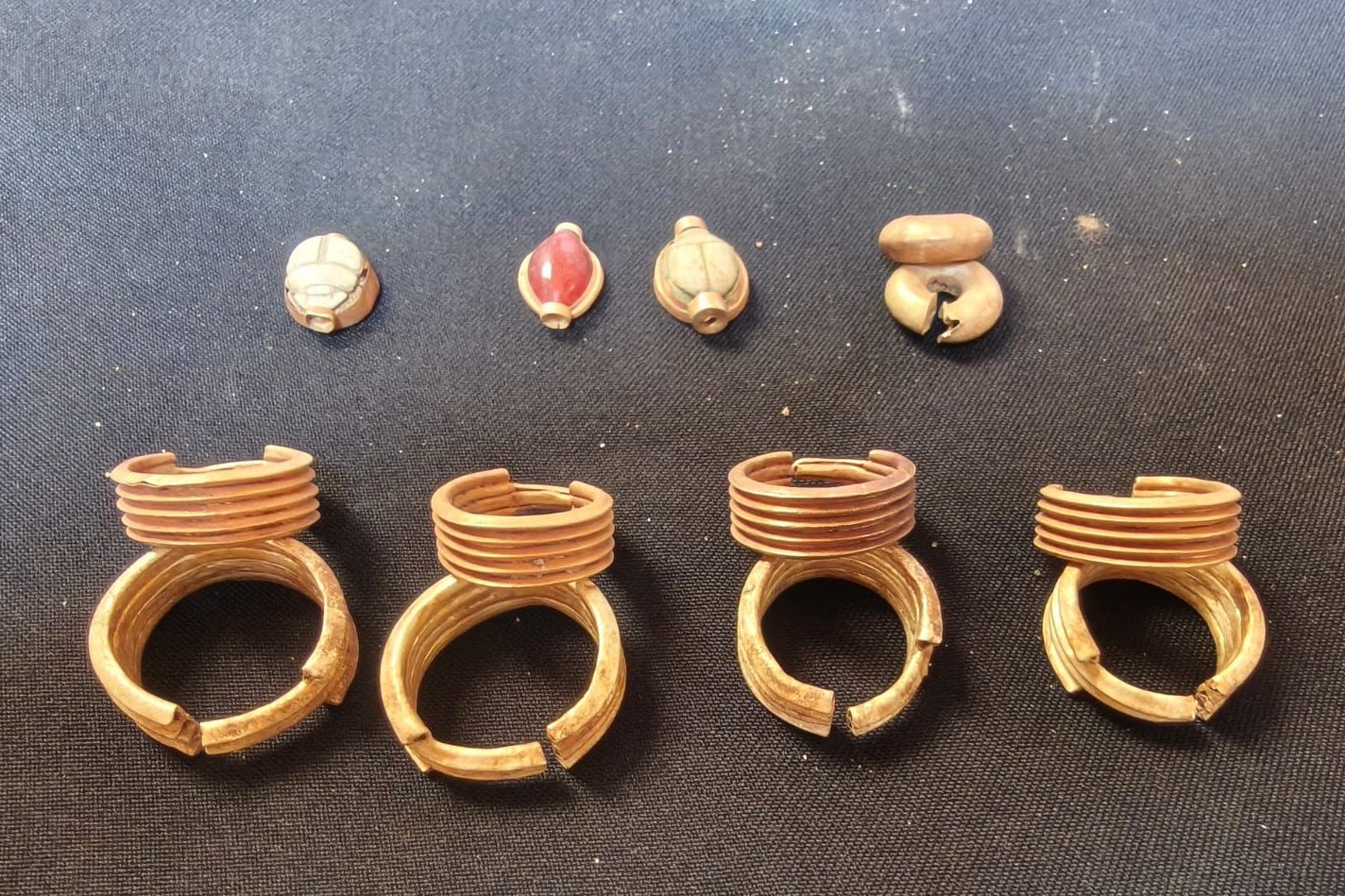
The excavation also revealed a collection of cosmetic tools, including a copper mirror and alabaster containers for kohl, a popular eye cosmetic. A particularly striking find was a cache of five pairs of yellow-coloured metal earrings, varying in size and thought to be made of gold. These personal items provide a glimpse into the daily lives and adornment practices of people from this era.
A Strategic Push for Tourism
These recent archaeological revelations are not merely academic pursuits; they are integral to a broader governmental strategy aimed at invigorating Egypt’s vital tourism sector. The industry, which is heavily reliant on the allure of ancient sites, has faced considerable headwinds in recent years. Political instability and unrest following the 2011 uprising, coupled with the global economic impact of the coronavirus pandemic and the ongoing Russia-Ukraine conflict, have presented significant challenges.
Despite these obstacles, official figures paint a picture of resilience and recovery. Last year, Egypt welcomed a record-breaking 19 million tourists, marking a substantial 21% increase compared to the previous year. The positive momentum appears to be continuing, with the first four months of 2026 attracting 6.1 million visitors, a notable rise from the 5.7 million recorded during the same period in 2025, according to data released by the prime minister’s office. The ongoing discoveries are expected to further enhance Egypt’s appeal to international travellers, reinforcing its position as a premier global destination for history and culture enthusiasts.