
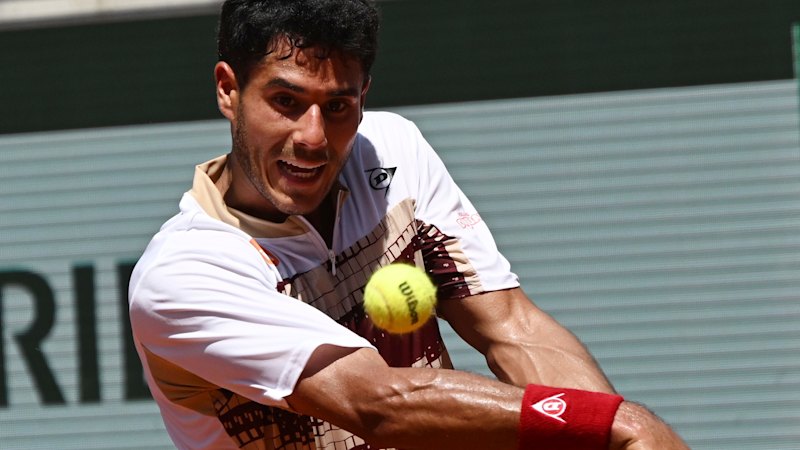
Paraguayan Tennis Player Penalised for Sexist Remarks at French Open
A Paraguayan tennis player has faced significant consequences at the French Open after making disparaging comments about female umpires’ ability to handle rowdy crowds. Adolfo Daniel Vallejo was reportedly fined half of his prize money for suggesting that women lack the necessary courage to officiate matches with vociferous spectators.
The incident occurred following Vallejo’s second-round defeat at the hands of French teenager Moise Kouame. The match, held on the packed Court Suzanne Lenglen, saw Kouame emerge victorious after a gruelling contest that concluded with a final score of 6-3, 7-5, 3-6, 2-6, 7-6 (10-8).
Following his loss, Vallejo directed his criticism towards Brazilian umpire Ana Carvalho, whom he accused of failing to adequately control the home crowd’s fervent support for Kouame. In comments made to the tennis website Clay, Vallejo explicitly stated that “this sort of match needs to be umpired by a man.” He elaborated on this by adding, “It’s very difficult for a woman to do it.”
Tournament director Amelie Mauresmo confirmed the disciplinary action taken against Vallejo. Players who reach the second round of the French Open are entitled to prize money of 130,000 euros (approximately AUD $211,210). Mauresmo informed reporters that Vallejo was fined 65,000 euros, a sum that “represent[s] roughly half of his prize money.” Organisers later clarified that the fine was denominated in US dollars rather than euros.
Mauresmo emphasised the tournament’s stance on such remarks, stating, “For us, things are very clear. This type of remark is not acceptable.”
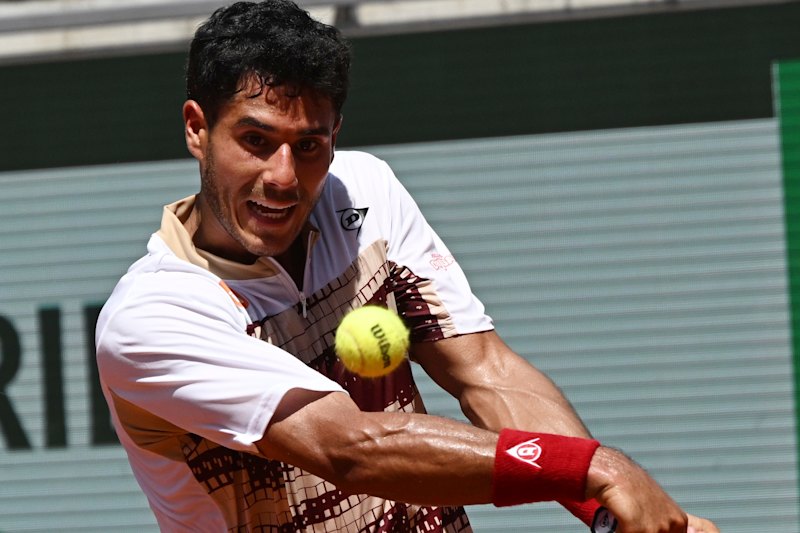
Vallejo’s rationale for his comments centred on his perception of the umpire’s inability to manage the intense atmosphere. He argued that a male umpire would be better equipped to handle the demanding crowd and possess the “strength to go against the crowd.” He acknowledged the crowd’s partisanship, stating, “The crowd was very out of line, but I understand they’re supporting their compatriot.” He further described the atmosphere as “quite an intense crowd” and claimed that while he was prepared for it, it “didn’t harm me, but rather strengthened him [Kouame].”
Beyond the crowd control issue, Vallejo also raised concerns about his opponent’s tactics, alleging that Kouame “took up a lot of time on many occasions, lying on the floor or stalling.” He found it “not normal for the crowd to be shouting for a full minute without any play.” Vallejo suggested that in a match where the “physical aspect matters so much,” granting a player excessive time would inevitably lead to them exploiting such advantages. He reiterated his belief that managing such situations is “difficult for a referee.”
The decision to fine Vallejo underscores the commitment of major sporting bodies to uphold principles of equality and respect. Sexist remarks, particularly those that question the competence of individuals based on their gender, are increasingly being met with firm repercussions in the professional sporting world. The French Open’s swift action sends a clear message that such discriminatory commentary will not be tolerated on its courts. This incident highlights the ongoing challenges in addressing ingrained biases within sports and the importance of holding athletes accountable for their public statements. The financial penalty serves as a tangible consequence, aiming to discourage similar behaviour in the future and promote a more inclusive and respectful environment for all participants, including officials.


