
A Global Tapestry of Festive Feasts: Beyond the Traditional Turkey
For many, the traditional British festive feast conjures images of a rather uninspiring meal: dry turkey, overcooked Brussels sprouts, and a dense Christmas pudding. It can feel less like a celebration and more like an obligation, a culinary dirge rather than a joyous occasion. Some might even playfully blame Charles Dickens, whose enduring tale of A Christmas Carol is thought to have cemented the turkey’s place on the festive table, potentially displacing more robust options like stuffed boar’s head, beef, and goose. Imagine a Christmas where the “American gobbler” remained a mere butcher’s display item, far from the heart of the Great British Christmas lunch.
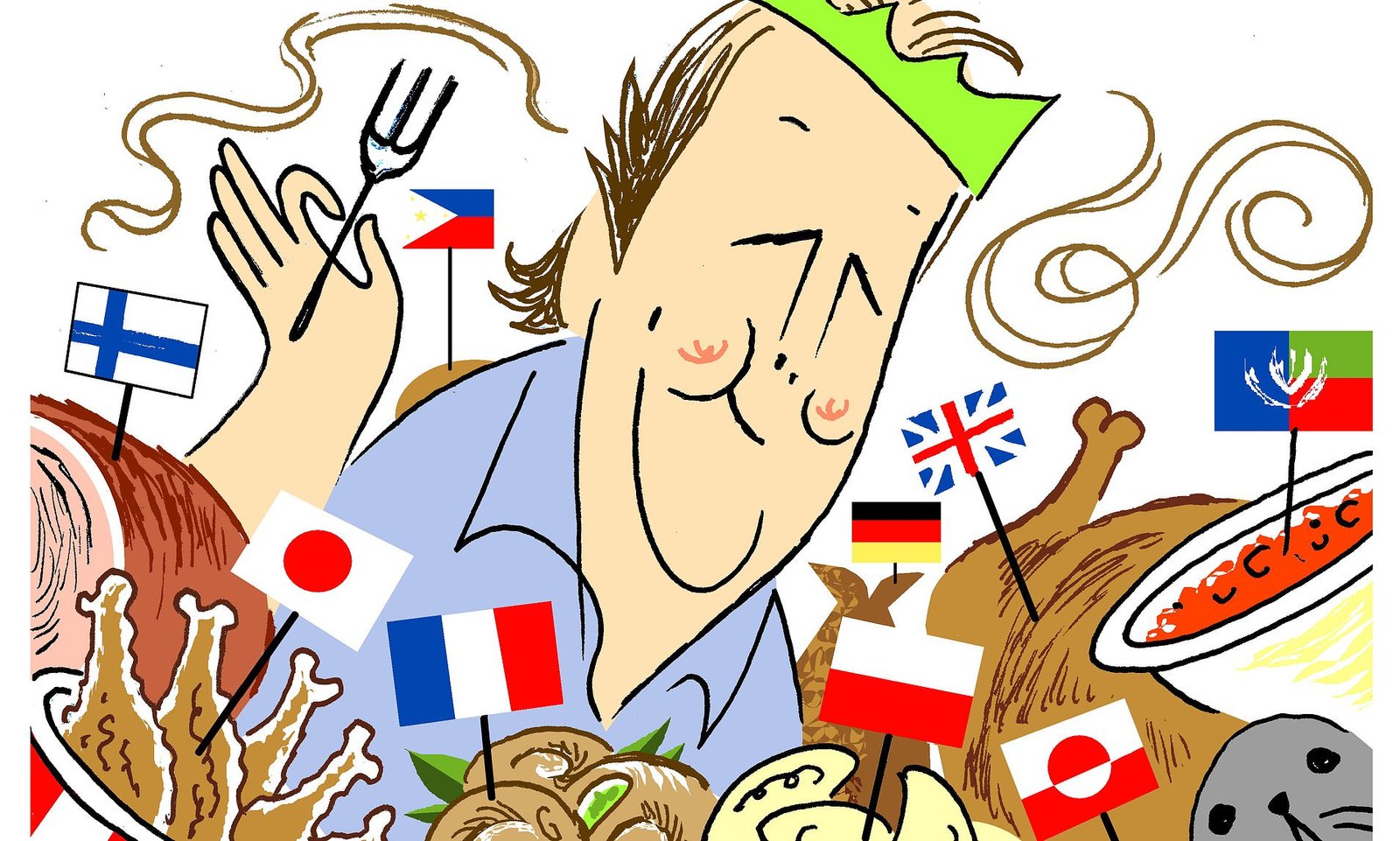
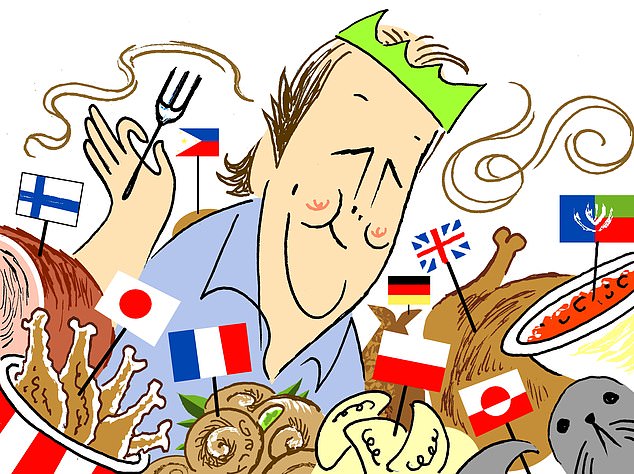
While it’s true that exceptionally flavourful and succulent British turkeys exist, and the bird has graced tables since the reign of Henry VIII, there’s a certain romantic yearning for a return to more ancient, perhaps even pagan, Yuletide traditions. These were times of epic, uninhibited feasting, a veritable Bacchanalia where culinary boundaries were not just pushed, but gleefully ignored. Alternatively, a journey around the world reveals a fascinating array of traditional Christmas dishes, some of which are, to put it mildly, quite peculiar.
The Unlikely King of Christmas: Kentucky Fried Chicken
Consider what is reportedly the most popular Christmas lunch globally. It’s a festive feast so eagerly anticipated, so universally loved, that it sells out within minutes. Millions of people eagerly log on to secure their reservation the moment orders open, often followed by queues on Christmas Day itself to collect their prize. This highly sought-after Yuletide delicacy, however, is neither rare nor exclusive. Far removed from the opulence of white truffles or golden caviar, it’s not even a turkey.
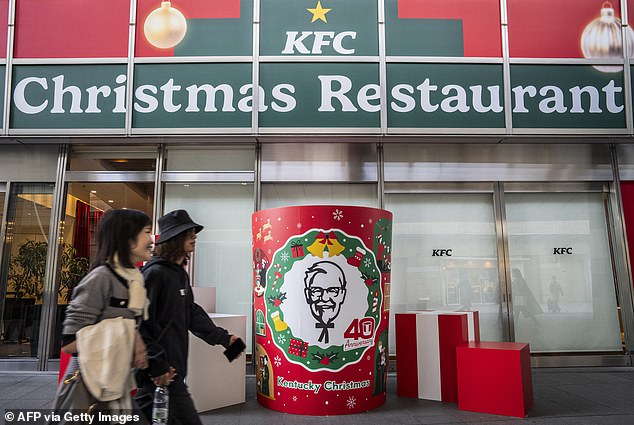
In Japan, the ultimate Christmas indulgence is the Kentucky Fried Chicken Christmas Party Barrel. This special edition bucket, costing around £25, typically contains eight pieces of fried chicken, a gratin, and some form of pudding. The catchy slogan, “Kentucky is Christmas!”, perfectly encapsulates its cultural significance. In Japan, Christmas is largely a secular and commercial event, with December 25th being just another day of business as usual for many.
The question remains: how did Colonel Sanders, the iconic, goateed Southern gentleman, become so inextricably linked with Japanese Christmas traditions? The story began in 1970 with the opening of the first “Kentucky” (as it’s colloquially known in Japan) in Nagoya. Legend has it that the store’s manager, Takeshi Okawara, overheard an expatriate lamenting the absence of turkey for Christmas. Inspired, Okawara conceived the Christmas Party Barrel, reasoning that chicken was a reasonable substitute for turkey. By 1974, the concept had expanded nationwide, complete with Colonel Sanders donning a Father Christmas costume, solidifying KFC’s reign as the go-to Christmas meal.
Culinary Adventures from Greenland to Norway
Some traditional dishes from other nations sound significantly less familiar, and perhaps a touch less appealing to the Western palate. Take, for instance, the festive specialty from Greenland known as ‘kiviak’. This rather unique dish involves disembowelling a seal, then stuffing it with up to 500 small Arctic birds. The seal is then sewn back up, sealed with fat to deter flies, and buried to ferment for as long as 18 months. Once suitably “aged,” the birds are extracted and consumed by biting off their heads and sucking out the juices. Another Greenlandic Christmas classic is ‘mattak’, which consists of raw whale skin with a layer of blubber. It can be eaten raw, deep-fried, or pickled. While it would be presumptuous to judge the culinary quirks of other cultures, the thought of kiviak might lead even the most adventurous diner to stick with a familiar turkey.
Moving to more palatable, yet still distinct, traditions, the Polish Christmas Eve feast, celebrated on December 24th in many Catholic countries, offers a more appealing prospect. This elaborate meal comprises 12 dishes, symbolizing the 12 Apostles and the 12 months of the year. Key components often include carp, a fish popular throughout central and eastern Europe, ‘barszcz’ (a beetroot soup, known as borsch in Ukraine and Russia), pierogi dumplings, and various fruit and poppy-seed puddings.
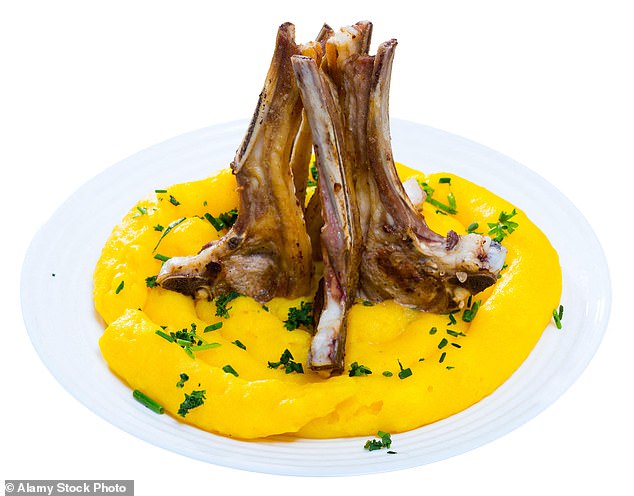
In the western regions of Norway, the crisp winter air on Christmas Eve is perfumed by the aroma of ‘Pinnekjøtt’ – dry-cured lamb ribs slow-cooked over birch wood. This hearty dish is traditionally accompanied by a bracing shot of aquavit. The meal typically concludes with ‘risgrøt’, a rice pudding in which a hidden almond is placed. The fortunate individual who discovers the almond is traditionally awarded a marzipan pig. A similar rice pudding tradition exists in Denmark, called ‘risalamande’. Here too, an almond is concealed, with a porcine prize for the finder. Alongside roast pork, herring holds a prominent position in Danish Christmas celebrations.
Specifically, ‘julesild’ involves the fish being pickled and spiced with cinnamon, cloves, and sandalwood, served as a starter during the festive ‘julefrokost’, or Christmas lunches, held throughout December.
Nordic Delights and French Grandeur
Further east, in Finland, roast ham, smoked fish, and pickled beetroot salad are enjoyed with characteristic Nordic gusto. These are often served alongside ‘lanttulaatikko’, a spiced swede bake.
France, as expected, approaches Le Réveillon, the Christmas Eve feast, with characteristic culinary seriousness and grandeur. The spread is typically lavish, featuring platters of oysters, langoustines, rillettes, gougères (baked cheese puffs), foie gras, and pain d’épices (spiced bread). This is often followed by a soup, snails swimming in garlic butter, lentil salads, and a variety of roasted meats including turkey with chestnut stuffing, roast quails, capons, and ducks. Coq au vin and boeuf en daube are common, as is the rich gratin dauphinoise. A substantial cheese course is almost a given, culminating in the iconic ‘bûche de Noël’, the French interpretation of the Yule Log. Essentially, it’s a celebration of everything that makes French cuisine so delectable.
The Germans have also mastered the art of the festive feast. Traditionally, Christmas Eve involves fish – commonly carp, salmon, or hake – served with fried potatoes and sauerkraut. Christmas Day lunch often features roasted duck, turkey, or goose, accompanied by plump bread dumplings and braised red cabbage. The quintessential German Christmas pudding is, of course, the stollen.
A Carnivorous Catalan Start and Italian Pasta Traditions
Things take a resolutely carnivorous turn in Catalonia, Spain, where Christmas lunch commences with ‘sopa de galets’. This is a rich broth made from beef and ham bones, chicken feet, and pig trotters, simmered with meatballs and ‘galets’, which are exceptionally large Catalonian pasta shells.
A different, yet equally cherished, pasta and broth tradition is observed on Christmas Eve in the Emilia-Romagna region of Italy. Here, ‘anolini in brodo’ is the dish of choice. The intricate process of rolling and filling these tiny meat-filled pasta parcels is a communal activity, a cherished ritual. Renowned chef Angela Hartnett, whose grandparents hailed from this region, continues this tradition, involving her entire family in this delightful culinary undertaking. While some believe this feast is rooted in the Seven Sacraments of the Catholic Church, others attribute its significance to the seven hills of Rome. Regardless of its origins, it is universally agreed that this meal is designed to be savoured over many hours.
Indian Spices, Filipino Roasts, and Mexican Revelry
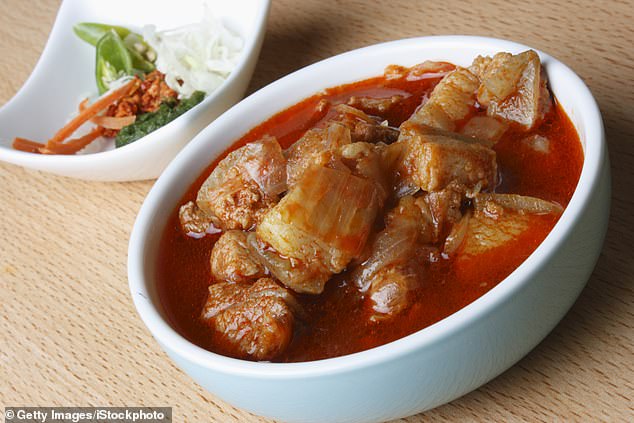
Around the world, of course, billions of people do not celebrate Christmas. However, in Goa, the southern coastal state of India, the enduring Portuguese influence is evident, particularly in the widespread consumption of pork, which is less common in other parts of India. ‘Sorpotel’, a delightful dish enjoyed at Christmas as well as weddings and other celebrations, is a vindaloo-style pork and offal stew, characterized by its tangy vinegar base and a satisfying chilli kick.
In the Philippines, a nation with the largest Catholic population in Asia due to over 300 years of Spanish colonial rule, the magnificent ‘lechon’, or whole roasted pig, takes centre stage on Christmas Eve. The skin is expected to be shatteringly brittle, like stained glass, while the meat is seductively tender. Marinated with salt, lemongrass, garlic, and bay leaves, the lechon offers a flavour as triumphant as its presentation.
Mexico elevates feasting to even more exhilarating heights with its ‘Nochebuena’ celebrations on Christmas Eve. Tables are laden with ‘tamales’ – corn dough parcels filled with sweet or savoury ingredients, steamed in corn husks or banana leaves – ‘pozole’, a hearty stew made from hominy (corn kernels) and various meats and chilies, and ‘moles’, complex sauces that come in myriad forms. Churros are also a popular sweet treat.
Australian Summer Barbecues and a Return to Traditional British Feasts
In Australia, where Christmas falls during the summer heat, the barbecue, or “barbie,” reigns supreme. It’s not just about shrimp on the barbie; crayfish and other local crustaceans like yabbies and lobsters, such as Moreton Bay bugs, are also popular. These are enjoyed alongside glazed ham, turkey, salads, gingerbread, trifle, and, of course, the iconic pavlova.
For the Parker Bowles family’s wider Christmas gathering, turkey is indeed the star. This celebration, held the week before Christmas, brings together mother, step-father, children, sister, brother-in-law, aunts, cousins, nieces, and nephews before they disperse across the country.
However, for the author’s own Christmas Day at home, the turkey is out of the question. While goose is adored, the children tend to object. Therefore, beef becomes the centrepiece – a generously sized four-rib roasting joint, cooked very rare, served with gravy, roast potatoes, Brussels sprouts with bacon, and pigs in blankets. The latter, a festive staple of chipolatas wrapped in bacon, is considered essential for a truly Christmassy experience.
Yet, there’s a persistent yearning for the spirit of the old Twelve Days of Christmas, a period characterized by carousing, mischief, and merry-making, all fuelled by copious amounts of alcohol.
The more things change, the more they stay the same, one might observe. However, when the Victorians re-emphasized family traditions, aided once again by Dickens and the high-church Oxford Movement of the 1830s and 1840s, certain dishes were lost, such as the elaborate Christmas Pie. This formidable creation involved deboning pheasants, hares, rabbits, capons, and pigeons, then chopping them and mixing them with their livers and hearts. To this base, two sheep’s kidneys, forcemeat balls, pickled mushrooms, salt, pepper, spices, and vinegar were added. The entire mixture was then stuffed into a “crust of good bake,” shaped like a bird, and filled with stock. This magnificent mélange was then baked and finally adorned with a pheasant’s head and feathers. Now, that truly was a proper Christmas feast.