Escalation of Conflict in the Middle East
The war in Iran has seen a significant escalation on day 19, with Tehran launching retaliatory attacks against Israel and its neighboring countries. These actions come in response to the Israeli military’s strike that resulted in the deaths of two high-ranking Iranian security officials.
Targeting Iranian Officials
On Tuesday, Israel announced the elimination of Ali Larijani, a powerful Iranian security chief, and Gholam Reza Soleimani, who leads the Basij paramilitary unit under the Revolutionary Guard Corps. The strikes took place during the night in Tehran, marking a major blow to Iran’s security apparatus.
Impact on Energy Infrastructure
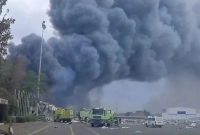
Iranian state media reported that Israel attacked the South Pars natural gas field, one of the world’s largest gas reserves and a critical component of Iran’s energy infrastructure. Facilities near Asaluyeh on Iran’s Gulf coastline were set ablaze, according to state media. In response, Iran vowed to target energy facilities in other Gulf countries as retaliation.
Retaliatory Attacks Across the Region
Iran launched attacks on Wednesday, resulting in two fatalities near Tel Aviv in Israel. The country also targeted Saudi Arabia’s Eastern Province, which houses many of its oil fields, as well as Kuwait, Bahrain, and the United Arab Emirates. These attacks demonstrate the growing regional tensions and the potential for further conflict.
Strikes in Lebanon
Israel continued its military operations in central Beirut, where Lebanese authorities reported at least 12 deaths, including a director from Hezbollah’s Al Manar TV channel. Additionally, two bridges in southern Lebanon were destroyed, raising concerns about the impact on civilian infrastructure and the movement of people and supplies.
Strategic Military Actions
In a strategic move, Israel stated it would target bridges crossing the Litani River. This action aims to prevent the transfer of reinforcements and weapons to the frontlines, effectively isolating a large portion of southern Lebanon from the rest of the country. Such measures highlight the complex nature of the conflict and the challenges faced by both sides.
International Reactions
Meanwhile, US President Donald Trump has hinted at a potential exit from NATO following the defense alliance’s decision to rule out deploying naval assets in his efforts to form a global coalition to reopen the Strait of Hormuz. This move is aimed at addressing soaring energy costs, but it raises questions about the future of international alliances and cooperation.
Economic Implications
Brent crude continued to trade above $100 per barrel on Wednesday, reflecting the ongoing uncertainty in the region. The rising cost of oil underscores the economic implications of the conflict, affecting not only the Middle East but also global markets.
Ongoing Tensions
As the situation continues to evolve, the potential for further escalation remains high. The involvement of multiple countries and the targeting of critical infrastructure highlight the complexity of the conflict. With each side taking strategic actions, the path to resolution appears increasingly uncertain.
Conclusion
The recent developments in the Middle East underscore the volatile nature of the region and the far-reaching consequences of military actions. As tensions persist, the need for diplomatic solutions becomes more urgent. The international community will be closely watching how these events unfold and the steps taken to de-escalate the situation.