
Kyoto Considers Sky-High Development, Sparking Fears of Lost Heritage
A proposal to significantly increase building height restrictions around Kyoto Station has ignited a fierce debate, with critics arguing that the move threatens to irrevocably damage the iconic skyline of Japan’s ancient capital. The plan, put forth by a city advisory panel, seeks to revise current regulations that limit structures near the station to a modest 31 metres, proposing instead a new limit of 60 metres.
The panel’s rationale centres on revitalising the area surrounding the station, a crucial gateway for millions of tourists visiting Kyoto. They contend that taller buildings will facilitate broader redevelopment, offering much-needed retail spaces, offices, and crucially, hotel accommodations to address a burgeoning demand. This demand has, at times, pushed visitors to seek lodging in nearby Osaka, resulting in lost revenue for Kyoto.
The draft proposal specifically targets the area directly north of the station, suggesting a 60-metre allowance – the same height as the current station building itself. This station, opened in 1997, has itself been a point of contention due to its modern, cubic design, featuring extensive plate glass and a steel frame, which many feel clashes with Kyoto’s traditional aesthetic. Furthermore, the proposal advocates for a broader zone around the station to adopt a new 45-metre height limit.
Proponents of the revision argue that the existing strict height regulations, in place for approximately 30 years, have stifled development. These limitations have effectively capped buildings at around six storeys, hindering expansion efforts.
- Arguments for Increased Height Restrictions:
- Economic Revitalisation: The panel believes taller buildings will stimulate redevelopment and attract investment to the Kyoto Station area.
- Tourism Infrastructure: Increased hotel capacity is seen as essential to capture tourism revenue that currently bypasses the city.
- Limited Ground Space: With finite space at ground level, vertical expansion is presented as the only viable option for growth.
- Historical Context: Some experts suggest that the area around the station, being on the southern edge of the city, is less critical to the preservation of Kyoto’s most historically significant sites, which are located further away.
- Addressing Underdeveloped Areas: The region south of the station, historically associated with the burakumin underclass, is now seen as ripe for development, free from past social stigmas.
Hiroo Ichikawa, an emeritus professor of urban planning and policy at Meiji University, supports the proposed changes. He points out the practical necessity of building upwards when ground-level expansion is limited. “There is obviously limited space to expand at ground level so the only option is to go higher,” he stated, highlighting the city’s awareness of a hotel room shortage that forces many tourists into day trips from Osaka. This, he argues, leads to a significant loss of potential revenue for Kyoto. Ichikawa also notes that the southern part of the city, near the station, has historically been overlooked and can now be developed.
Voices of Opposition: Preserving Kyoto’s Unique Charm
However, a significant chorus of opposition views the proposal as a direct assault on Kyoto’s unique identity. Many fear that allowing taller buildings will shatter the city’s renowned low-rise skyline and obscure the picturesque mountain vistas that surround it.
Masaru Takayama, president of Spirit of Japan Travel, a Kyoto-based company, voiced strong disapproval. “Something like this would just damage Kyoto’s reputation,” he stated. He reminisces about a childhood understanding that no new building should exceed the height of a five-storey pagoda, a sentiment that fostered local pride.
Takayama suggests that the city’s financial difficulties are the primary motivator behind the proposal, anticipating a substantial financial boost from new construction. However, he insists that economic gain should not supersede the preservation of Kyoto’s distinct character. “It will end up looking like every other city in Japan and it will no longer be the Kyoto that people want to experience for themselves because it is different and special,” he warned. He anticipates considerable local resistance, particularly from residents concerned about losing their views of the surrounding mountains.
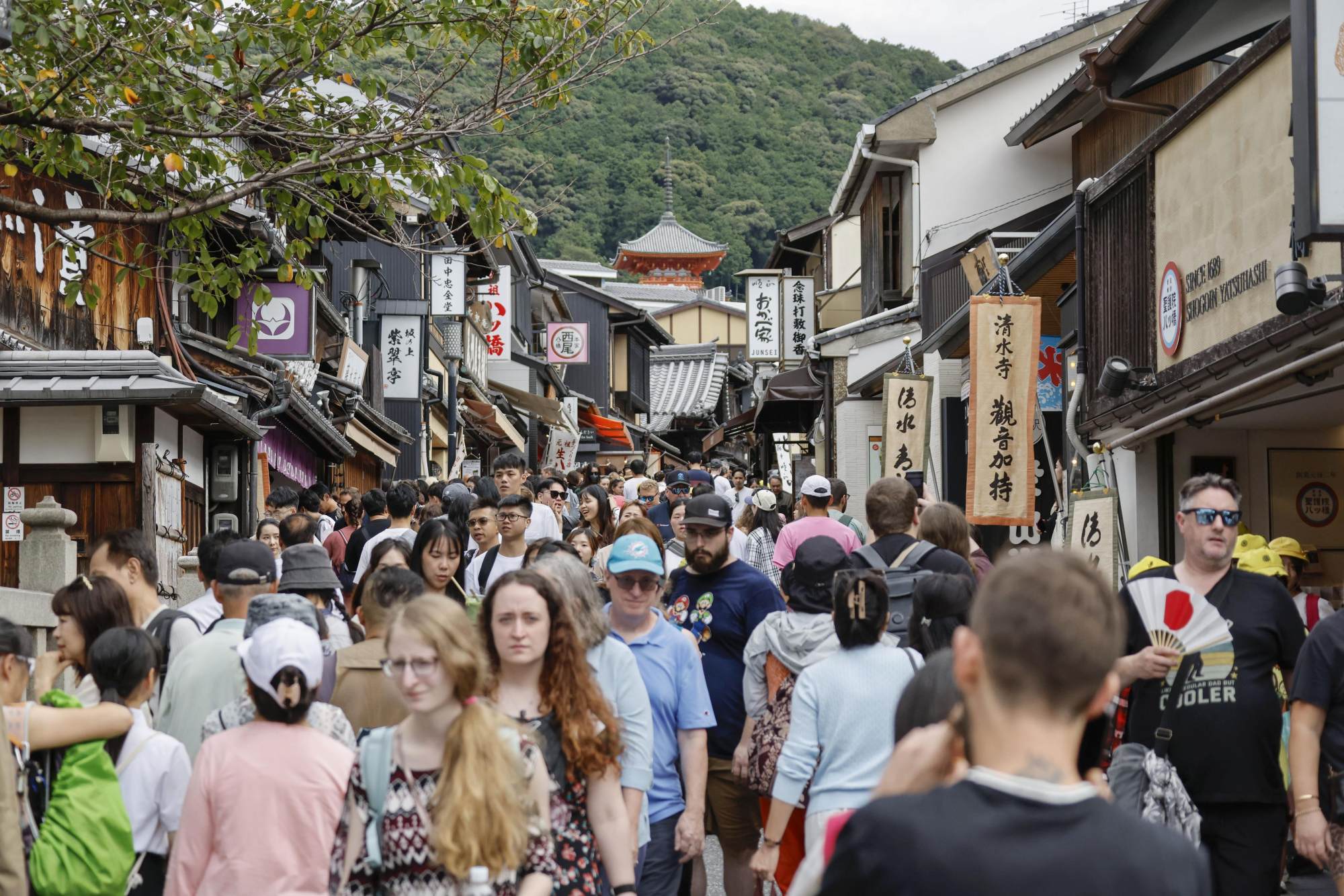
Peter Macintosh, a Canadian author and expert on geisha culture who has resided in Kyoto since 1993, shares these concerns. “Six storeys is already too high for me. The low skyline is what makes Kyoto different from every other city in Japan and I can see no good reason to change that,” he asserted. Macintosh argues that the ability to see the surrounding mountains from most parts of the city is a cherished aspect of Kyoto’s appeal, and losing these views would deeply disappoint residents.
He criticises what he calls the “monstrosities and terrible architecture” already present in the city, arguing against the notion of transforming Kyoto into a “city of the future” with modern buildings. “Kyoto is Kyoto and the people who choose to live here want it to stay that way,” he concluded, emphasising the desire to maintain the city’s unique essence.
The debate underscores a fundamental tension between modern urban development and the preservation of cultural heritage, a challenge faced by many historic cities worldwide. As Kyoto grapples with economic pressures and the demands of a global tourism industry, the question remains: can it adapt without sacrificing the very qualities that make it so beloved?