
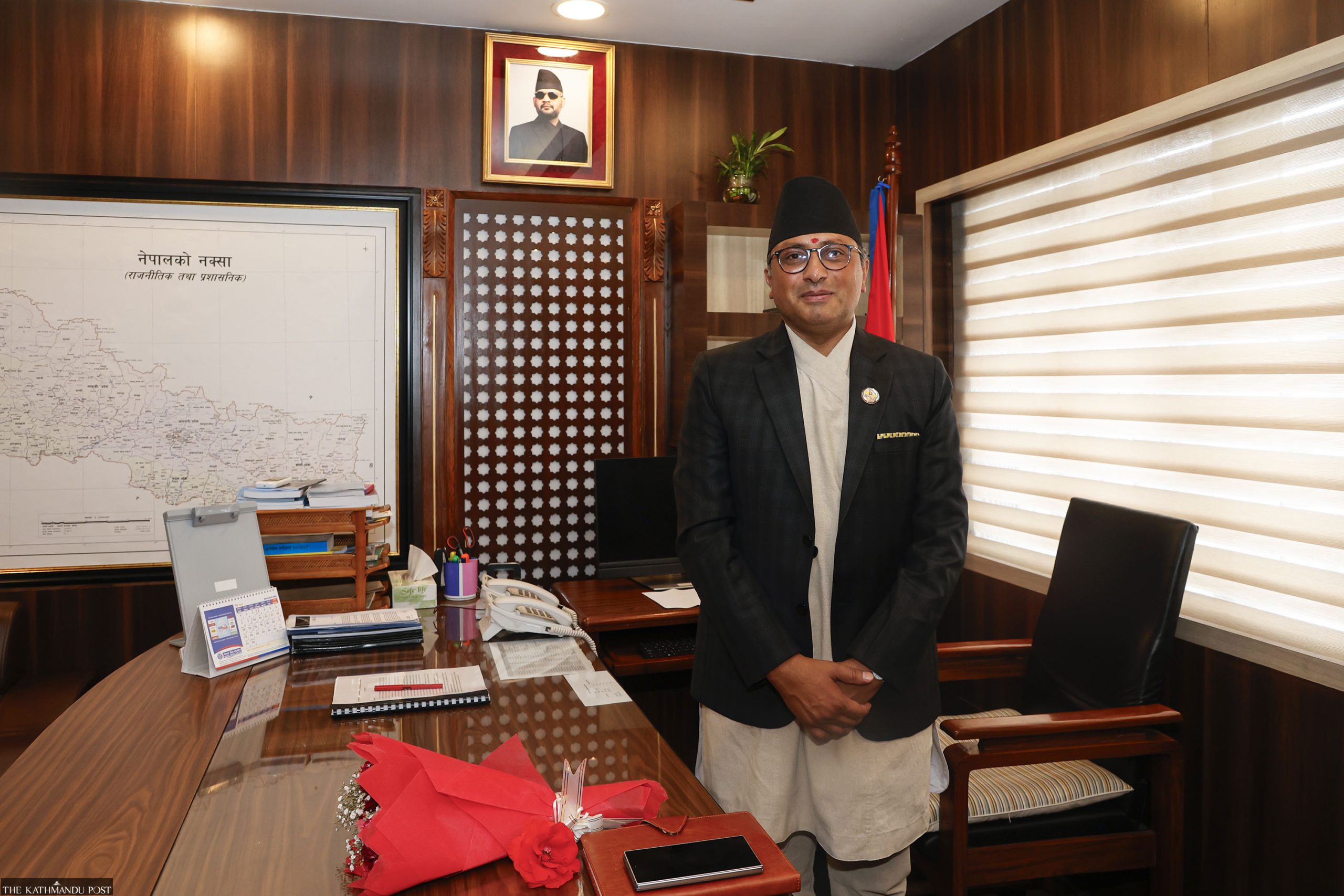
Nepal’s economic landscape is currently marked by a complex interplay of challenges and opportunities. While foreign currency reserves remain robust, the nation grapples with subdued revenue collection, sluggish capital expenditure, and a decline in foreign grants. Against this backdrop, economist Swarnim Wagle has stepped into the crucial role of Finance Minister, facing an immediate mandate to revitalize the nation’s fiscal health.
The new Finance Minister’s primary objectives are clear: to bolster revenue streams, accelerate the pace of capital spending, and curb recurrent expenditure, all while re-establishing fiscal discipline. Despite a steady decline in interest rates, credit uptake by businesses remains weak, leaving the banking sector awash with lendable funds. This scenario reflects a broader erosion of confidence within the private sector, which cites an unfavorable investment climate and pervasive policy uncertainty as significant deterrents. A core responsibility for the Finance Ministry will be to rekindle this confidence through demonstrably credible fiscal management and strategically targeted public spending initiatives.
A Seasoned Economist Takes the Helm
Swarnim Wagle’s journey to the Finance Ministry is marked by a distinguished academic and professional career. He entered Parliament via a by-election and subsequently secured a decisive victory in the general election held on March 21st. Hailing from Gorkha, Wagle’s early education included a notable achievement, ranking second nationally in the 1990 SLC examinations.
His academic prowess is further underscored by advanced degrees from prestigious global institutions. He holds a PhD in Development Economics from the Australian National University, a Master’s degree in International Development and Public Policy from Harvard University, and a Bachelor’s degree in Economics from the London School of Economics. These credentials firmly establish him as one of Nepal’s most highly educated economists and a significant figure in its political sphere.
Extensive International Experience
Beyond his academic achievements, Wagle boasts over 25 years of experience as an international development economist, working extensively both within Nepal and on the global stage. His tenure included a significant role as Chief Economic Adviser for Asia-Pacific at the United Nations Development Programme (UNDP) headquarters in New York, where he was responsible for overseeing economic strategies across 36 countries.
His prior experience also includes serving as a member and later Vice-Chair of the National Planning Commission, a pivotal body for national development. Furthermore, he has contributed as a senior economist at the World Bank and UNDP. Wagle also maintains active roles as a Senate member at Kathmandu University and chairs the Institute for Integrated Development Studies, demonstrating a broad engagement with policy and development discourse.
A Political Journey Rooted in Democratic Ideals
Wagle’s political engagement has been long-standing, deeply intertwined with Nepal’s democratic movement. He was an active participant in the civil disobedience movement and the pivotal 1990 People’s Movement, contributing significantly to policy formulation and election manifesto drafting. Currently serving as Vice-Chairman of the Rastriya Swatantra Party, he now shoulders the immense responsibility of guiding an economy beset by structural weaknesses.
Underlying Economic Fragilities
While headline economic indicators might present a picture of stability, the underlying conditions reveal a more fragile reality. Economic growth has been sluggish, and public sentiment remains subdued. Decades of political instability and inconsistent policy frameworks have taken a toll on the investment climate, prompting many young individuals and aspiring entrepreneurs to seek opportunities abroad. Businesses frequently encounter a labyrinth of procedural hurdles, from initial registration to eventual closure, reinforcing a pervasive perception of systemic inefficiency.
The nation is also contending with an increase in illicit trade along its border regions, while liquidity remains largely concentrated within the banking sector, failing to circulate effectively throughout the broader economy. A concerning trend of agricultural land being left fallow is observed, with commercial farming operations remaining limited in scope. This, coupled with a decline in public trust in governmental institutions, further dampens investor confidence, both domestically and internationally.
Prioritizing Fiscal Prudence and Realistic Solutions
Prakash Sharan Mahat, the former Finance Minister, underscored the imperative of narrowing the gap between government income and expenditure. He cautioned that while the government’s commitment to generating large-scale employment is commendable, achieving tangible results will be an arduous task amidst a volatile global economic environment. Mahat emphasized that successful outcomes necessitate the identification of core problems and sustained, dedicated effort, advocating for a pragmatic approach over populist rhetoric.
The challenge of managing limited financial resources and addressing escalating social security obligations, while simultaneously financing critical infrastructure development and job creation initiatives, demands highly efficient resource mobilization and stringent spending discipline. With a strong parliamentary majority, the government faces little room for excuses in its pursuit of these objectives.
Ambitious Targets for Economic Transformation
The Rastriya Swatantra Party’s manifesto outlines a series of ambitious economic targets. These include achieving an average annual economic growth rate of 7 percent over the next five years, propelling per capita income beyond the $3,000 mark, and steering the economy towards a valuation approaching Rs 10 trillion. The party also pledges to reduce the tax burden without compromising revenue generation, reform the exchange rate peg with the Indian Rupee, streamline investment processes through a one-stop service, and complete national pride projects that have faced delays within a two-year timeframe.
The Path Forward: Stability and Credibility
Experts consistently highlight the critical importance of restoring policy stability and bolstering institutional credibility as foundational steps for economic recovery. Key strategies will involve strengthening fiscal federalism, enhancing regulatory clarity, and fostering an environment conducive to private sector-led growth. Ultimately, Swarnim Wagle’s tenure as Finance Minister will be defined by his capacity to move beyond superficial economic indicators and decisively address the deep-seated structural constraints that continue to impede Nepal’s economic progress.