Fuel Prices Show No Sign of Easing as Middle East Conflict Impacts Australian Drivers
Drivers across Australia are bracing for continued increases at the bowser, with the ongoing conflict in the Middle East significantly impacting global oil prices. New analysis suggests that Australian motorists have already forked out an estimated $500 million in additional fuel costs since the escalation of tensions in the region. This unwelcome trend shows no immediate signs of abating, leaving many households feeling the pinch.
Despite the rising prices at the forecourt, fuel retailers are pushing back against accusations of price gouging. They maintain that fuel supplies remain stable and that the increased costs are a direct consequence of volatile global oil markets, rather than opportunistic profiteering.
The Ripple Effect of Geopolitical Instability
For a considerable period, crude oil prices hovered around the $60 to $70 per barrel mark. However, recent events, particularly the blockade of the Strait of Hormuz – a critical artery for approximately 20 per cent of global oil shipments – have seen prices nearly double, reaching peaks of around $120 per barrel. While prices have seen a slight easing in recent days following optimistic reports of potential diplomatic breakthroughs, motorists are being warned that the cost to fill up their vehicles is still expected to climb in the coming weeks.
In Australia, the average price of unleaded petrol has risen by nearly 12 per cent since the initial attacks in the Middle East on February 28th. The cost per litre has jumped by approximately 16 cents, reaching an average of 148.6 cents. This figure represents the highest unleaded price seen since July 2024, according to figures compiled by the RAC.
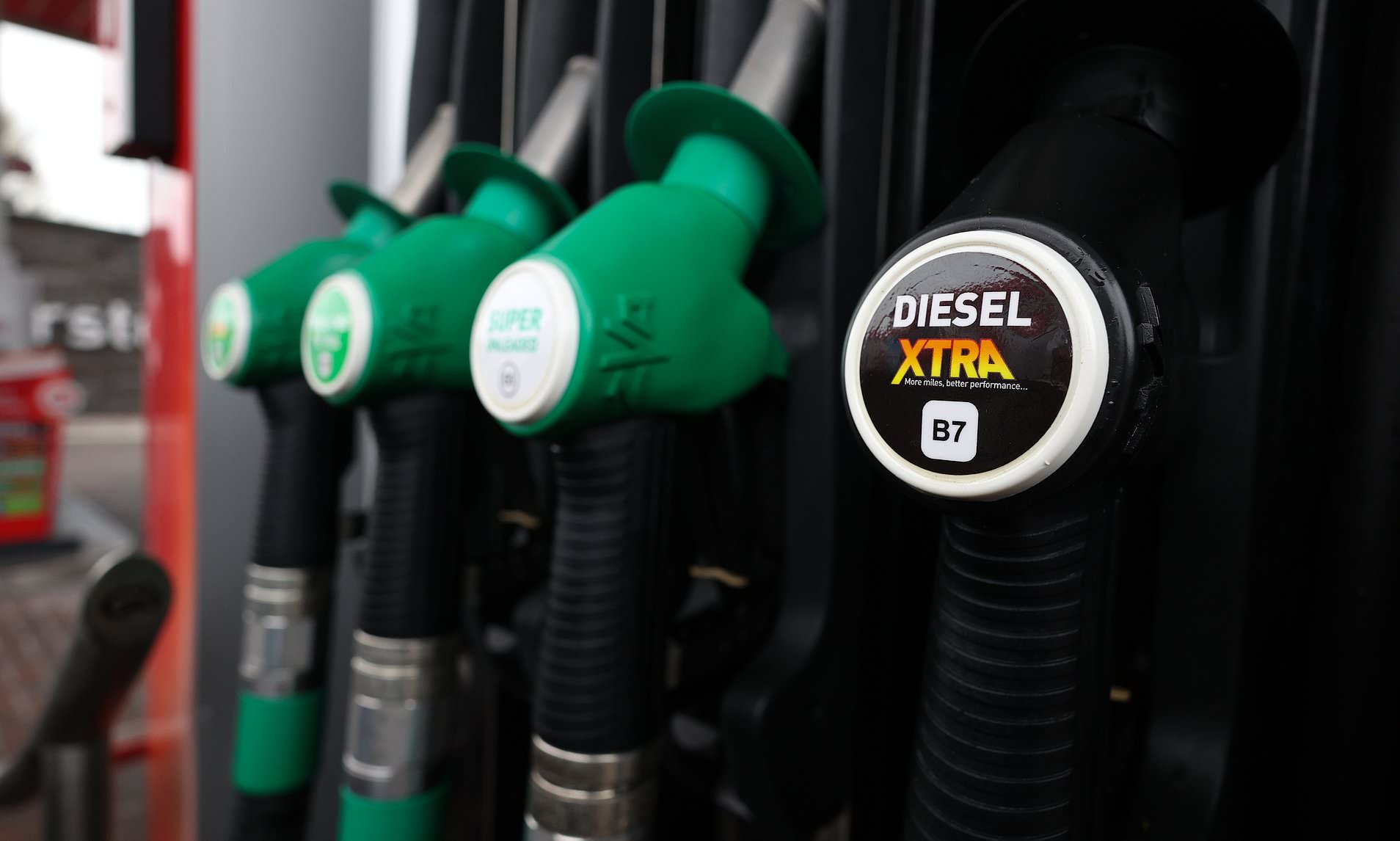
Diesel fuel has experienced an even more dramatic surge, reaching a three-year high. In less than four weeks, prices have climbed by 22 per cent, adding a significant 31.5 cents to the average litre, which peaked at 173.8 cents on Tuesday.
Understanding the Wholesale Price Surge
While pump prices are climbing, an examination of wholesale fuel costs – what retailers pay for their stock – reveals an even more rapid acceleration. Wholesale unleaded prices have reportedly soared by as much as 21 per cent, while wholesale diesel prices have experienced a staggering 40 per cent increase.
This disparity is partly attributed to Australia’s reliance on imported diesel. Unlike petrol, which is largely refined domestically, the nation imports the vast majority of its diesel, making it more susceptible to global price fluctuations. Consequently, retailer margins, which were once around 8.5 per cent per litre a year ago, have contracted to approximately 5 per cent for petrol. The sharp rise in wholesale diesel costs, however, has pushed retail margins on this fuel into negative territory.
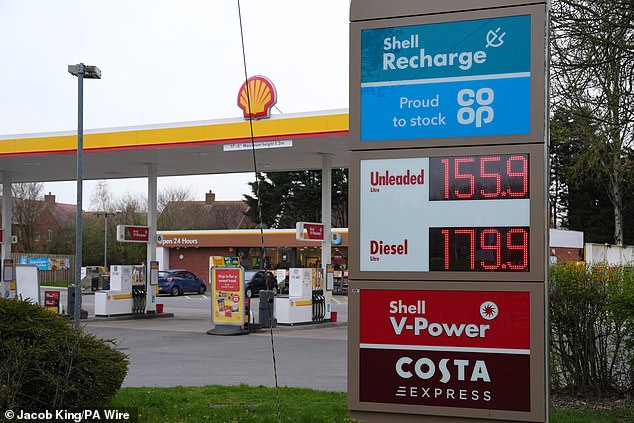
The RAC Foundation has estimated that Australian drivers have spent in the vicinity of $4.574 billion at forecourts since February 28th. This represents an additional $307 million compared to what they would have paid if prices had remained stable.
The Tax Burden at the Pump
Adding to the cost for consumers, taxes continue to constitute a significant portion of what drivers pay. Approximately 53 per cent of every litre of petrol sold is comprised of fuel duty and VAT, equating to around 79 cents per litre. For diesel, due to the higher wholesale pricing, taxes represent a slightly smaller proportion of the overall cost, at 47 per cent. Nevertheless, this still amounts to 82 cents per litre contributing to government revenue.
Fuel Retailers Deny ‘Price Gouging’
The continuous rise in pump prices comes shortly after fuel retail executives were reportedly called for crisis talks with the government regarding suggestions of “ripping off” motorists during the oil crisis. At a meeting on March 13th, government officials reportedly warned company bosses that “unfair practices” would not be tolerated and that consumers would be treated fairly during the crisis.
However, industry representatives have refuted these accusations. The Petrol Retailers Association (PRA), which represents a substantial number of forecourts, stated that “inflammatory language” used by ministers had unfortunately led to unwarranted attacks on petrol station staff by frustrated drivers.
Gordon Balmer, the PRA’s executive director, indicated that “some forecourts are not making anything on fuel at the moment.” He warned that pump prices would likely continue to rise as retailers replenish their stock of unleaded and diesel in the coming weeks.
Mr. Balmer highlighted how different purchasing strategies leave smaller petrol station operators more vulnerable to surging costs. Larger supermarket and oil company retailers often secure stock in advance and in bulk at lower rates, allowing rising wholesale costs to filter through to consumers more gradually. In contrast, smaller, independent petrol stations often pay a “daily spot price,” meaning they are subject to the live market price, leaving them exposed to dramatic oil price hikes. This often forces smaller operators to implement significant price increases or drastically reduce their margins to remain competitive against larger local forecourts.
The PRA has urged the government to reconsider its plans to increase fuel duty, which is scheduled to take effect in September, to alleviate pressure on struggling households. They also suggest that motorists seeking the best fuel deals in their area can utilise apps like PetrolPrices.com. Furthermore, they have called for increased government support for smaller operators facing rising business rates.
AA Highlights Price Discrepancies
The Automobile Association (AA) has also noted significant price differences at filling stations, sometimes located just a short distance apart. Their analysis revealed instances where an independent garage in Warrington was charging 177 cents per litre for diesel, while a supermarket forecourt less than a kilometre away was selling the same fuel for 159 cents.
Similar variations have been observed between major retailers. On the A303 in Popham, Hampshire, a BP station on one carriageway was charging 147.9 cents for petrol, while an Esso across the road on the eastbound carriageway had unleaded priced at 158.9 cents – an 11-cent difference. In Reading, three BP garages within a one-kilometre radius were found to be charging 145.9 cents, 146.9 cents, and 149.9 cents for petrol, a total difference of 4 cents per litre.
Edmund King, AA president, commented that fuel prices “are now all over the place.” He suggested that some larger forecourts might be “hiking prices under the cover of depressing global news,” while some independent garages are attempting to keep prices down. He also acknowledged that prices in remote rural areas tend to be higher due to lower turnover and their vital role as a lifeline for local communities.
Generally, supermarkets remain the most affordable places to refuel. Records indicate that supermarket unleaded was approximately 6 cents per litre cheaper than major fuel suppliers last week and about 7 cents per litre less than independent stations.
Looking Ahead: Further Price Hikes Expected
With prices still on an upward trajectory, the RAC predicts that diesel is on course to surpass the 180 cents per litre mark in the coming week. If it reaches 182 cents, the cost of filling a family car’s tank would exceed $100. Simon Williams, head of policy at the RAC, stated that if petrol climbs to 150 cents, as appears inevitable, the cost of a fill-up would reach $82.50.
Despite these forecasted increases, current prices are still expected to fall short of the all-time records seen in July 2022, when petrol soared to 191.5 cents and diesel to 199 cents in response to Russia’s invasion of Ukraine.
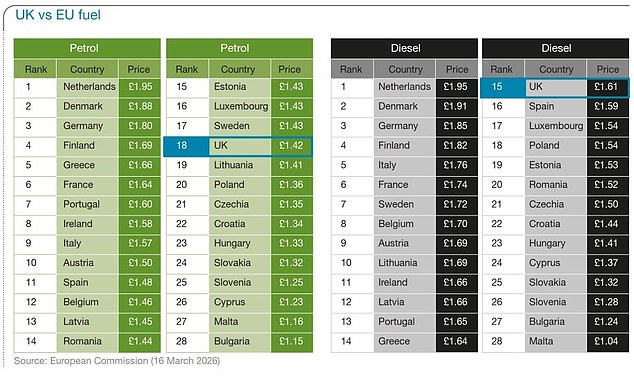
Even with the existing fuel duty cut in place, drivers in Australia face some of the highest taxes on petrol across Europe. However, when comparing the overall price of a litre of unleaded last week, Australia ranked only 18th highest among 28 European nations. UK diesel prices were 15th overall, suggesting that retailers in the EU are implementing more substantial price hikes.
Steve Gooding, director of the RAC Foundation, commented that it’s easy for the government to point fingers at fuel retailers and raise the issue of price gouging. However, he noted that data suggests Australia has a competitive fuel market, especially when compared to prices paid in many European countries. He also reminded that even with elevated oil prices, half of what is paid at the pump goes to the Treasury in taxes.
When contacted, the Treasury stated that a rapid de-escalation in the Middle East remains the most effective way to keep pump prices low. However, the government is committed to taking necessary decisions to assist families with the cost of living and protect public finances. They also referenced comments made by opposition leaders, who have expressed a commitment to ensuring no one is profiteering from the crisis and have tasked competition authorities to investigate any instances of price gouging.
The Road Haulage Association (RHA) has described the government’s reluctance to delay the fuel duty increase as a “missed opportunity to ease pain for many businesses.” Commercial fleet operators, responsible for transporting 80 per cent of the nation’s goods, are facing soaring fuel costs. RHA managing director Richard Smith stressed that their industry is a crucial economic enabler and called for the planned fuel duty rise to be scrapped, along with any linkage to future inflation increases, warning that such a rise would be detrimental to many firms.
Ministers Advise Against Changing Driving Habits
In the wake of the conflict, motoring organisations have encouraged drivers to be proactive, utilise smartphone apps to find the cheapest local fuel, and adjust their driving styles to conserve fuel. However, energy minister Michael Shanks recently advised Australian motorists not to slow down or alter their fuel buying habits due to the oil crisis. This advice comes despite recommendations from the International Energy Agency (IEA) for drivers globally to reduce speed, carpool, and work from home when possible to minimise fuel consumption.
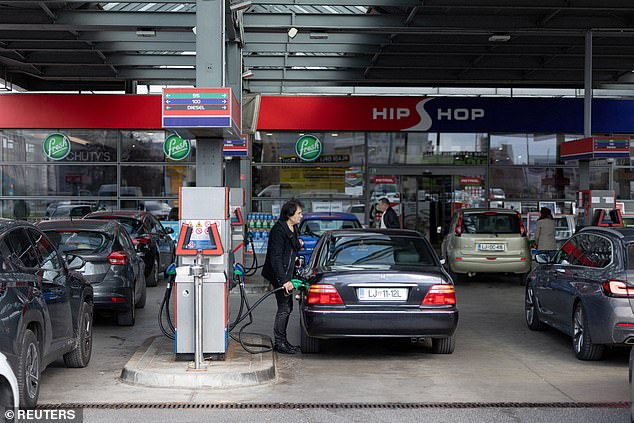
Other governments have taken more direct action. Slovenia has become the first country to introduce fuel rationing, limiting motorists to a maximum purchase of 50 litres of fuel per day until further notice. In South Korea, drivers of internal combustion engine vehicles are now banned from driving one day a week under new regulations.
However, Mr. Shanks reiterated that Australian drivers “should do everything as absolutely normal because there is no shortage of fuel anywhere in the country at the moment.” He assured that the situation is monitored daily and that there are no current issues with fuel availability.
Last month, the government launched its Fuel Finder scheme, which mandates retailers to report all fuel price changes across forecourts nationwide within half an hour of implementation. This initiative aims to bolster transparency for drivers, with the data made accessible to motorists, organisations, and developers, enabling its incorporation into live fuel price mapping applications.