
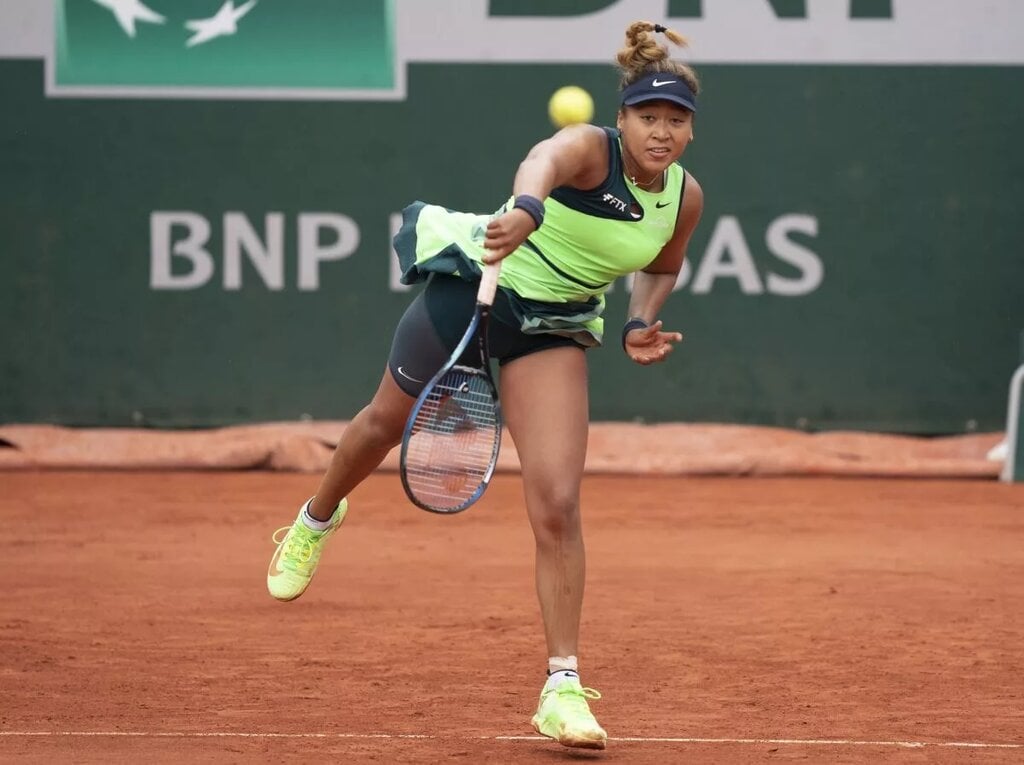
Naomi Osaka’s clay-court journey at the Grand Slams has been a tale of two surfaces, with a stark contrast between her dominance on hard courts and her struggles on the natural clay. While her trophy cabinet boasts four Grand Slam titles – two each at the Australian Open and the US Open – her performances on the red dirt of Roland Garros have historically been more subdued.
Before the 2026 French Open, Osaka’s best result at a natural surface Grand Slam was a third-round appearance at the French Open in 2016, 2018, and 2019. Despite being seeded 16th heading into this year’s tournament, expectations for a deep run were understandably tempered, given her past results on clay. However, Osaka’s recent performances suggest that the narrative is beginning to shift, with the Japanese star showing tangible progress and a growing belief in her abilities on the challenging surface.
The Near Miss That Hinted at Potential
In 2024, Osaka made her return to Roland Garros after a significant break from the sport due to pregnancy. Her second-round encounter was against Iga Swiatek, the formidable three-time French Open champion who would go on to clinch her fourth title just two weeks later. Facing such an elite opponent, coupled with the natural rustiness after time away and a challenging draw, meant the odds were heavily stacked against Osaka.
The scoreline read as a straightforward second-round exit for Osaka. Yet, the reality of the match painted a far more complex picture. Swiatek clinched the opening set in a gripping tiebreak. However, Osaka responded with a stunning display of power and precision in the second set, dismantling Swiatek 6-1. This resurgence carried into the decider, where Osaka gained an early break and even had the opportunity to serve for the match at 5-3. It was a moment brimming with the potential for one of the biggest upsets of the tournament, pitting the underdog Osaka against the top seed and defending champion.
The tension was palpable. At 30-15 in that pivotal game, Osaka had a clear forehand winner into the open court, but a momentary lapse saw the ball sail into the net. She then had to fend off a break point at 30-40, and with the advantage, she held a match point. Swiatek, however, showcased her championship mettle, saving the match point and then reeling off four consecutive games to secure victory. While Osaka’s French Open campaign ended prematurely, the match underscored just how close she was to a significant breakthrough on clay.
Finding Her Footing on the Grand Slam Stage
Two years later, in 2026, Osaka once again found herself facing the top seed at the French Open. This time, however, the encounter occurred in the fourth round, a testament to her improved performances throughout the tournament. While the match ended in straight sets, it followed three hard-fought victories against increasingly challenging opponents.
In the opening two rounds, the 16th seed navigated past Laura Siegemund and Donna Vekic, both dangerous unseeded players who, in previous years, might have posed significant problems for Osaka on clay. Her ability to defeat them in straight sets demonstrated a newfound resilience and tactical maturity.
The third round presented a sterner test in the form of 17th seed Iva Jovic, a rising talent capable of competing against any player. The match was a thrilling seesaw battle, with both players trading tiebreak sets. Ultimately, it was Osaka who dug deep in the final moments of the deciding set, snatching victory and securing her first-ever trip to the fourth round of the French Open. This milestone, achieved after a decade of appearances at Roland Garros, represented more than just a win on paper; it was a significant personal achievement and a clear sign of her growing confidence on the surface.
Her run was eventually halted by the No. 1 seed, Aryna Sabalenka, in the fourth round. While Osaka couldn’t replicate the magic of her earlier matches when it mattered most, she kept the contest competitive throughout. The 7-5, 6-3 scoreline, though a loss, belied the intensity of the battle and the extent to which Osaka pushed the world’s top player.
The match itself held historical significance, being only the fifth women’s singles match to be granted a French Open night session slot and the first since 2023. The high level of play expected was delivered, and as the underdog, Osaka carried the pressure of performing under the spotlight. Throughout the entire match, her level remained remarkably high, a testament to her dedication and improved clay-court game.
While Naomi Osaka may not have yet replicated the Grand Slam heights she’s achieved on hard courts on the clay or grass courts of other majors, her performance at the 2026 French Open clearly demonstrated the vast potential that has always been inherent in her game. She is steadily building a new chapter in her Grand Slam story, one where clay is no longer an insurmountable hurdle but a surface where she can, and is, finding success.


