

Tragedy Strikes: Paralympian’s Death Exposes Safety Failures in Athletics
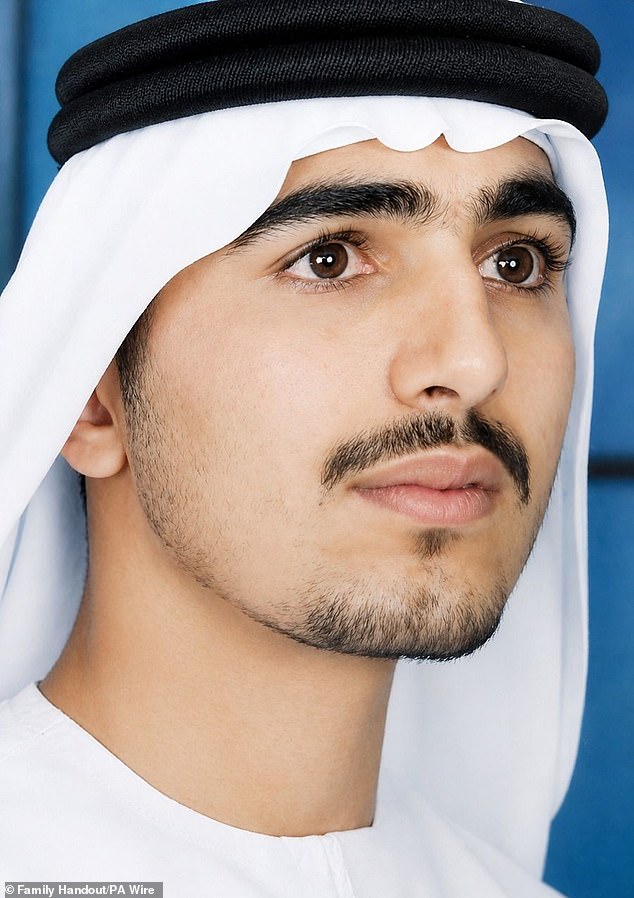
A devastating incident at a London leisure centre has led to a significant legal reckoning for UK Athletics, after a decorated Paralympian was killed when a metal throwing cage catastrophically failed during training. The tragedy, which occurred on July 11, 2017, claimed the life of 36-year-old United Arab Emirates shot-putter Abdullah Hayayei.
Mr Hayayei, a father of five who had achieved sixth in javelin and seventh in shot put at the 2016 Rio Paralympics, was preparing for the World Paralympic Athletics Championships. He was training at Newham Leisure Centre in east London when the equipment, a relic from the London 2012 Olympics, collapsed. The court heard that the throwing cage was in a dangerously compromised state, with “half of it missing,” a critical omission that rendered it unstable.
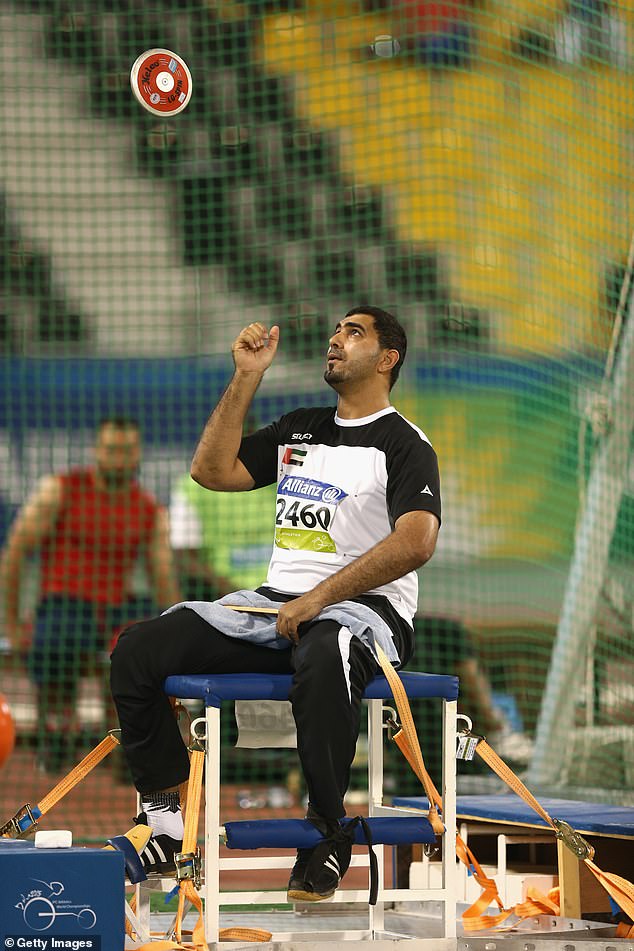
The cage, gifted to UK Athletics by the London 2012 Organisation Committee after the Paralympics concluded in September 2012, was intended for use by elite athletes. However, its subsequent neglect and improper maintenance led to the fatal incident. Mr Hayayei, who competed in the F34 classification for athletes with functional arms but leg impairments, was pronounced dead at the scene. His coach, Ayman Ibrahim, and assistant Abdula Shaik, were mere metres away when the structure gave way.
Corporate Manslaughter and Negligence Charges
In February, UK Athletics Ltd, the national governing body for the sport, pleaded guilty to corporate manslaughter. This admission underscores the severity of the safety breaches that contributed to Mr Hayayei’s death.
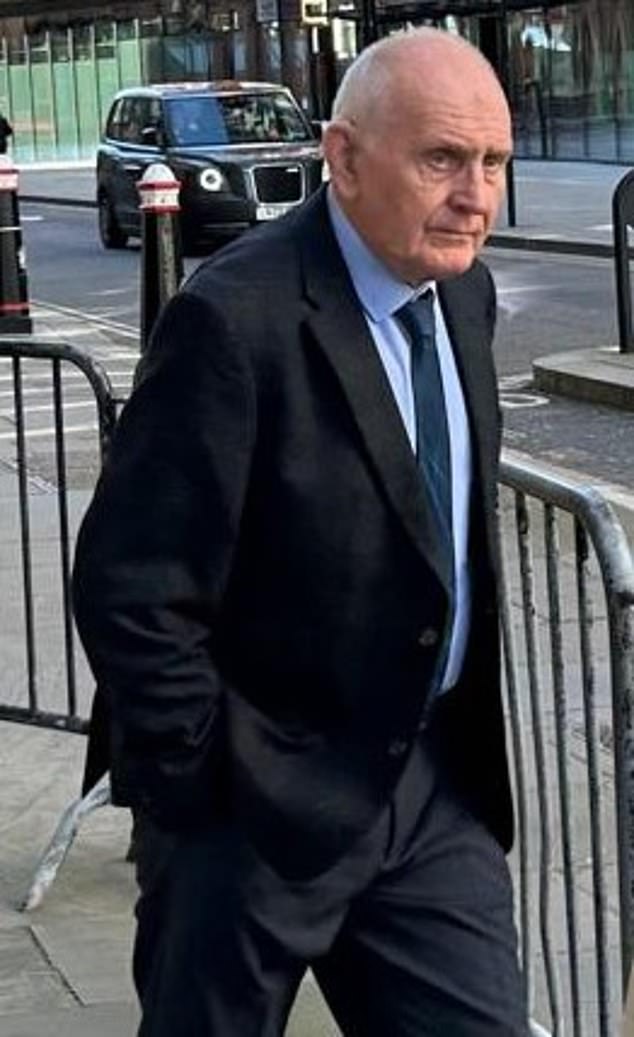
Keith Davies, 79, who held the position of head of sport for the championships, faced charges of gross negligence manslaughter. While he denied this specific charge, he did admit to failing to take reasonable care for health and safety, a violation of the Health and Safety at Work Act 1974.
The Financial Fallout and a Plea for Leniency
During sentencing proceedings, UK Athletics, represented by Simon Antrobus KC, argued for a minimal fine, suggesting an amount at the “very bottom” of the sentencing range, specifically £350,000. The defence cited the organisation’s declining turnover since the tragedy, stating that such a fine would necessitate significant cuts and that they “simply cannot pay that out of cash.” The organisation has, however, agreed to cover £44,000 in prosecution costs.
A Coach’s Harrowing Account and a Devastated Family
Mr Ibrahim, Mr Hayayei’s coach, provided a statement to the police detailing the horrific moments leading up to the collapse. He described how Mr Hayayei was “about to throw” when the cage “collapsed.” The impact was equivalent to a 200kg weight, rendering the athlete unconscious. Despite the efforts of helicopter paramedics, resuscitation attempts were unsuccessful, and Mr Hayayei was declared dead later that evening.
The loss has had a profound impact on Mr Hayayei’s family. His widow, Badria Al-Yahyaei, spoke of him as a devoted husband and father who provided a stable life for them despite his disability. The couple’s five children, who were aged between two and 14 at the time of their father’s death, have seen their family’s monthly income drastically reduce from £8,000 to £1,800. They now rely on Mr Hayayei’s brother for financial support.
“He used to take care of every detail of the house and follow up on the children’s studies and needs,” Ms Al-Yahyaei shared. “His presence was very important to us all. It was a huge shock to me because I was waiting for news of his victory and success in the championships.” She expressed her inability to comprehend the news initially and the enduring pain of the loss. The children, she added, were deeply affected by the absence of a father they were proud of, especially given his representation of the UAE on the world stage. Ms Al-Yahyaei’s grief is compounded by the knowledge that the tragedy was preventable. “What happened was not just a simple mistake,” she stated. “It was the result of negligence, gross negligence, that could have been avoided.”
Mr Hayayei’s brother echoed these sentiments, describing him as “loved by everyone” and a “source of pride for all of us.” He highlighted his brother’s “great determination and ambition” and spoke of the family’s “continuous sadness” since his passing.
Unravelling the Safety Deficiencies
While Mr Hayayei’s coaches reported a strong gust of wind as a potential factor, an expert’s assessment revealed the wind conditions were moderate, peaking in the low thirties miles per hour, well within the expected tolerance of the cage. Investigations subsequently uncovered a shocking lack of essential components.
Keith Davies, who had been involved in the cage’s purchase and oversaw its use, had visited the manufacturer, Mondo, in Spain in 2010. He also witnessed its re-erection by volunteers in Newham in 2017 after it had been relocated. Davies claimed he received no direct training on assembling the cages but asserted they were erected according to instructions. However, prosecutor John Price KC contested this, calling it “not a truthful statement.”
Further scrutiny revealed that while Davies had mentioned using five-gallon water bottles to weigh down the cage, inspectors found that not all were filled to their marked levels. A risk assessment booklet, referenced by Davies, also failed to address the specific management and servicing of the throwing cage. “There was no method for keeping an inventory of all the many parts, to ensure they remained together and were all present when the cages were erected,” Mr Price explained.
A representative from Mondo, Johannes Hoekstra, was unequivocal when asked about the cause of the failure: “I can tell you exactly what is wrong here – half of it is missing.” He identified the absence of a steel base, which should have been securely bolted to the cage, as a critical issue. Mr Hoekstra stressed that the cage “should not be used without the base as it would not be stable.” The assembly also occurred on a slope and without the net support fixed to the post, though these were secondary to the missing base.
A Pattern of Negligence
The prosecutor highlighted that the missing base plates were not an isolated incident. Davies had previously reported an identical white throwing cage collapsing in 2012 due to “exceptional wind.” However, a Mondo representative recalled finding that same white cage erected without base plates in 2011. This suggested a recurring pattern of improper assembly and a disregard for safety protocols.
The investigation also uncovered evidence of a potential cover-up. When a licensing officer searched for missing base plates at the London Stadium, Davies claimed Mondo had never provided them. Yet, a photograph taken eight days earlier showed white base plates in a storage room at the stadium. In January 2020, these base plates were discovered at a farm in Cambridge, having supposedly been moved to free up space. The base plates for the purple cage involved in the fatal incident have never been found. Mr Price suggested it was “reasonable to infer” that Davies knew the location of the white plates and had previously chosen not to use them, now “seeking to cover it up.”
UK Athletics’ Response and the Investigation’s Scale
UK Athletics Ltd attempted to shift blame solely onto Davies. However, their statement was described by Mr Price as a “deeply unworthy document.” Davies’ defence counsel, Mark Balysz KC, urged the judge to consider his client’s remorse and his lifelong dedication to athletics.
The governing body issued a statement expressing their “deepest regrets” and sympathy to Mr Hayayei’s family, friends, and team-mates. Financial records from Companies House indicate UK Athletics Ltd posted a revenue of £13.8 million in 2025, with expenditure matching that figure.
The seven-year investigation by the Metropolitan Police and the Newham Council’s health and safety team involved meticulous examination of over 1,500 documents, approximately 160 statements, and interviews with more than 80 witnesses.
Colin Gibbs, Senior Specialist Prosecutor with the CPS Special Crime Division, emphasised the gross negligence involved. “There can be no doubt that UK Athletics were grossly negligent in their safety management, which caused the death of a talented athlete,” he stated. “They left equipment in a seriously unsafe condition, and Mr Hayayei’s death was wholly avoidable – a fact the organisation has admitted.” He further highlighted the “failure to inspect, maintain and properly manage basic safety components, leaving a heavy metal structure dangerously unstable.”
Detective Sergeant Brett Hagen, who led the Met’s investigation, acknowledged the difficult nature of such prosecutions due to legislative complexities but expressed satisfaction with the outcome.
The sentencing is scheduled to be delivered by Common Serjeant Richard Marks KC.


