The Concept of a “Lost Decade” in the Stock Market
Some financial experts on Wall Street have raised concerns about a potential “lost decade” for stock markets. This term refers to a period where returns are significantly lower than historical averages, often due to economic downturns or market volatility. One firm that has successfully navigated such periods is Yacktman Asset Management.
Yacktman Asset Management’s Resilience
During the 2000–2010 period, which many consider a lost decade for stocks, Yacktman Asset Management thrived. The S&P 500 experienced a 24% decline from its peak in March 2000 through March 2010. This period was marked by weak returns and uncertainty, but Yacktman managed to achieve impressive results.
The firm’s president, Molly Pieroni, emphasized that their investment strategy focuses on companies with strong free cash flows that can withstand recessions. This approach has proven effective during challenging market conditions.
Current Concerns and Predictions
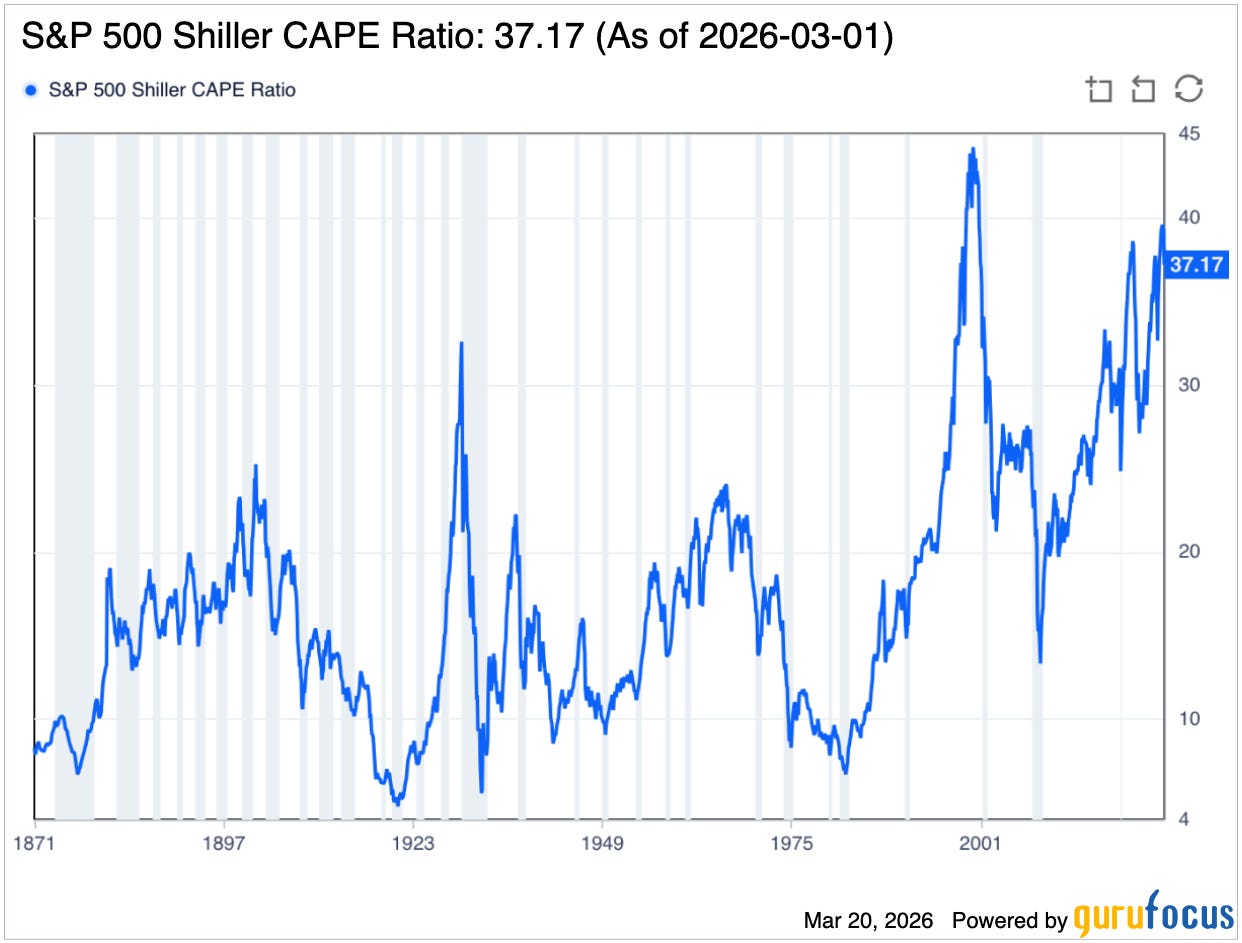
Recent warnings from top forecasters, including Goldman Sachs’ David Kostin, Bank of America’s Savita Subramanian, and Morgan Stanley’s Mike Wilson, suggest that another period of low returns could be on the horizon. These predictions are based on historically high starting valuations, as indicated by the Shiller PE ratio, which is currently near levels seen in 2021 and 2000.
In addition to valuation concerns, several near-term downside catalysts have emerged in 2026, such as the ongoing conflict in Iran, AI disruption, and a weak February jobs report. These factors contribute to the growing anxiety about the future performance of the S&P 500.
Navigating Uncertainty with a Defensive Strategy
Pieroni acknowledges that it is impossible to predict exactly what the market will do, but she believes there is a compelling argument for a lackluster stretch ahead. She noted that the major indices have had mid-20s returns for three consecutive years, primarily driven by multiple expansion rather than fundamental growth.
Yacktman’s investment philosophy centers around managing downside risk. Their track record during difficult periods includes significant outperformance during the 2000–2010 decade and the financial crisis of 2009. The AMG Yacktman Fund (YACKX) gained approximately 102% during the 2000–2010 period, and it surged by 100% over 13 months from March 2009.
Key Elements of Yacktman’s Investment Strategy
The firm’s success during tough times can be attributed to several key factors. One is their focus on normalized free cash flow levels. They assess how a company’s cash flows perform during recessions, which helps them identify safe bets during uncertain times.
“When we look at a company, we’re looking back into what happened in ’07, what happened in ’08, ’09, what happened in 2000, 2001, and as far back as Factset will let you,” Pieroni explained.
She also highlighted the importance of low leverage and reasonable valuations. This approach may lead to underperformance when investors take a risk-on stance, but it becomes beneficial during risk-off periods.
Adapting to Market Conditions
When the market experiences a risk-off mood, Yacktman’s defensive stocks tend to surge as investors seek safety. At this point, the firm typically trims its positions and moves into underappreciated areas of the market. Pieroni described this as the time when they do their best work.
Recently, the firm has added to some software industry stocks following their sell-off earlier in the year. While specific stock names cannot be disclosed due to compliance reasons, the firm’s top five holdings as of December 31, 2025, include Samsung (9.09%), Bollore (7.36%), Canadian Natural Resources (4.91%), Microsoft (4.15%), and Hyundai (3.76%).
Conclusion
Yacktman Asset Management’s ability to navigate periods of market uncertainty highlights the importance of a defensive investment strategy. By focusing on companies with strong free cash flows, low leverage, and reasonable valuations, they have consistently delivered strong returns even during challenging times. As concerns about a potential “lost decade” grow, firms like Yacktman may play an increasingly important role in helping investors protect their capital.