
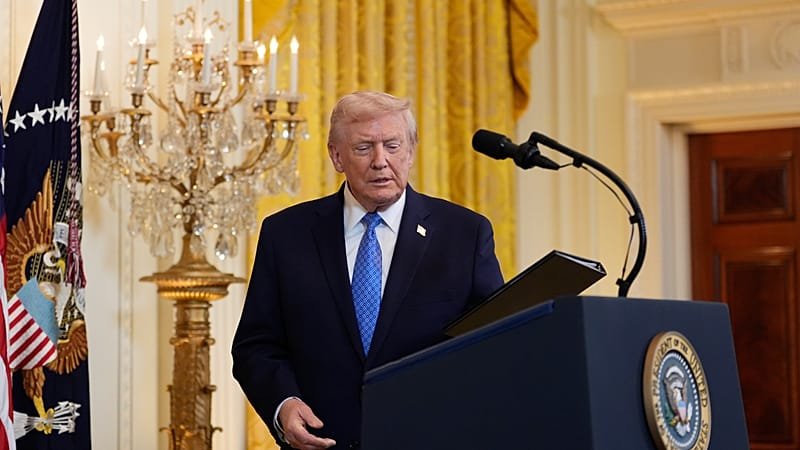
The Trump administration has significantly broadened its travel restrictions, doubling the number of nations affected by sweeping entry limits to 39. This expansion adds 20 new countries and the Palestinian Authority to an existing list, signaling a substantial escalation of the U.S.’s approach to international travel vetting.
The latest announcement includes a complete ban on entry for citizens of five additional countries. Furthermore, individuals traveling with documents issued by the Palestinian Authority are now subject to these stringent measures. For another 15 countries, new, more restrictive limitations have been imposed.
This move builds upon previous actions taken by the administration. In June, President Donald Trump initially announced bans for citizens of 12 countries and heightened restrictions for seven others. At that time, the countries facing a full ban included Afghanistan, Myanmar, Chad, the Republic of Congo, Equatorial Guinea, Eritrea, Haiti, Iran, Libya, Somalia, Sudan, and Yemen. Visitors from Burundi, Cuba, Laos, Sierra Leone, Togo, Turkmenistan, and Venezuela were subjected to more rigorous scrutiny.
The most recent update, announced on a Tuesday, designates Burkina Faso, Mali, Niger, South Sudan, and Syria as countries whose citizens are now completely banned from entering the United States.
New Additions to Travel Restrictions
The 15 countries now facing partial restrictions include:
- Angola
- Antigua and Barbuda
- Benin
- Ivory Coast
- Dominica
- Gabon
- Gambia
- Malawi
- Mauritania
- Nigeria
- Senegal
- Tanzania
- Tonga
- Zambia
- Zimbabwe
These restrictions are comprehensive, affecting individuals seeking to enter the U.S. for both temporary visits and permanent residency.
Exemptions and Effective Date
Certain individuals are exempt from these new travel limitations. These include:
- People who already possess valid visas.
- Lawful permanent residents of the United States.
- Individuals holding specific visa categories, such as diplomats or athletes.
- Those whose entry is deemed to be in the U.S. interest.
The proclamation stated that these updated restrictions are scheduled to take effect on January 1st.
Increased Scrutiny for Palestinians
The new restrictions targeting individuals with Palestinian Authority passports represent an escalation of previous measures. Months prior, the administration had already implemented limits that made it exceedingly difficult for anyone holding such a passport to obtain travel documents for purposes like business, work, leisure, or education in the U.S. This latest announcement goes further by prohibiting emigration to the U.S. for individuals with Palestinian Authority passports.
Rationale Behind the Restrictions
The Trump administration cited several reasons for expanding these travel bans. In its announcement, the administration stated that many of the countries affected by the restrictions were chosen due to issues such as:
- Widespread corruption: This makes it challenging to verify the authenticity of documents.
- Fraudulent or unreliable civil documents: Creating difficulties in vetting individuals.
- Inadequate criminal record systems: Hindering thorough background checks.
- High rates of visa overstays: Indicating potential immigration compliance issues.
- Refusal to repatriate citizens: Countries not cooperating with U.S. deportation orders.
- Lack of stability and government control: Making vetting processes difficult due to an unstable environment.
The administration also referenced national security concerns and foreign policy considerations as drivers for these broadened restrictions.
Criticism and Opposition
The expansion of the travel ban is expected to face significant backlash from critics who argue that the administration is misusing national security as a pretext to exclude individuals from a wide array of countries.
Laurie Ball Cooper, vice president of U.S. Legal Programs at the International Refugee Assistance Project, stated, “This expanded ban is not about national security but instead is another shameful attempt to demonize people simply for where they are from.”
Advocates for Afghan citizens who supported the U.S. war effort expressed alarm, noting that the updated ban no longer includes an exception for Afghans eligible for the Special Immigrant Visa. This visa category is specifically designed for individuals who provided significant assistance to the U.S. military operations in Afghanistan, often at great personal risk.
International Reactions
Governments of the newly restricted countries have begun to respond to the news. The government of Dominica, an island nation in the Caribbean Sea, declared it was treating the matter with “utmost seriousness and urgency” and was actively engaging with U.S. officials to seek clarification on the implications of the restrictions and to address any potential issues.
Ronald Saunders, Antigua and Barbuda’s ambassador to the United States, described the situation as “quite serious” and indicated his intention to seek further information from U.S. officials regarding the new measures.
Adjustments to Previous Restrictions
In addition to adding new countries, the Trump administration also upgraded restrictions on some nations that were previously on the partially restricted list, including Laos and Sierra Leone. In a notable exception, Turkmenistan was recognized for improvements, leading to some easing of restrictions for travelers from that country. The administration confirmed that all other aspects of the travel restrictions announced in June remain in effect.