Used Electric Vehicles Emerge as Top Choice for Long-Term Savings
In a significant shift for the automotive landscape, a comprehensive new study reveals that used electric vehicles (EVs) now present the most economical option for consumers, boasting a lower total cost of ownership than both new and used gasoline-powered cars. This finding offers a ray of hope for budget-conscious buyers navigating the current economic climate, where car payments are reaching unprecedented levels.
A recent analysis conducted by researchers at the University of Michigan has determined that opting for a pre-owned EV can lead to substantial savings over the vehicle’s lifespan. Specifically, a three-year-old electric mid-size SUV, for instance, can save its owner an average of $13,000 when compared to purchasing a brand-new gasoline-powered SUV of the same class. In contrast, a used gasoline SUV from the same category is projected to offer lifetime savings of approximately $3,000, a fraction of what a used EV can deliver.
The financial strain of vehicle ownership is a considerable concern for many households. With over 20% of Americans reportedly committing to monthly car payments exceeding $1,000 for new vehicles, the prospect of reducing these costs is highly appealing. This new research underscores that affordable ownership is not only achievable but is most effectively realized by considering the used EV market.
Maxwell Woody, the lead author of the study and a research assistant at the University of Michigan’s Center for Sustainable Systems (CSS) and School for Environment and Sustainability (SEAS), highlighted the broader implications of these findings. “Transportation constitutes the second-largest segment of the average household budget,” Woody stated. “While new EVs often come with a higher initial price tag, the reality is that 70% of all vehicle purchases are for used cars. Within this segment, used EVs demonstrate the lowest cost of ownership across all vehicle classes.”
Unpacking the Savings: Key Factors and Scenarios
While the overall picture is overwhelmingly positive for used EVs, a deeper dive into the study’s data reveals nuances that can affect the breakeven point compared to their internal combustion engine (ICE) counterparts. The research identifies two primary drivers behind these savings:
- Depreciation: EVs typically experience a steeper depreciation curve in their initial years compared to gasoline cars. This means that after the first few years, their market value drops more significantly, making them more affordable for second-hand buyers.
- Charging Habits: The study assumes that owners will predominantly utilize home charging for their EVs. This is a critical factor in minimizing “fuel” costs.
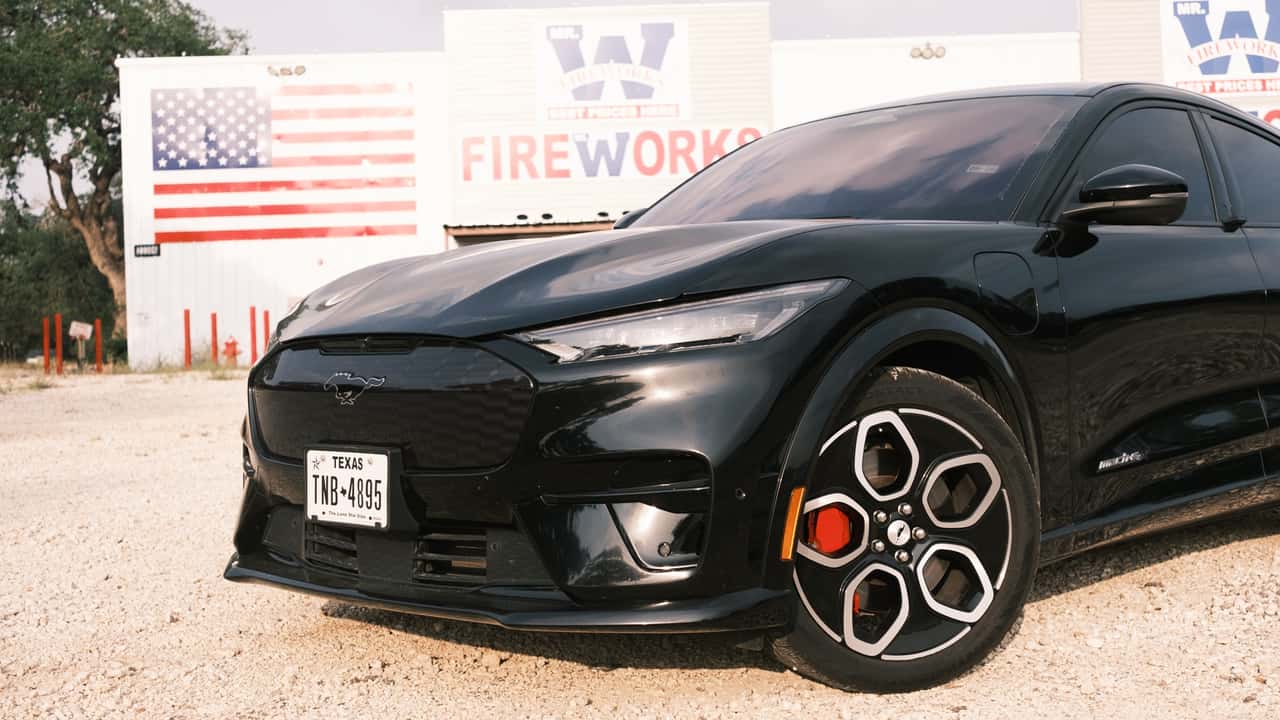
The reliance on home charging is particularly important for maximizing savings. Drivers who frequently rely on public DC fast chargers may find their energy costs approaching or even exceeding those of hybrid vehicles. However, even in such scenarios, the study suggests that a used EV owner would still incur lower overall costs than someone driving a purely gasoline-powered car.
The study’s methodology involved a rigorous analysis of synthetic vehicle models representing various classes and powertrains. Researchers focused on used cars that had been on the market for three years, projecting their ownership over a 10-year lifespan, resulting in a 7-year ownership period for the analysis. The total cost of ownership was meticulously calculated, encompassing:
- Upfront Costs: Including purchase price and any initial setup fees.
- Recurring Costs: Such as energy (electricity or gasoline), maintenance, and insurance.
- End-of-Ownership Costs: Accounting for resale value or disposal.
Methodology and Vehicle Representation
To ensure a comprehensive comparison, the researchers analyzed data from approximately 260,000 Craigslist listings for used cars. This data was used to model depreciation curves. Furthermore, average fuel and electricity costs across 17 different U.S. cities were incorporated, and key vehicle performance parameters were derived from Argonne National Laboratory’s Autonomie model. This approach allowed for the creation of representative “synthetic” vehicles that met specific performance thresholds, facilitating consistent comparisons across different powertrains.
It’s important to note that the vehicles used in the study are not specific, real-world models from manufacturers. Instead, they are representative synthetic vehicles designed to allow for consistent comparisons. This methodology, while ensuring consistency, does present some limitations, such as the current absence of plug-in hybrid pickup trucks in the U.S. market for direct comparison.
New vs. Used: A Tale of Two Markets
The study’s findings present a stark contrast between the new and used vehicle markets for electric cars:
- New EVs: Purchasing a new EV over a seven-year ownership period is generally not more cost-effective than buying a comparable gasoline or hybrid vehicle. In categories like small SUVs, mid-size SUVs, and pickup trucks, new EVs actually exhibit the highest total cost of ownership.
- Used EVs: The financial landscape changes dramatically when considering three-year-old EVs. Over a seven-year ownership period, used EVs emerge as the significantly cheaper option across all vehicle categories.
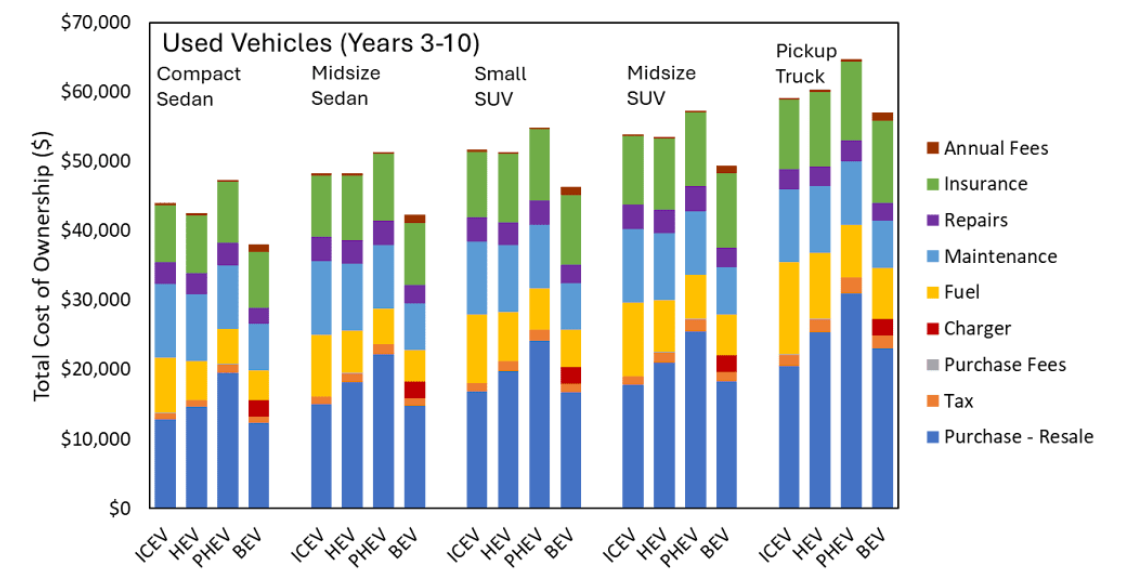
The projected total costs for a seven-year ownership of a three-year-old EV are as follows:
- Compact Sedan: Under $40,000
- Mid-size Sedan: Approximately $40,000
- Small SUV: Around $45,000
- Mid-size SUV: Approximately $50,000
- Pickup Truck: Under $60,000
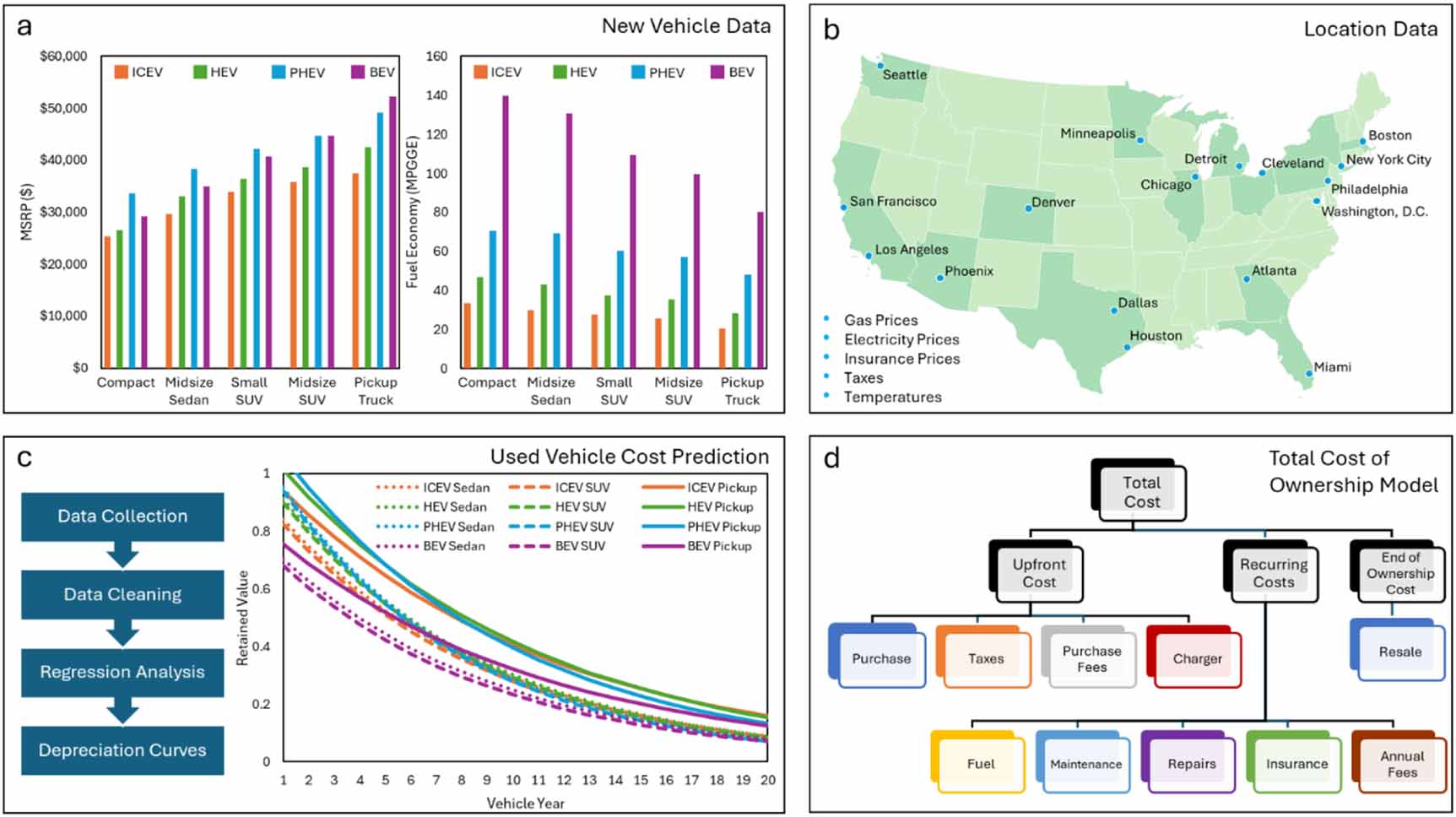
(a) The manufacturer’s suggested retail price (MSRP) and fuel economy for the combinations of vehicle class and vehicle powertrain used in this study.
(b) The 17 U.S. cities investigated in this study, and the location specific data that was used in modeling.
(c) Vehicle depreciation curves resulting from regression analysis of used vehicle listings collected from craigslist.org.
(d) The components of total cost of ownership.
Implications for Consumers and the Market
Greg Keoleian, a senior author of the study and co-director of the Center for Sustainable Systems, offered his perspective on the study’s implications. “For those in the market for a new EV, this news might not be entirely positive, as faster depreciation could affect resale value,” Keoleian commented. “However, for consumers looking to purchase a used vehicle, this presents very encouraging news.”
The research suggests that the current market dynamics, particularly the initial depreciation of EVs, create a prime opportunity for savvy buyers to acquire electric vehicles at a much more accessible price point, while still reaping the long-term benefits of lower operating costs. This shift could significantly influence consumer purchasing decisions and accelerate the adoption of electric mobility in the used car sector.