Singapore’s Domestic Supply Prices See Modest Annual Rise Amidst December Dip
Singapore’s economic landscape experienced a nuanced shift in its domestic supply prices towards the end of last year. While the final month of 2025 saw a notable dip, the overall annual figures reveal a modest uptick, indicating a complex interplay of global and local economic forces.
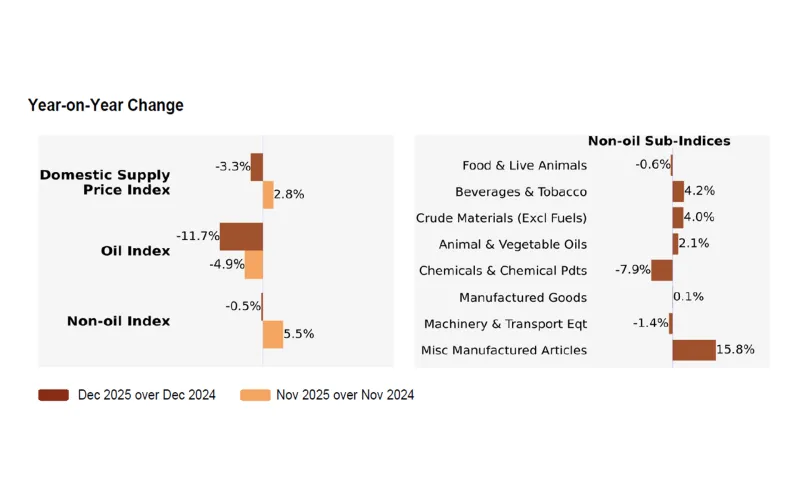
The Domestic Supply Price Index (DSPI) registered a 3.3% year-on-year (YoY) decrease in December. This downturn marked a reversal from the 2.8% increase observed in November, according to the latest figures released by SingStat. This end-of-year decline was primarily influenced by a significant contraction in the oil sector, with the oil index plummeting by a substantial 11.7%. Concurrently, non-oil prices also experienced a slight decrease of 0.5%.
Total annual domestic supply prices for 2025 rose by nearly 1% despite the year-end dip.
Within the broader non-oil category, several sub-sectors contributed to the overall fall. Notably, prices for chemicals and chemical products saw the sharpest decline, largely attributable to a reduction in the cost of organic chemicals. Other areas experiencing price drops included:
- Machinery and Transport Equipment: This sector witnessed a decrease in prices.
- Food and Live Animals: This category also contributed to the downward trend.
However, these decreases were not entirely unchecked. Several categories saw price increases, acting as partial offsets to the overall decline. These included:
- Miscellaneous Manufactured Articles: Prices in this segment rose.
- Crude Materials: This category experienced an increase in its supply prices.
- Animal and Vegetable Oils: A rise was observed in the prices of these commodities.
- Beverages and Tobacco: This segment also contributed to higher overall prices.
- Manufactured Goods: Prices in this area saw an upward movement.
Full-Year Perspective: A Year of Gradual Increase
Despite the contraction observed in December, a look at the full-year data for 2025 presents a more optimistic picture. For the entirety of 2025, domestic supply prices experienced an overall increase of 0.9%. This stands in contrast to the preceding year, 2024, which saw a 1.3% decline in domestic supply prices. This suggests a gradual recovery and a shift towards price appreciation in the domestic supply chain.
The annual gains in 2025 were predominantly led by the machinery and transport equipment sector. This positive performance was particularly bolstered by increased prices for electrical machinery and apparatus. This indicates a robust demand or rising input costs within this vital industry.
Several other sectors also played a significant role in driving the annual price increases:
- Miscellaneous Manufactured Articles: This sector continued its upward price trajectory, contributing to the overall annual gain.
- Food and Live Animals: This category also saw its prices rise over the year, indicating potential shifts in agricultural costs or consumer demand.
- Animal and Vegetable Oils: The increase in prices for these commodities further supported the overall positive annual performance.
These upward movements, however, were somewhat tempered by declines observed in other key areas:
- Chemicals: As mentioned earlier, this sector experienced lower prices, acting as a moderating factor.
- Manufactured Goods: While some manufactured goods saw price increases, the overall impact from the sector was less pronounced due to offsetting factors.
Understanding the DSPI
The Domestic Supply Price Index (DSPI) is a crucial economic indicator for Singapore. It serves to track the price fluctuations of goods that are either produced within the nation or imported for consumption by various entities within Singapore. This includes:
- Businesses: Tracking the cost of raw materials, components, and finished goods for their operations.
- Households: Reflecting the prices of goods available for consumer purchase.
- Government: Monitoring the costs associated with public procurement and services.
By providing a comprehensive view of price movements across a wide range of goods, the DSPI offers valuable insights into inflationary pressures, supply chain dynamics, and the overall health of the Singaporean economy. The recent data highlights a year where inflationary pressures, though present in certain sectors and across the annual period, were somewhat mitigated by specific price drops, particularly in the energy markets, towards the close of the year.