
The Silent Struggle: Mothers Concealing Postnatal Trauma Behind a Facade of Gratitude
For many new mothers in Australia, the journey into parenthood is a carefully curated performance. While outwardly projecting an image of serene contentment, a significant number are silently battling severe physical and emotional trauma, their struggles hidden behind a mask of forced gratitude. This widespread phenomenon, exacerbated by societal expectations and sometimes inadequate healthcare support, is leaving mothers feeling isolated and ashamed to admit they are not “enjoying every minute.”
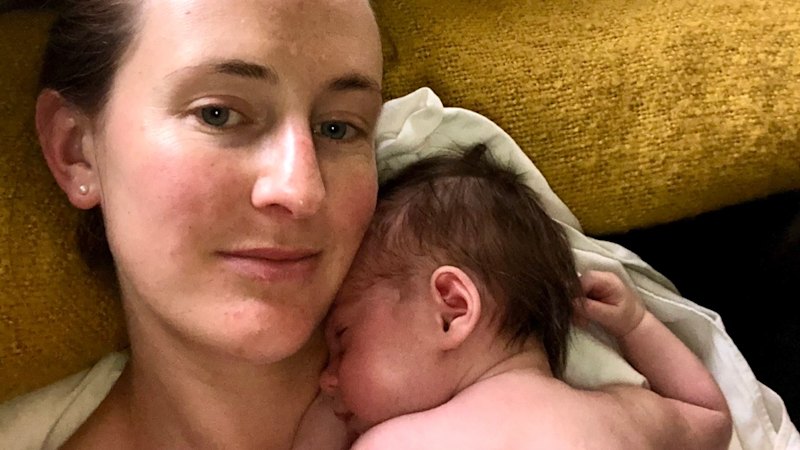
Ali Minichello, a Melbourne mother, experienced this firsthand. After the birth of her first child, she was left with debilitating physical injuries, including urinary incontinence and pelvic organ prolapse. Compounded by her husband’s night shifts as a police officer, the isolation of COVID-19 lockdowns, and her newborn’s severe colic, Ali plunged into depression. Sleep deprivation became so profound that she began experiencing double vision while breastfeeding. Despite her immense physical and emotional distress, Ali felt an overwhelming pressure to appear coping.
“I felt like I would seem ungrateful or unfit to be a mother if I complained,” Ali shared. “Only my husband was privy to my internal world… I was an expert at keeping my dirty little secret hidden.” Her story is far from unique. Across Australia, mothers are reporting a similar experience of concealing the harsh realities of postnatal recovery, terrified of admitting they are struggling, especially when their baby is healthy. The prevailing narrative of motherhood, often reinforced by well-meaning advice, is to “enjoy every minute” and “soak it all up,” leaving little room for frank discussions about the immense challenges involved.
The Pressure to Be Grateful: A Barrier to Seeking Help
This pressure to always feel grateful can be a significant barrier to mothers speaking up about their difficulties. Data from PANDA’s Anxiety Lived Experience Survey, conducted between December 2025 and January 2026, revealed that over one in five respondents reported that healthcare providers did not inquire about their mental health during pregnancy or after birth. Of those who were asked, a concerning 20 per cent felt their concerns were treated superficially, with providers merely “ticking a box” without offering adequate support or referrals.
Ariane Beeston, director of clinical content at COPE, Australia’s peak body in perinatal mental health, highlights the devastating cost of this instinct to hide trauma. “Admitting that you’re finding it hard, that you’re struggling, can seem like a failure and feel incredibly shameful,” she explains. “Some women are also terrified that if they’re too honest and vulnerable about how they’re feeling, their baby might be taken from them.”
Normalising Struggle: Guilt and Shame in Healthy Motherhood
Clinical psychologist and PANDA chief executive Julie Borninkhof corroborates these findings, noting that many women experience deep shame when discussing their struggles. “We hear parents speak about feelings of guilt and shame when their baby is healthy, but they feel sad, depressed, anxious and not enjoying things they used to enjoy,” she says. It’s crucial to understand, Borninkhof stresses, that these feelings are normal and “not a sign that someone is a bad parent.”
The focus of postpartum conversations overwhelmingly remains on the baby, with the mother’s recovery often relegated to secondary importance, if addressed at all. The standard six-week postnatal check-up is frequently perceived as the benchmark for complete recovery, a notion strongly challenged by experts. “When you consider it takes two years for the body, hormones and organs to really recover from birth, six weeks is such a short time to expect someone to be feeling ready for exercise, sex, or even driving,” Borninkhof points out.
Beyond Preparation: When Birth Plans Go Awry
The feeling of being blindsided by the realities of childbirth is a common experience, even for those with professional backgrounds. Psychologist Shari Hendriks, who had meticulously prepared for a vaginal delivery with birthing classes, mindfulness, and physiotherapy, found her experience drastically different. An induction, two failed epidurals, an obstructed labour, an emergency C-section, and a postpartum haemorrhage left her feeling “let down” and disconnected from her body. “I realised that all of the preparation did not cover how to respond when things don’t go to plan,” she stated. Hendriks subsequently struggled with vivid flashbacks, nightmares, and significant physical pain.
Beeston, also a psychologist and author, shares a similar narrative, emphasizing that no amount of preparation can entirely shield one from the impact of a traumatic birth. “You can know all the facts and ‘myths’ of motherhood… and still be shocked when it happens to you,” she asserts. Perinatal mental illness, she adds, “doesn’t discriminate; anyone can be impacted, and no one should feel they need to suffer in silence.”
Systemic Gaps in Postnatal Care
During her recovery, Hendriks joined a hospital-run postpartum physiotherapy class. She was struck by how many mothers, upon learning she was a psychologist, privately shared their own traumatic birth stories. “It was a moment of sheer horror for me to see how little women were being provided with systematic high-quality (or basic) care for their physical and emotional recovery… and how much they felt they had to fend for themselves,” she recounted. These women described severe tearing, frightening emergency deliveries, and babies being whisked away to special care without explanation. Some even reported rough treatment by staff and a lack of basic human courtesies, such as being addressed by name.
Amelie Cazzulino, a postpartum advocate and founder of Bare Mum, points out that while women are often well-prepared for pregnancy and labour, they receive scant guidance on the subsequent physical and emotional fallout. Cazzulino believes many mothers feel trapped by the toxic expectation of appearing unconditionally happy after their baby’s arrival. “There is this unspoken idea that because you have a healthy baby, you should only feel grateful. And of course, you can be deeply grateful,” she acknowledged. “But you can also be in pain, overwhelmed, exhausted, anxious or grieving the version of yourself you were before.”
Cazzulino argues that postpartum recovery is too often dismissed as a matter of individual self-care, overlooking the profound and multifaceted changes a woman undergoes. “The postpartum period changes almost every part of a woman’s life – her body, hormones, sleep, identity, relationships, confidence and mental health,” she stated. “Even when someone looks ‘fine’ from the outside, she may be navigating pain, feeding challenges, anxiety, loneliness or a complete loss of autonomy.”
Addressing the Shortcomings: A Call for Integrated Care
While maternal mental health is gaining more open discussion, medical leaders concede that the system still fails to adequately support many struggling mothers. Dr. Nisha Khot, president of the Royal Australian and New Zealand College of Obstetricians and Gynaecologists (RANZCOG), described PANDA’s findings on mental health screening gaps as “certainly concerning.” She emphasised that a mother’s physical and emotional recovery must be prioritised alongside her baby’s health.
“Recovery following childbirth is highly individual,” Dr. Khot explained. “For some women, the impacts of birth trauma, physical injury, or mental health challenges can extend well beyond the traditional six-week review.” She also noted that workforce pressures and fragmented care models, particularly in regional areas, remain significant barriers to providing comprehensive support. “There is more work to do to ensure all women receive equitable, compassionate, and comprehensive care,” Dr. Khot urged.
The Department of Health, Disability and Ageing has indicated that the government is collaborating with states and territories to enhance mental health screening and follow-up care for new and expectant parents. This includes efforts to integrate physical recovery with mental health supports through national programs. Funding is also being provided to Monash University to update pregnancy and postnatal care guidelines, aiming to improve outcomes for both mothers and babies.
For those seeking support:
- PANDA: Visit panda.org.au or call the PANDA Helpline on 1300 726 306 for help with pregnancy or new parenthood challenges.
- COPE: Search the COPE Directory for help and support services.
- Lifeline: Contact 13 11 14 for immediate support.
- Beyond Blue: Offers support for mental health concerns.


