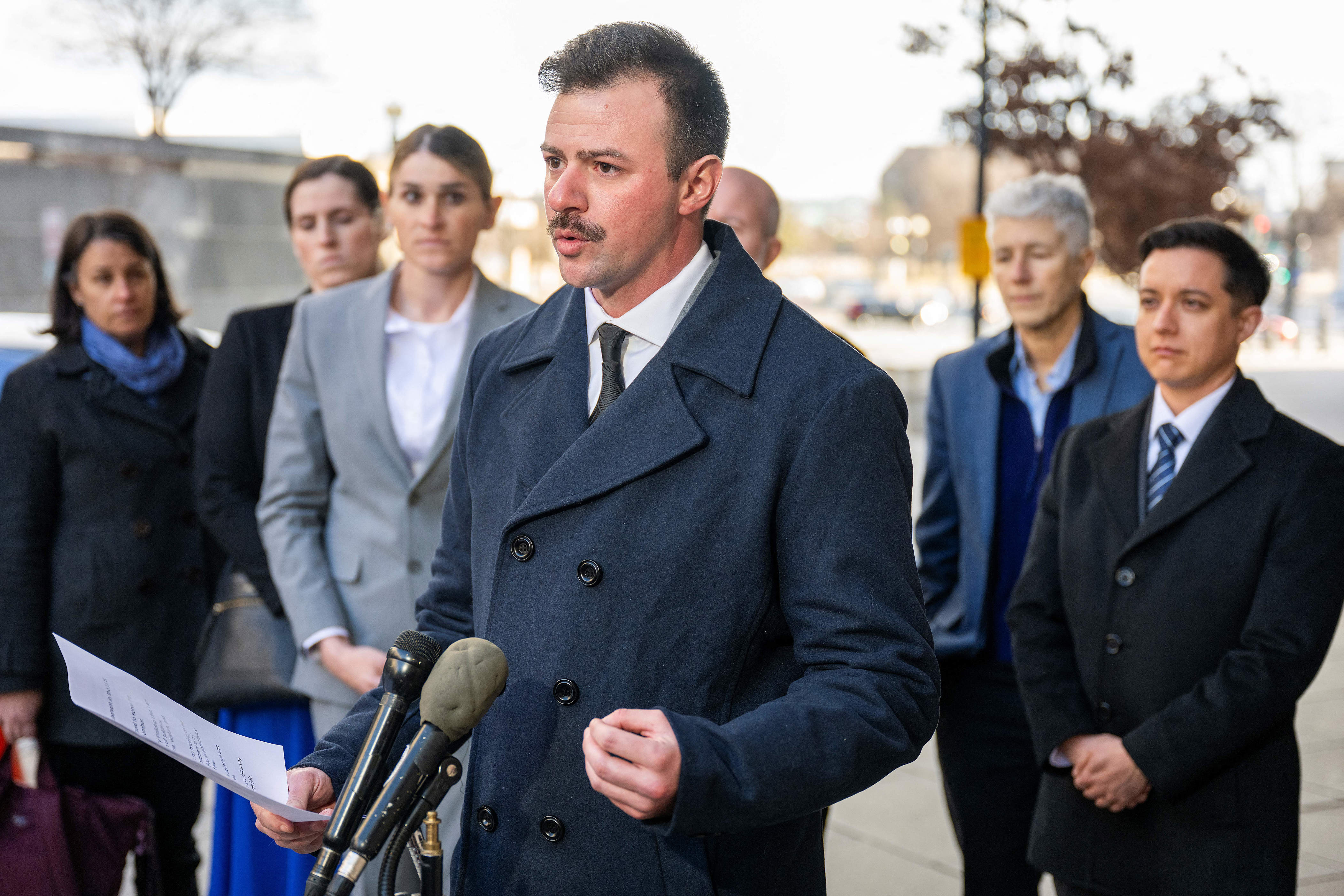
Federal Court Blocks Transgender Military Ban Amidst Discrimination Claims
A significant legal battle over the inclusion of transgender individuals in the U.S. military has seen a major victory for transgender service members, with a divided federal appeals court in Washington, D.C. issuing a ruling that halts the Trump administration’s efforts to remove them. The court’s decision highlights concerns that the administration’s policy was driven by prejudice rather than legitimate military necessity.
The 2-1 ruling stated that the administration’s policy was “arbitrary” and fuelled by “animus” towards transgender people. Judge Robert Wilkins, writing for the majority, expressed that some of the disqualifications were unexplained and lacked reasonable justification. He argued that the policy was instead “driven by the bare desire to harm a politically unpopular group: persons who identify as transgender.” The court found direct evidence indicating that prejudice, rather than sound policy, motivated these classifications.
While the ruling prevents the Pentagon from discharging transgender service members who are already serving, it does allow the military to continue denying entry to new transgender recruits while the broader legal challenge proceeds. This aspect of the decision largely upholds a previous ruling from District Judge Ana Reyes in March 2025, who had also described the policy as “unabashedly demeaning” and “soaked in animus” without any factual basis.
The appeals court decision comes after an extensive legal fight initiated by over two dozen active-duty service members and recruits. They contend that the administration’s directives are discriminatory and violate their Fourteenth Amendment right to equal protection under the law.
Advocates have hailed the ruling as a crucial turning point. Shannon Minter, legal director for LGBTQ Rights, described it as a “dramatic shift in the status quo,” noting that the decision stops the administration from actively discharging these service members. He added that service members were facing review boards and potential discharge despite years of honourable service, and the court has now affirmed that the ban has no legitimate basis.
Jennifer Levi, GLAD Law’s senior director of transgender and queer rights, echoed this sentiment, stating the ruling “confirms that the Trump administration has no legitimate basis to discharge transgender servicemembers who have met every demanding standard and proven, time and again, their fitness and dedication to serve.”
The Administration’s Directive and Its Underpinnings
Donald Trump’s directive, issued shortly after he took office in January of the previous year, asserted that “the adoption of a gender identity inconsistent with an individual’s sex conflicts with a soldier’s commitment to an honorable, truthful, and disciplined lifestyle, even in one’s personal life.” Following this, the Department of Defense issued an order for military officials to immediately review the medical records of transgender service members with the aim of removing them from all branches of the armed forces.
This order came despite a series of court rulings that had already deemed the president’s directive discriminatory. It also followed a Supreme Court decision that had temporarily permitted the administration to bar transgender individuals from entering all branches and to remove currently serving transgender members.
Judicial Scrutiny and Dissenting Views
In their analysis, the appellate court judges examined policy memos and official statements used to defend the ban. They found it difficult to reconcile these justifications with the numerous public statements made by officials that disparaged transgender individuals. Judge Wilkins highlighted that the judges “could not ignore the disparaging statements repeatedly made by the decisionmakers.”
He further elaborated on the rationale presented for the policy, noting, “What has been clearly and repeatedly explained are the foundational premises of the Hegseth Policy: persons with a ‘false gender identity’ are unfit for the military, and persons with a history of gender dysphoria are also unfit because they lack ‘honesty, humility … and integrity.’”
The ruling concluded that these justifications were likely a pretext. “All of these things, when taken together, demonstrate that the government’s stated reason for issuing the Hegseth Policy as based solely upon gender dysphoria was pretextual, and that instead, the Hegseth Policy was premised, at least in part, on a non-legitimate state interest to harm the politically unpopular group of transgender persons,” the court stated.
However, the dissenting opinion came from Trump-appointed Judge Justin Walker. He argued that the authority to make system-wide military judgments regarding the composition of the armed forces rests solely with the president and Congress.
Broader Context of Policies Affecting Transgender Americans
This legal challenge is part of a wider pattern of administrative actions impacting transgender Americans since the current administration took office. These have included an executive order that rescinded federal recognition of transgender individuals, measures restricting access to gender-affirming healthcare, and bans on transgender athletes participating in women’s sports. Furthermore, hundreds of federal surveys have reportedly removed questions related to sexual orientation and gender identity, according to research from UCLA Law School’s Williams Institute.