
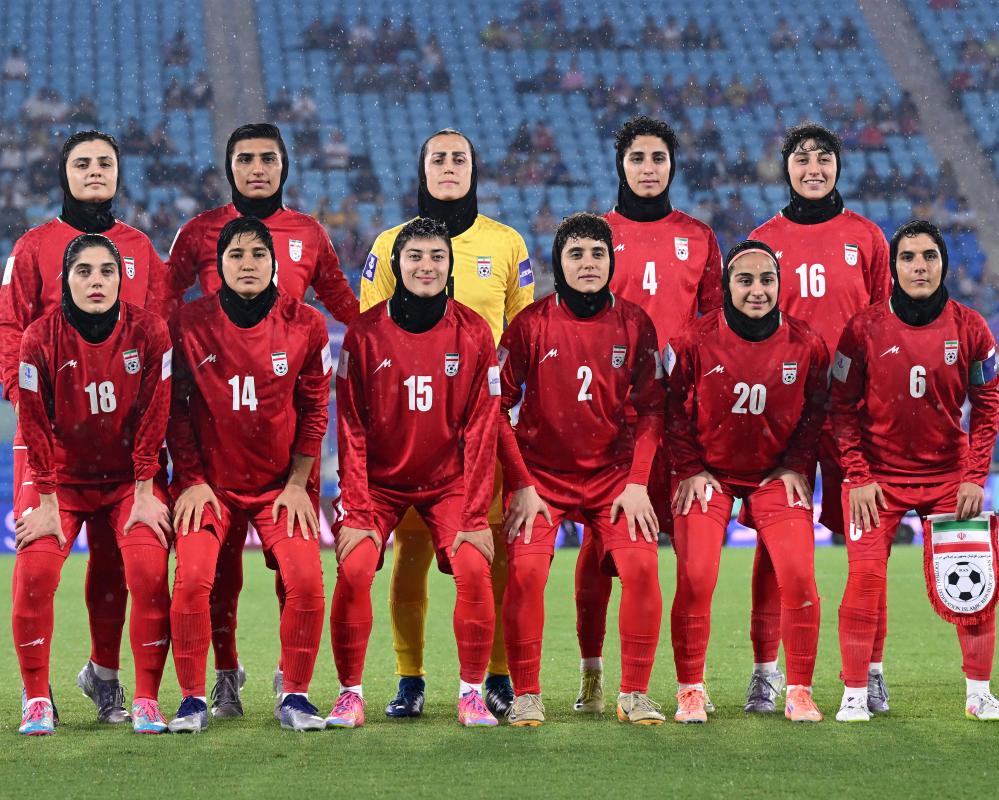

The Australian leg of the Women’s Asian Cup has seen a significant development, with three more members of the Iranian women’s football squad departing the country after initially seeking asylum. These players, identified as Mona Hamoudi and Zahra Sarbali, along with a support staff member, reportedly left Australia on Saturday night, heading to Kuala Lumpur. There, they are expected to reunite with other team members who are already en route back to their homeland, Tehran.
Adding to this unfolding situation, Iranian state media has also indicated that the team’s captain, Zahra Ghanbari, has withdrawn her asylum bid and will also be travelling to Malaysia before returning to Iran. If Captain Ghanbari indeed flies home, this would leave only two of the original seven squad members who sought asylum still in Australia. Iranian news agencies, such as IRNA and Mehr, have framed Ghanbari’s decision as a “patriotic” return to the “embrace of the homeland,” portraying it as a voluntary and proud choice.
Australia’s Home Affairs Minister, Tony Burke, confirmed on Sunday that three players had opted to rejoin their teammates in Iran. This decision came after the players were issued special protection visas, offering them the opportunity to remain in Australia. Minister Burke emphasised that Australian officials had repeatedly offered the players chances to discuss their options, acknowledging that while the government could provide opportunities and communicate them clearly, it could not dictate the context of the players’ “incredibly difficult decisions.”
The Players’ Plight and International Attention
The Iranian team’s situation gained considerable international attention, particularly after players reportedly refused to sing their national anthem before a match during the tournament. This act led to them being labelled “wartime traitors” by some back home. The escalating Middle East conflict, coupled with the players’ predicament, even drew calls for support from then-US President Donald Trump.
Allegations of Coercion and Intimidation
However, the narrative surrounding the players’ return is far from simple. Tina Kordrostami, an Iranian-born Sydney councillor, voiced serious concerns to Fox News, suggesting that the returning women had been subjected to intimidation and direct communication from the Iranian regime. Kordrostami alleged that individuals within Sydney and Brisbane had been actively influencing the players, attempting to undermine any offers of support from Australia.
“When you see these women turning back to Iran and not seeking our help in Australia, do not think this is their request,” Kordrostami stated. “They are being coerced, they are being threatened, they are being intimidated; this is not a choice of their own.” She posited that the only genuine choice these young women had made was their initial decision to remain silent during the national anthem.
Tense Scenes and Shifting Decisions
The situation culminated in a tense standoff on Monday at the team hotel on the Gold Coast. Anti-Iranian regime protesters gathered as the players prepared to board a bus to the airport for their flight back to Iran. Reports described chaotic scenes at the Royal Pines hotel, with government minders reportedly rushing into the lobby searching for players believed to be seeking protection in Australia.
Adding another layer to the complexity, one player reportedly changed her mind on Wednesday and contacted Iranian embassy officials. Others, as mentioned, returned home with team officials, with some still believed to be in Kuala Lumpur awaiting their onward journey to Iran.
Iranian State Media’s Counter-Narrative
Iran’s Tasnim news agency released a statement claiming the players had been subjected to “psychological warfare, extensive propaganda and seductive offers.” Federal Minister Kristy McBain, speaking on ABC News, dismissed this statement outright, labelling it as “propaganda.” Minister McBain reiterated that the Australian government had been transparent about its efforts to ensure the women had every opportunity to make their own decisions.
Minister Burke expressed pride that Australia had provided a platform where these women could experience a nation offering genuine choices and interact with authorities keen to assist them.
Broader Immigration Policy Shifts
Coinciding with the facilitation of asylum requests for these players, the Australian government also fast-tracked new legislation aimed at preventing certain temporary visa holders from entering Australia and seeking permanent residency, particularly in light of the Middle East war. These new laws could be used to bar Iranian tourists from travelling to Australia if their visas were issued before recent military actions involving the US and Israel, especially if there are concerns they might overstay their visas or claim asylum upon arrival.
The Australian government has publicly supported the US and Israeli-led military actions in Iran and is providing military assistance to the United Arab Emirates as a defensive measure against potential retaliatory strikes from Tehran.


