

Chinese EV Giant’s Lightning-Fast Charging Set to Shake Up UK Auto Market
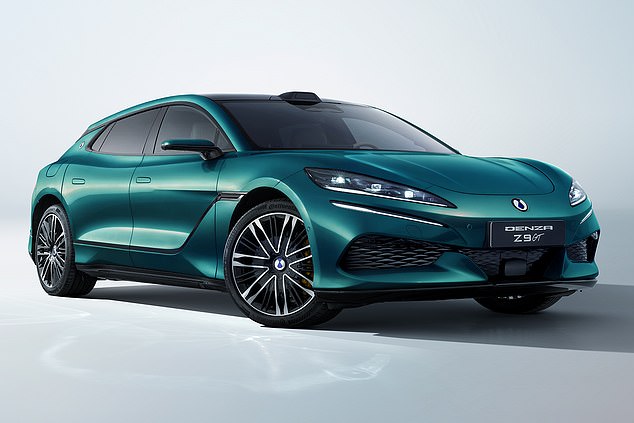
A new electric vehicle from Chinese manufacturer BYD is poised to make waves in the United Kingdom, presenting what many are calling a significant “wake-up call” for British carmakers. The Denza Z9GT, set to launch in the UK this summer, boasts an astonishing charging capability: it can replenish its battery from a mere 10 per cent to a substantial 70 per cent in just five minutes, and reach a remarkable 97 per cent charge in a mere 12 minutes. This blistering pace rivals the time it takes to refuel a traditional petrol car, a feat that industry experts believe could revolutionise the electric vehicle (EV) landscape.
This rapid charging technology is being hailed as a game-changer, but it’s also fuelling apprehension within the UK’s automotive sector. The concern is that the Denza Z9GT, with its advanced technology and potentially competitive pricing, could significantly outperform and outprice its British counterparts. Such a scenario could exacerbate the UK’s already precarious reliance on Beijing for automotive technology, particularly in light of a recent slump in domestic car production, which has reportedly hit a 73-year low.
The Denza Z9GT is no slouch in terms of range either, promising an impressive journey of up to 497 miles on a single charge. Following its European debut next month, the vehicle is slated for a UK release, although official pricing details are yet to be confirmed.
Beyond the vehicle itself, BYD is also making a substantial investment in charging infrastructure. The company has announced plans to establish up to 300 “Flash Charger” stations across the UK by the end of the year. These stations are designed to resemble familiar petrol station forecourts, aiming to ease the transition for consumers accustomed to traditional refuelling methods.
The secret behind BYD’s rapid charging lies in its innovative “Flash Charger” technology. These chargers operate at power levels of up to 1,500 kilowatts, a stark contrast to the 350 kilowatts typically offered by most fast-charging stations currently available in the UK. Furthermore, BYD’s new battery designs are engineered to minimise resistance, thereby reducing power loss through heat generation during the charging process.

Industry Leaders Sound the Alarm
The technological prowess of BYD’s charging system has drawn praise from notable figures in the automotive world. Andy Palmer, the former CEO of Aston Martin and a veteran known for his significant contributions to electric vehicle development during his tenure at Nissan, described BYD’s technology as “a significant step forward.” He highlighted its potential to alleviate a key “psychological barrier” for potential EV adopters: the perceived long waiting times associated with charging.
However, Palmer also issued a stark warning. He noted that the rapid advancements being made by Chinese manufacturers, who are innovating at an “incredible pace,” should serve as a critical “wake-up call” for automakers in Europe and the UK. He expressed a concern that Western manufacturers risk being “left behind” if they do not accelerate their own innovation efforts.
BYD’s Growing Dominance and Broader Implications
BYD, an acronym for “Build Your Dreams,” entered the UK market in 2023 and has been steadily expanding its presence by offering a range of affordable electric cars that undercut many British competitors. Under the leadership of Chinese billionaire Wang Chuanfu, BYD has experienced meteoric growth. By the close of last year, the company had become the largest seller of electric vehicles in the UK, with an impressive 51,422 registrations.
The rapid charging capabilities of BYD vehicles also pose a challenge to established players like Tesla. Last year, BYD famously dethroned Elon Musk’s company as the world’s largest electric carmaker. While Tesla’s Superchargers can reportedly add up to 200 miles of range in 15 minutes, BYD’s claimed 432 miles in 12 minutes presents a significantly faster charging experience.
The increasing popularity of BYD, alongside the emergence of other Chinese brands like Chery, which has enlisted the support of football personality Peter Crouch and his wife Abbey Clancy for its advertising campaigns, is heightening concerns about potential sharp declines in sales for British and European car manufacturers. This competitive pressure comes at a critical juncture, with the UK’s ban on the sale of new petrol and diesel cars set to take effect in 2030, a policy that is expected to further boost EV adoption.
Beyond the economic implications, BYD’s growing dominance also raises broader geopolitical questions. Concerns have been voiced regarding the potential for China’s Communist government to leverage vehicles as tools for espionage. Under Chinese national security laws, domestic companies are legally obligated to “support, assist, and co-operate” with state intelligence operations, a provision that has led to scrutiny and apprehension from governments worldwide.


