Escalation in the Middle East: Missile Strikes and Rhetoric Intensify
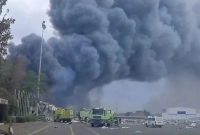
Tensions in the Middle East have reached a critical juncture, with escalating rhetoric and military actions dominating headlines. Overnight, a missile struck the US embassy in Iraq, igniting a small fire on a helipad. This incident follows a significant escalation by the United States, with President Trump declaring that Iran’s military targets on Kharg Island have been “completely obliterated.”
Despite these aggressive moves, Iran has signalled no intention of backing down. The nation has adopted a defiant stance, indicating plans to ramp up its use of more potent weaponry, including ballistic missiles. Furthermore, Iran has warned that parts of the United Arab Emirates (UAE) are now considered legitimate targets. This declaration comes as Iran continues to threaten US interests and has already launched attacks on major oil facilities in the region.
The ongoing conflict is having a tangible impact on global energy markets, with fuel and energy prices already experiencing significant surges in the US, UK, and across the wider world.
Iran’s Counter-Threats and Strategic Posturing
Iran has not shied away from issuing stern warnings to the United States. The nation has indicated plans to retaliate against any invading forces and has vowed to transform the Strait of Hormuz into a war zone should US troops set foot on Iranian soil. This hardline approach is being met with a significant US military deployment, with reports suggesting up to 5,000 marines and sailors are being sent to the region as part of an amphibious ready group.
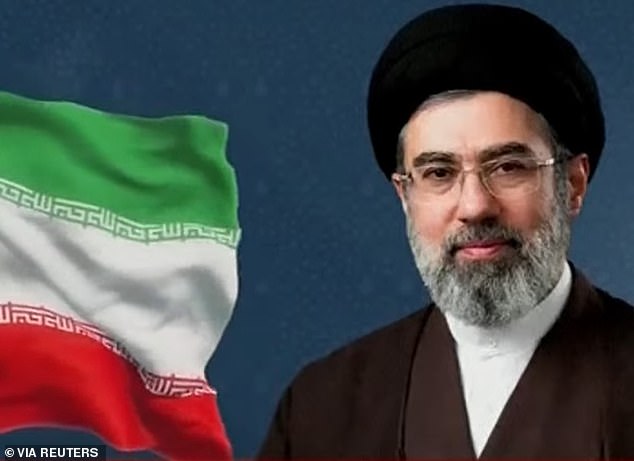
Sources within Iran suggest that the new supreme leader, Mojtaba Khamenei, has sanctioned drastic measures in response to a potential invasion. These measures reportedly include turning the Strait of Hormuz into a de facto war zone. Another concerning option on the table is the “total destruction” of any island used by US forces for a landing, which could involve the annihilation of its oil infrastructure.
Adding to the escalating rhetoric, an Iranian MP and former Foreign Minister, Manouchehr Mottaki, stated that if the US lands forces on Iranian territory, Iran reserves the right to capture American troops. He posed a rhetorical question: “If they dare to commit such an act and sit on a part of our soil, why shouldn’t we go to a part of their soil – which now exists in the form of their regional bases – carry out a helicopter landing there, and capture their forces?”
US Strikes on Kharg Island and Trump’s Declaration
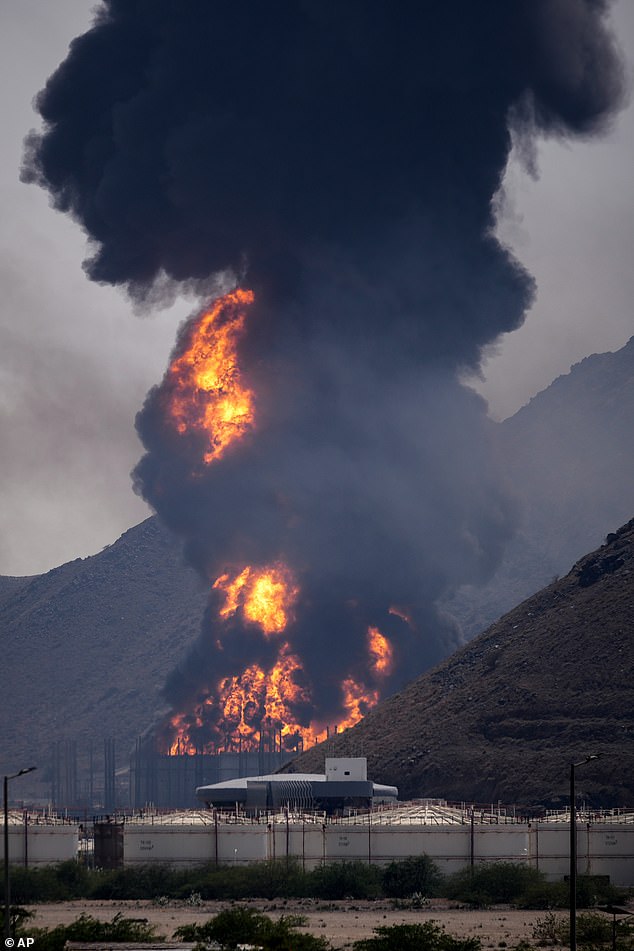
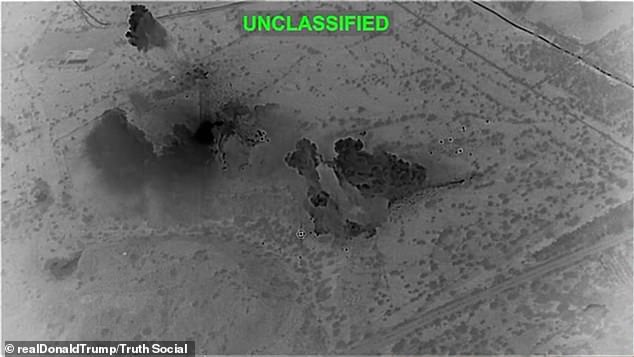
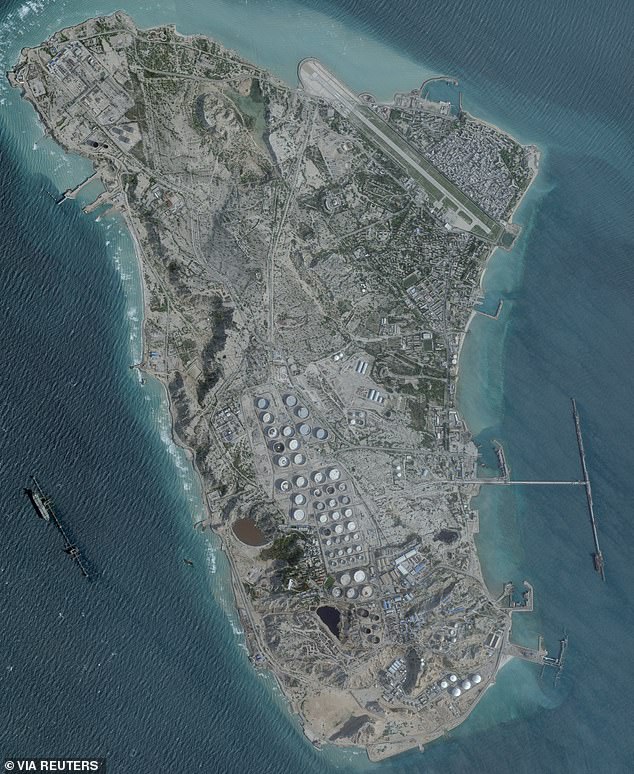
The recent US strikes targeted Kharg Island, a location described as a “jewel in the crown” for the Islamic Republic and a critical hub for Iran’s oil exports, handling approximately 90% of the nation’s crude. President Trump took to social media to announce the operation, stating, “Moments ago, at my direction, the United States Central Command executed one of the most powerful bombing raids in the History of the Middle East and totally obliterated every MILITARY target in Iran’s crown jewel, Kharg Island.”
However, President Trump clarified that he had not authorised attacks on the island’s oil infrastructure. He issued a stark warning: “However, should Iran, or anyone else, do anything to interfere with the Free and Safe Passage of Ships through the Strait of Hormuz, I will immediately reconsider this decision.” He further declared that Iran’s alleged plans to “take over the entire Middle East, and completely obliterating Israel” were now “DEAD!”
The Strait of Hormuz: A Vital Chokepoint Under Threat
Iran’s actions have effectively halted traffic in the crucial Strait of Hormuz, a vital shipping lane through which approximately 20% of the world’s oil and liquefied natural gas passes. Since the conflict began, numerous attacks and suspicious activities have been reported on vessels in the region. This blockade is directly contributing to the soaring fuel prices observed in Britain and globally. The average price of diesel has reached unprecedented levels, and petrol is at an 18-month high, with crude oil prices surging back over the significant $100 per barrel mark.
Despite the apparent blockade, Iranian General Mohsen Rezaei has claimed the strait is not entirely closed, stating it is only restricted for the US Navy, US oil tankers, and their coalition. He asserted that the end of the war is within Iran’s control, contingent on receiving full compensation for damages and the withdrawal of the US from the Persian Gulf.
Challenges of Reopening the Strait
Former US General David Petraeus, who commanded forces in both Iraq and Afghanistan, described the prospect of forcibly reopening and maintaining the Strait of Hormuz as “feasible but very, very challenging.” He highlighted the difficulties, noting that even a few mines can significantly impede naval operations, and minesweeping capabilities are limited.
Petraeus elaborated on the complexities of mine clearance: “Keep in mind that just a handful of mines in the water can slow you down enormously. Keep in mind that the minesweeping capabilities are limited. But it’s [a] painstaking business. As you know, there’s mines that be on the bottom of the floor of the Strait, there are those that float just below it, there’s others that can be tethered to the bottom. And again, it’s a painstaking effort to do that – first to identify them and then to figure out what means are you going to use to blow it up or disable it, or what have you.” He stressed the necessity of absolute confidence from major oil companies before large tankers would risk transiting the Gulf and the Strait.
Iran Designates UAE Interests as Targets
In response to the attack on Kharg Island, Iran’s Revolutionary Guards (IRGC) have declared that US interests in the UAE, including ports, docks, and military installations, are now legitimate targets. The IRGC has urged residents in the UAE to evacuate these areas and US military shelters to avoid civilian casualties.
Official figures from the Ministry of Defence indicate that nine ballistic missiles and 33 drones were launched from Iran towards the UAE on Saturday. This brings the total number of ballistic missiles, cruise missiles, and drones launched from Iran since the war commenced to a substantial figure. The IRGC also launched an attack on a major port and energy installation in the UAE, seemingly targeting the Gulf’s petroleum facilities.
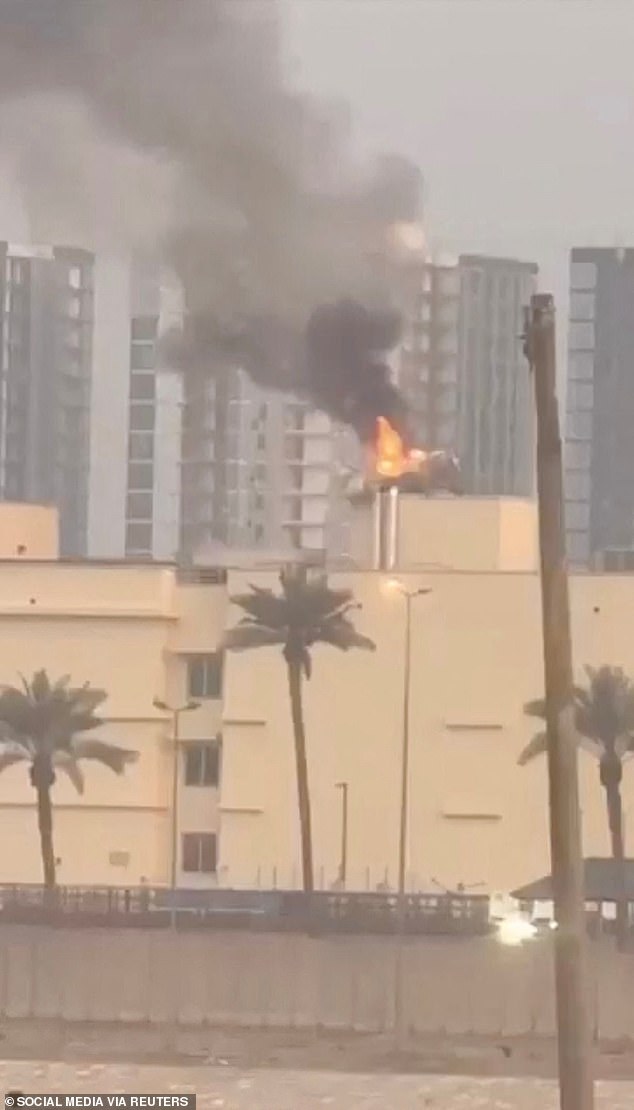
Dark plumes of smoke were observed rising from Fujairah, where Iranian attacks have previously targeted an oil storage and trading hub. The port is also home to a significant oil export terminal. A fire was reported following what the UAE described as a successful interception of a drone. Reports suggest this incident led to a partial suspension of oil loading operations.
Regional Leaders’ Concerns and Israel’s “Decisive Phase”
Prior to these developments, Gulf leaders were reportedly expressing private anger over President Trump’s escalating conflict. While not publicly criticising the US President, Dubai billionaire Khalaf Al Habtoor alluded to the situation in a now-deleted social media post, suggesting that the region was being drawn into dangerous escalation without consultation.
Meanwhile, Israel has stated that the war against Iran is entering its “decisive phase.” Explosions have been reported across the Middle East, including strikes on the US embassy in Baghdad and a major Emirati energy facility. Black smoke was seen rising above the US embassy in Iraq, marking the second time it has been targeted recently.
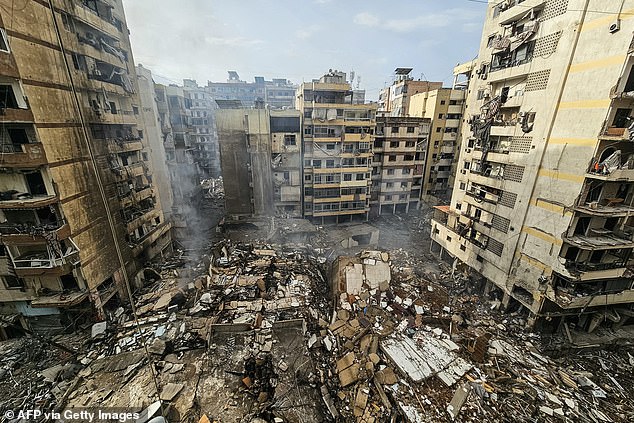
Israel’s Defence Minister, Israel Katz, cautioned that the conflict would “continue as long as necessary.” Iran’s health ministry reports that over 1,200 people have been killed by US and Israeli attacks, though these figures are difficult to independently verify. The UN refugee agency estimates that up to 3.2 million people have been displaced within Iran, and in Lebanon, over 770 people are reported to have been killed, with 800,000 displaced. The conflict, now entering its third week, shows little sign of abating, with millions displaced by waves of drone, missile, and aerial bombardments.