
US President Criticises World Cup Hosts Over Iran Stance
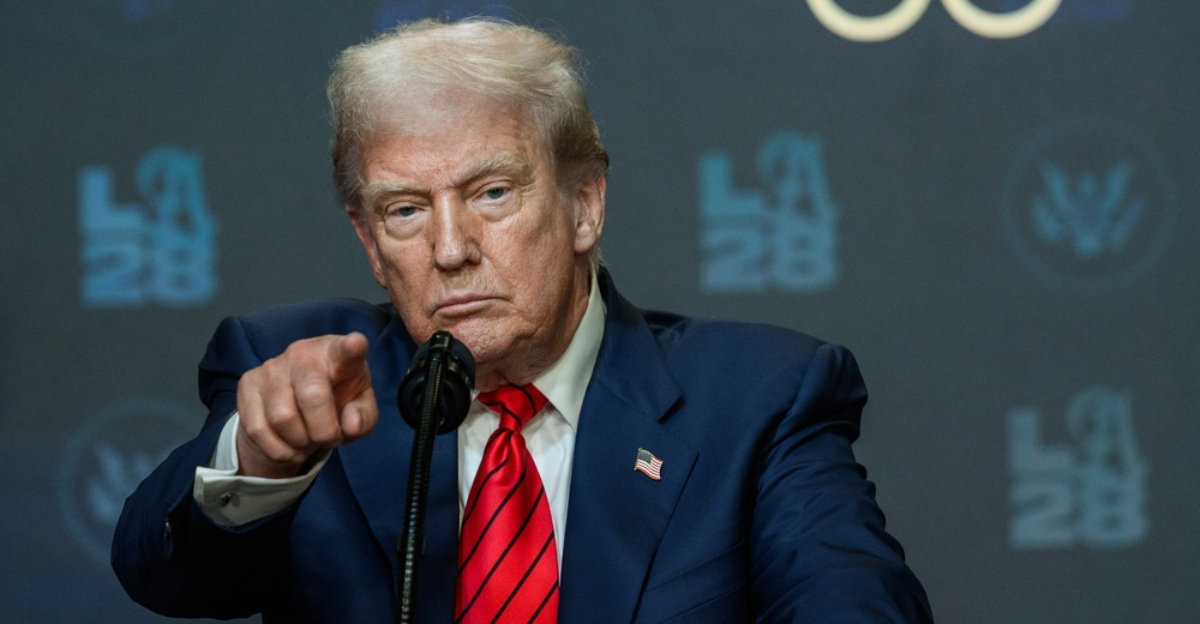
US President Donald Trump has made a series of public remarks targeting several countries that are set to be involved in the 2026 FIFA World Cup, following their refusal to support Washington’s military actions against Iran. His comments were shared on his Truth Social platform, where he accused a number of key allies and NATO members of not backing the United States’ efforts.
The controversy comes as the United States prepares to co-host the 2026 World Cup with Canada and Mexico, with the event scheduled for June and July. The timing of Trump’s criticism is significant, as it coincides with heightened tensions in the Middle East after a series of military operations involving the US and Israel targeting Iran.
This conflict has led to disruptions in regional airspace and travel across parts of the area, affecting international teams preparing for the World Cup. For instance, Iraq’s preparations for a play-off match in Mexico have reportedly been impacted by these developments.
Allies Distance Themselves from the Conflict
Several US allies have publicly expressed their stance on the ongoing conflict. UK Prime Minister Keir Starmer stated that Britain would take “necessary action to defend ourselves and our allies” but would “not be drawn into the wider war.” Spain’s Prime Minister Pedro Sánchez described the strikes as “illegal,” emphasizing that “we are not going to respond to one illegal act with another. Violence begets more violence.”
French President Emmanuel Macron called the attacks “outside international law,” while Italy’s Prime Minister Giorgia Meloni said that Italy “is not taking part and does not intend to take part.” These statements reflect a growing divergence between the US and its traditional allies on how to handle the situation in the Middle East.
Trump Targets Countries Linked to World Cup
In his response, Trump specifically targeted countries that are both part of NATO and connected to the upcoming World Cup. These include Canada, Belgium, France, Germany, the Netherlands, Norway, Portugal, Spain, and the United Kingdom, as well as Japan, South Korea, and Australia.
He wrote: “The United States has been informed by most of our NATO ‘Allies’ that they don’t want to get involved with our Military Operation against the Terrorist Regime of Iran.” Trump added that he was “not surprised” by their stance, claiming he had long viewed NATO as “a one way street.”
He also claimed that the US has significantly weakened Iran’s military capabilities and suggested that American forces do not need allied support. This statement highlights a broader concern about the reliability of US alliances in times of crisis.
Growing Divisions Ahead of the World Cup
The dispute underscores the increasing rift between Washington and its partners at a time when global attention is shifting toward the 2026 World Cup. The tournament is expected to bring together nations from around the world, yet the political tensions surrounding it may cast a shadow over the event.
As the World Cup approaches, the question remains whether the geopolitical challenges will affect the spirit of the competition or if the focus will remain on the sport itself. For now, the events unfolding in the Middle East continue to shape the narrative around the upcoming tournament.


