
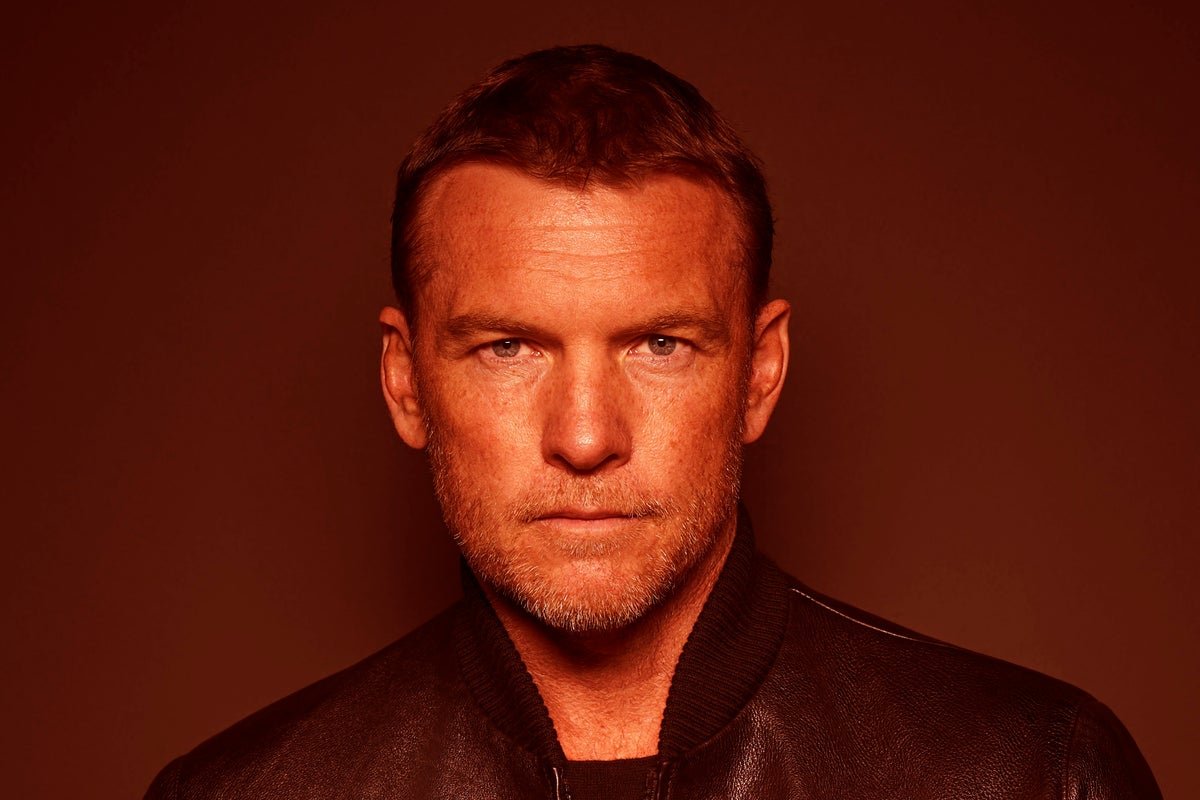
Sam Worthington: Navigating the Unpredictable Tides of a Hollywood Career
Sam Worthington’s career trajectory is anything but conventional. One moment he’s front and centre in a global blockbuster, the next he’s a near-silent presence in a gritty thriller. This unpredictable path, he admits, is a deliberate, albeit unconventional, choice.
“It’s always been bizarre,” Worthington chuckles, his voice resonating with a familiar Australian cadence, though currently muffled by the snowy landscape of Colorado where he’s spending time with his family. His scruffy beard lends him a rugged, wilderness-ready appearance, prompting a self-deprecating joke: “I look a bit like I’m in The Revenant.”
Currently, Worthington is garnering attention for his role in the taut heist thriller Fuze. The film, which he describes as “exactly the kind of film that just never gets made any more,” sees him playing a minor, almost dialogue-free character. He reveals that in the initial script, his part was essentially labelled “Henchman Two.” To transition from the monumental success of Avatar: Fire and Ash, a film that has raked in nearly $1.5 billion and secured its place as the 16th highest-grossing movie of all time, to such a peripheral role might seem perplexing to many.
A Deliberate Detour from the Spotlight
Worthington’s decision to join Fuze stemmed from a desire to collaborate once again with director David MacKenzie, with whom he previously worked on the 2024 thriller Relay and the 2022 miniseries Under the Banner of Heaven. The initial approach for Fuze was met with resistance; he was told the cast was full and there were no available roles.
“They said, ‘It’s all cast – there’s nothing,’” Worthington recalls. “‘You can’t work with him again.’” Yet, the part they eventually settled on, he admits, was “written like an extra.”
However, these are precisely the kinds of roles that excite him. “But,” he adds, his voice picking up pace, “they’re the roles I sometimes love. Because David trusts me enough to let me come up with something. And he knows that I know the dynamics of filmmaking enough that I can balance the other actors.” This seemingly small role evolved into a significant antagonistic presence for Theo James’s character, a “ticking bomb” alongside the literal one being defused by Aaron Taylor-Johnson’s military major.
For Worthington, this meant doing a lot with very little. Without an explicit backstory, he was tasked with building his character through action and minimal dialogue. “I don’t like words, man,” he states emphatically. “It’s motion pictures, not motion words! That’s what I’ve always thought.”
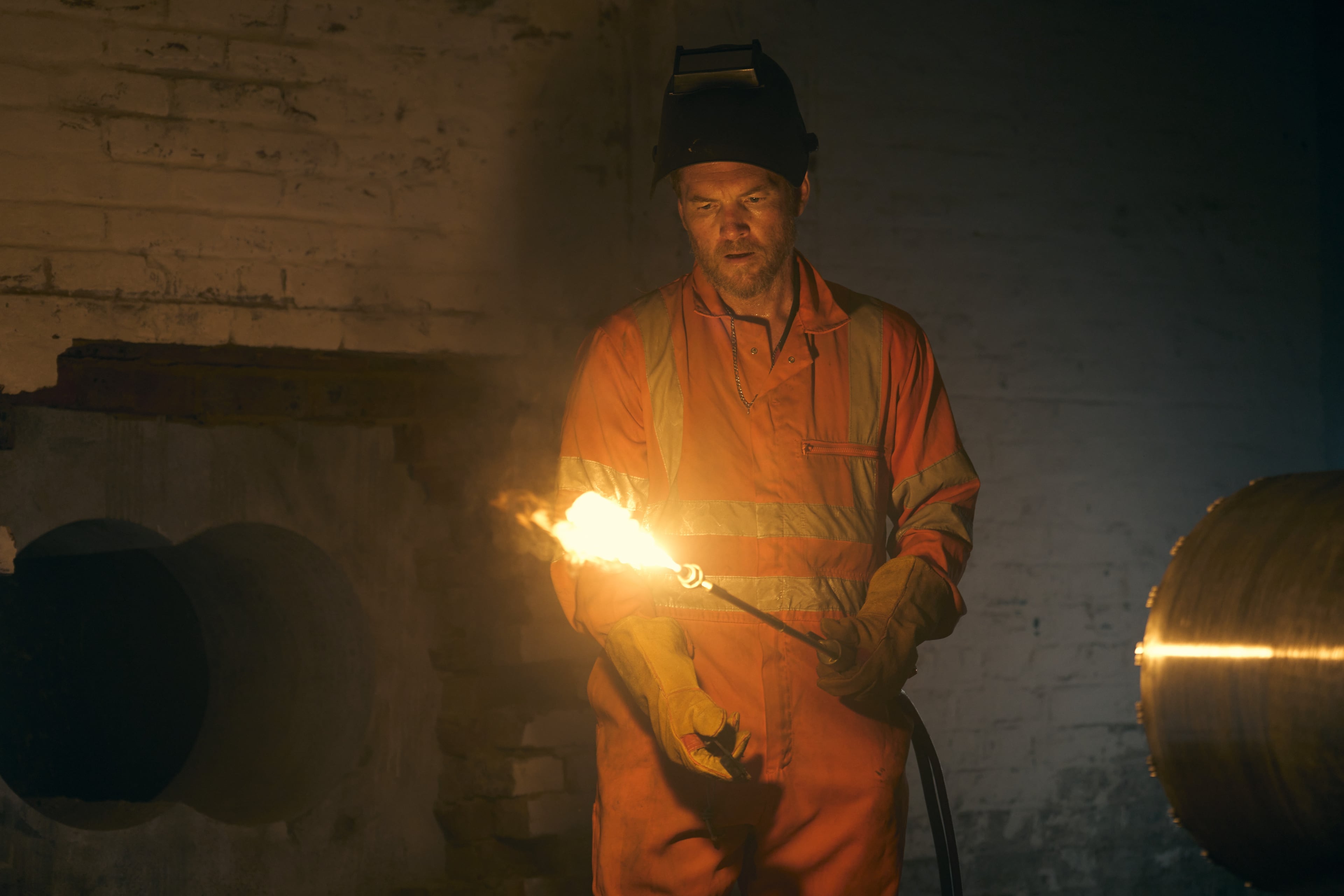
He elaborates, “If we’re talking about a [David] Mamet or [an Aaron] Sorkin, their writing is unbelievable. But most times, I like scripts where the words are the least important thing. It’s human behaviour that excites me. And if you can do that economically, or with a look, that’s the challenge.”
The Journey of Self-Discovery Through Acting
For Worthington, each new role is fundamentally an exploration of himself. “Every job is me trying to learn something,” he explains. “Maybe over the last 20-odd years, it’s been to my detriment, but I’ve learned more as an actor than I ever could if I was trying to search for a career. You learn more from s*** jobs sometimes than ones that are revered. I’ve always looked at that as my journey.”
This perspective is particularly striking considering his pivotal role in Avatar, James Cameron’s groundbreaking 2009 sci-fi epic. At the time of his casting, Worthington was living out of his car. While not a complete unknown, having worked in Australia for nearly a decade, the leap to global superstardom was seismic.
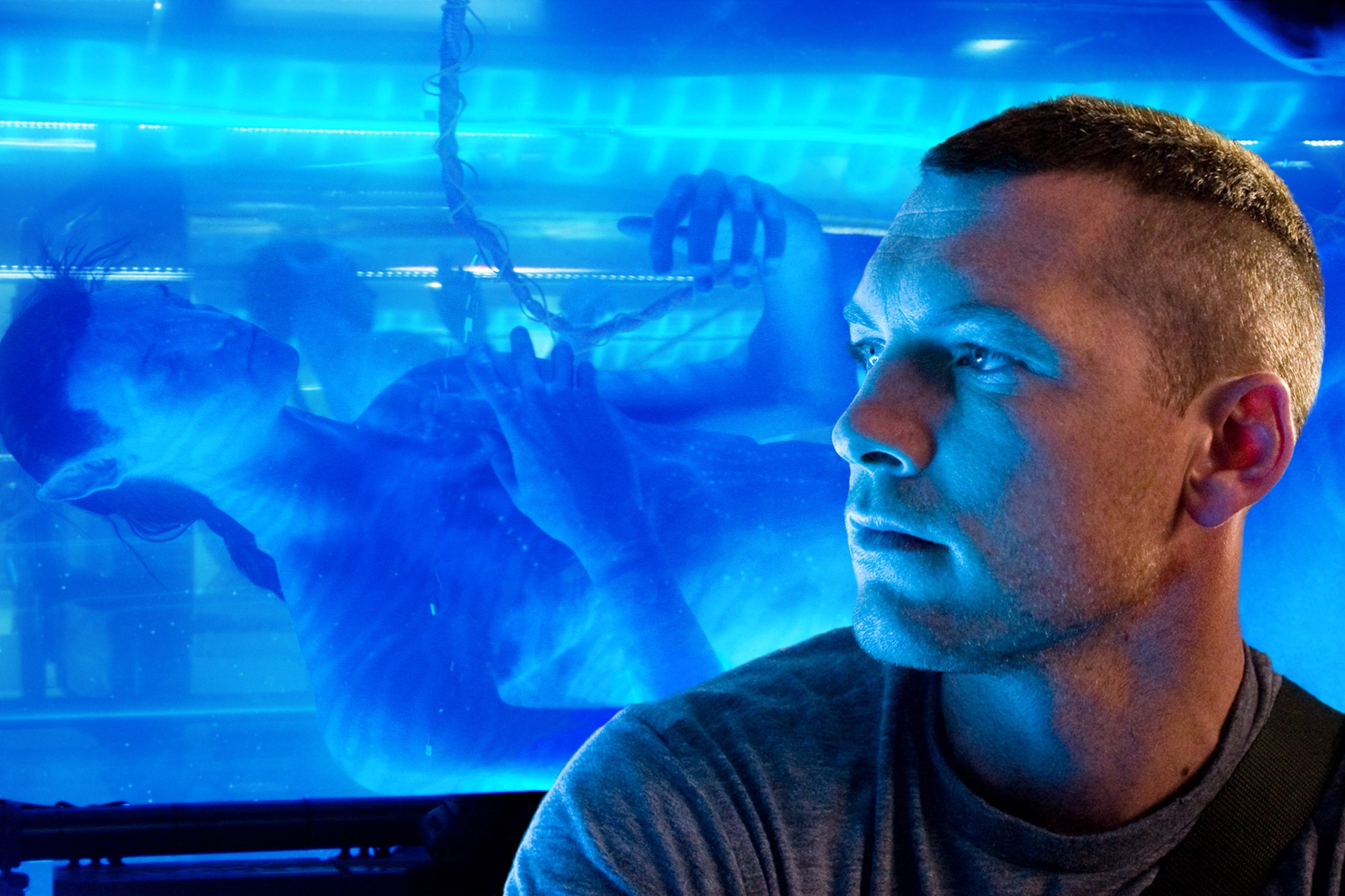
The first Avatar saw him transformed into a CGI-rendered Na’vi, but also prominently featured his human face, thrusting him into the international spotlight. “Dude, I was a 29-year-old dude from Australia,” he reflects. “If you told me I was going to be in the biggest movie of all time, I would have just laughed. It doesn’t make much sense.” Even now, the sheer scale of Avatar‘s success remains a source of bewilderment. “I don’t play it down, because it means so much to me and it’s given me my life. But at the same time – what? I’m gonna walk around wearing a red chinchilla and driving a limo?”
He shares that his wife, Australian model and TV personality Lara Worthington, often dismisses his ponderings on the film’s magnitude. “Every time I try to overthink it or if I just bring it up to my wife, she just looks at me like I’m crazy and goes, ‘Why are you saying this?’ Like, I don’t care, my kids don’t care what I did or how big the movie is. It doesn’t work that way.”
The sudden fame had a destabilising effect, and Worthington has openly discussed his struggles with alcoholism in the years following Avatar. With the unwavering support of his wife and a renewed connection to his Christian faith, he has been sober since 2014. The couple have since welcomed three children: Rocket, Racer, and River.
Navigating Blockbusters and “Dad Roles”
The 2010s presented a period of professional recalibration. Worthington took on more large-scale productions, including the commercially successful Clash of the Titans in 2010, though its 2012 sequel saw a dip in fortunes. “In my thirties, it was a lot of blockbusters and action movies, and people assumed that that’s what I wanted to do,” he says. This was followed by an influx of “dad roles” as he entered his forties.
Ironically, his most acclaimed work in recent years has been precisely these “dad roles.” Cameron’s subsequent Avatar films, The Way of Water (2022) and Fire and Ash, represented a significant artistic advancement for the franchise, surpassing the original in many respects. While the action and visual effects were amplified, the emotional depth was considerably richer. Jake Sully, no longer the conflicted marine, had evolved into a patriarchal figure burdened by the responsibility of an entire society.
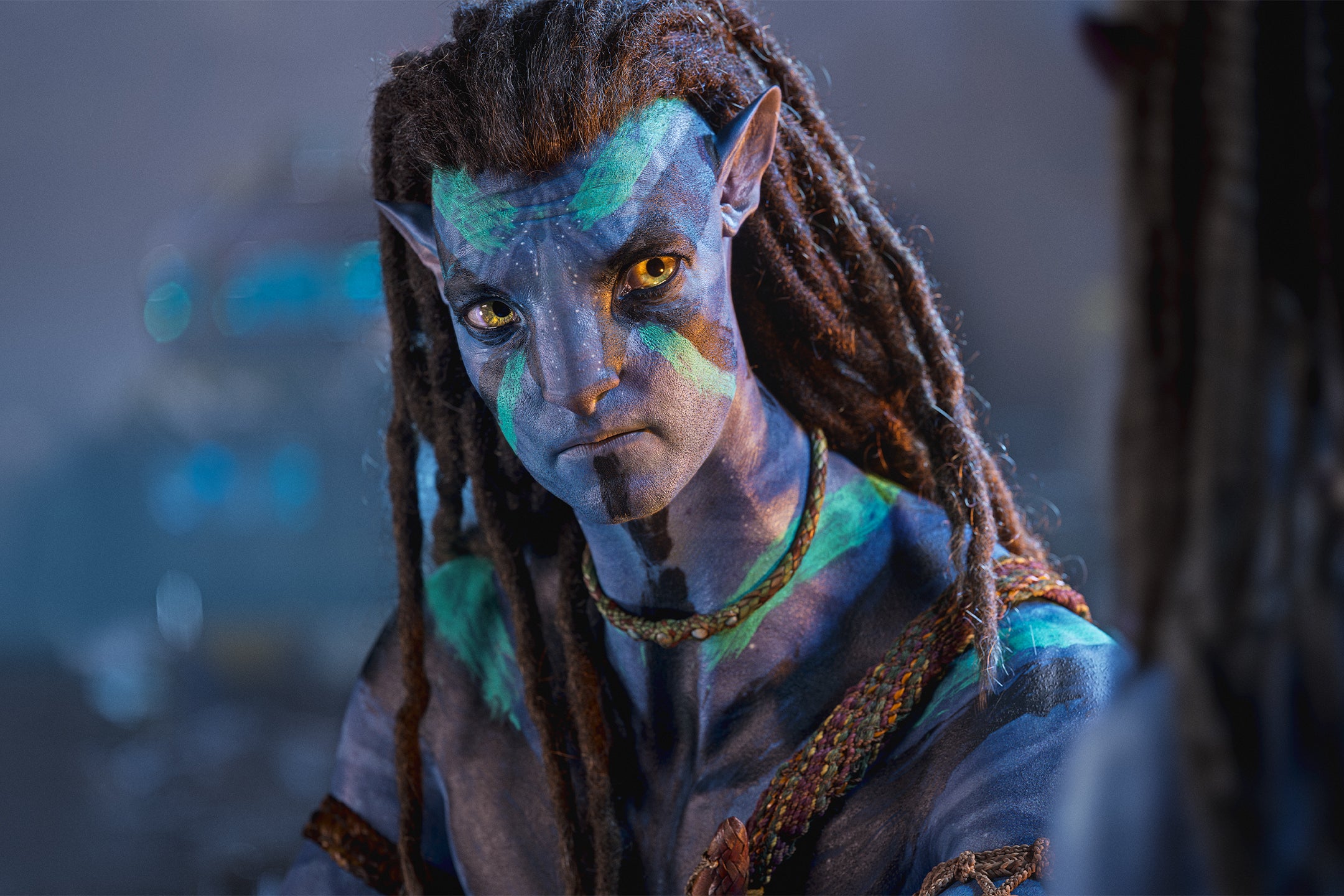
Worthington explains that Cameron’s collaborative approach to the sequels, involving in-depth discussions about the narrative complexities, allowed the cast to imbue their characters with a greater sense of lived experience. “By that time, me and [co-star Zoe Saldana] had become parents, so he knew he could push us down those paths. You’re not using your family, but you definitely have different instincts than you had when you were single and 29.” He describes his long-standing relationship with Cameron: “I know what he wants and I’m the soldier who will give it to him.”
Despite his discomfort with the more commercial aspects of the industry, Worthington credits Cameron and producer Jon Landau for creating a protected environment for the Avatar cast. “We’re unlike Marvel movies, in the sense of… it feels like an independent movie when we make it,” he asserts. “We don’t have outside pressures, or expectations from the press, or the studio, or the community. It doesn’t affect what we do. And that’s why we can take more risks.”
He dismisses the common perception of Cameron as a rigid perfectionist. “They think it’s this big solid machine where Jim is the didactic director. And he’s not. He’s a painter.”
Venturing into Leftfield and Faith-Based Narratives
Worthington has also sought out collaborations with auteur filmmakers, including Mel Gibson on the Oscar-nominated war drama Hacksaw Ridge and Kevin Costner on his ambitious western project Horizon (a series of films, two of which are still in development). “When an actor is your director, they impart knowledge without actually knowing they’re imparting it,” Worthington observes. He found Costner’s traditional and specific directorial style a challenge, contrasting with his own desire for freedom and creativity.
Increasingly, Worthington is drawn to unconventional projects. His upcoming slate includes a faith-based film titled Zero AD. “I just think the Bible has some great stories, man, and this is one of them,” he says, referring to the biblical narrative of the Slaughter of the Innocents. He finds the story of King Herod’s brutal decree to massacre babies a powerful and compelling subject matter, remarking, “I think you can only get away with that by saying it’s a faith-based film. Imagine if that was the pitch to Paramount or Warner Bros as a normal movie. They’d look at you like you’re insane.”
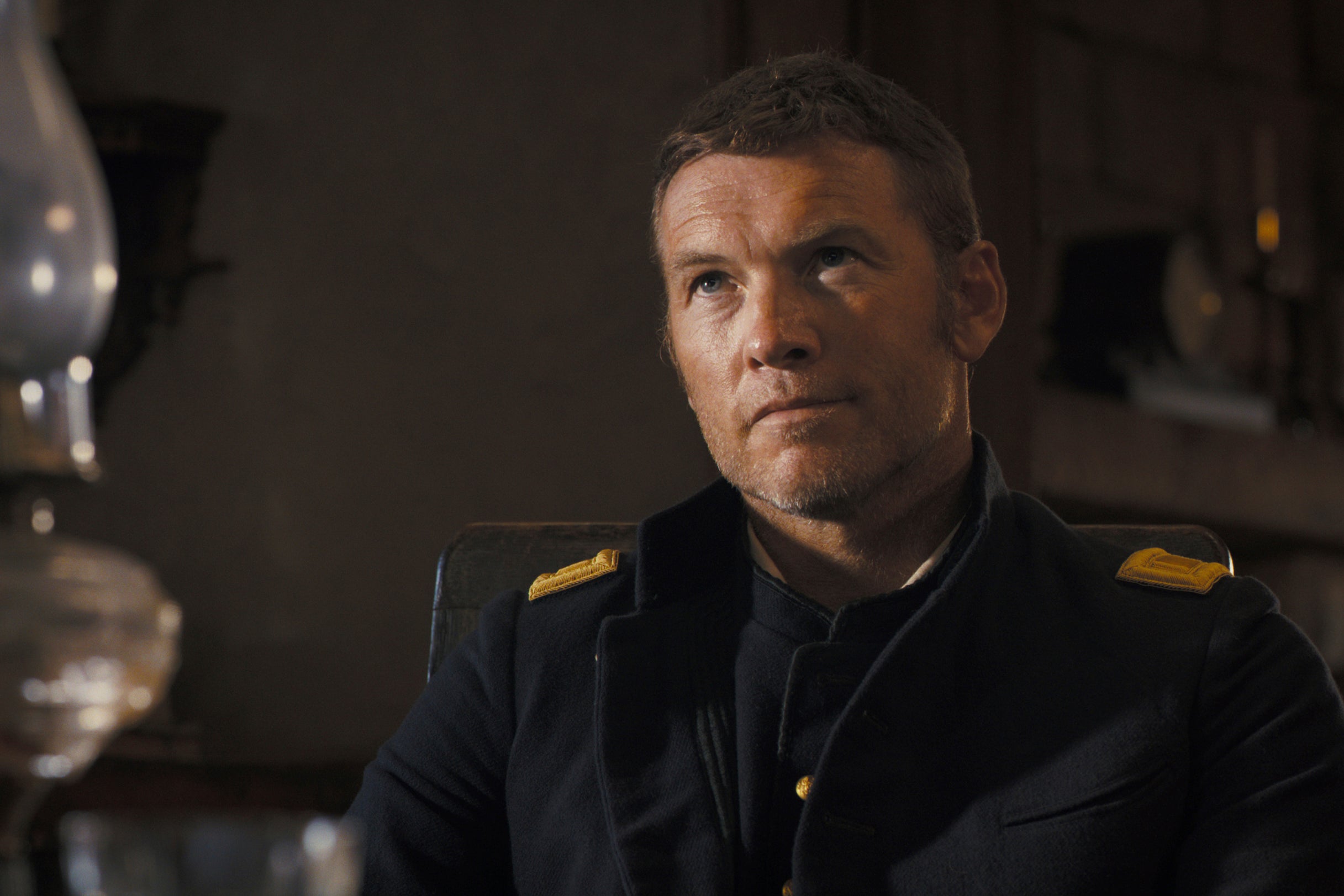
Another project in the pipeline is The Exiles, filmed in Taiwan, where Worthington plays a gangster attempting to infiltrate the Taipei crime scene. The film features a significant portion in Taiwanese. “If the movie works, who knows what that’s going to open up?” he muses. “But it was a hell of an experience, probably one of the best I’ve ever had. Even though I’ve got no idea what they said half the time. The director was just crazy enough to embrace me.”
As he approaches his 50th birthday, Worthington expresses a newfound understanding of his identity as an actor. “I’m now about to turn 50,” he states. “That’s a long career. And what’s happened is I’m now starting to understand what the f* I’m doing, in the sense of what kind of actor I am, and where I can fit into the puzzle.” Whether it’s a colossal production like Avatar 4 or a small, character-driven piece like “Henchman Number Three,” Sam Worthington is ready for whatever comes next.


