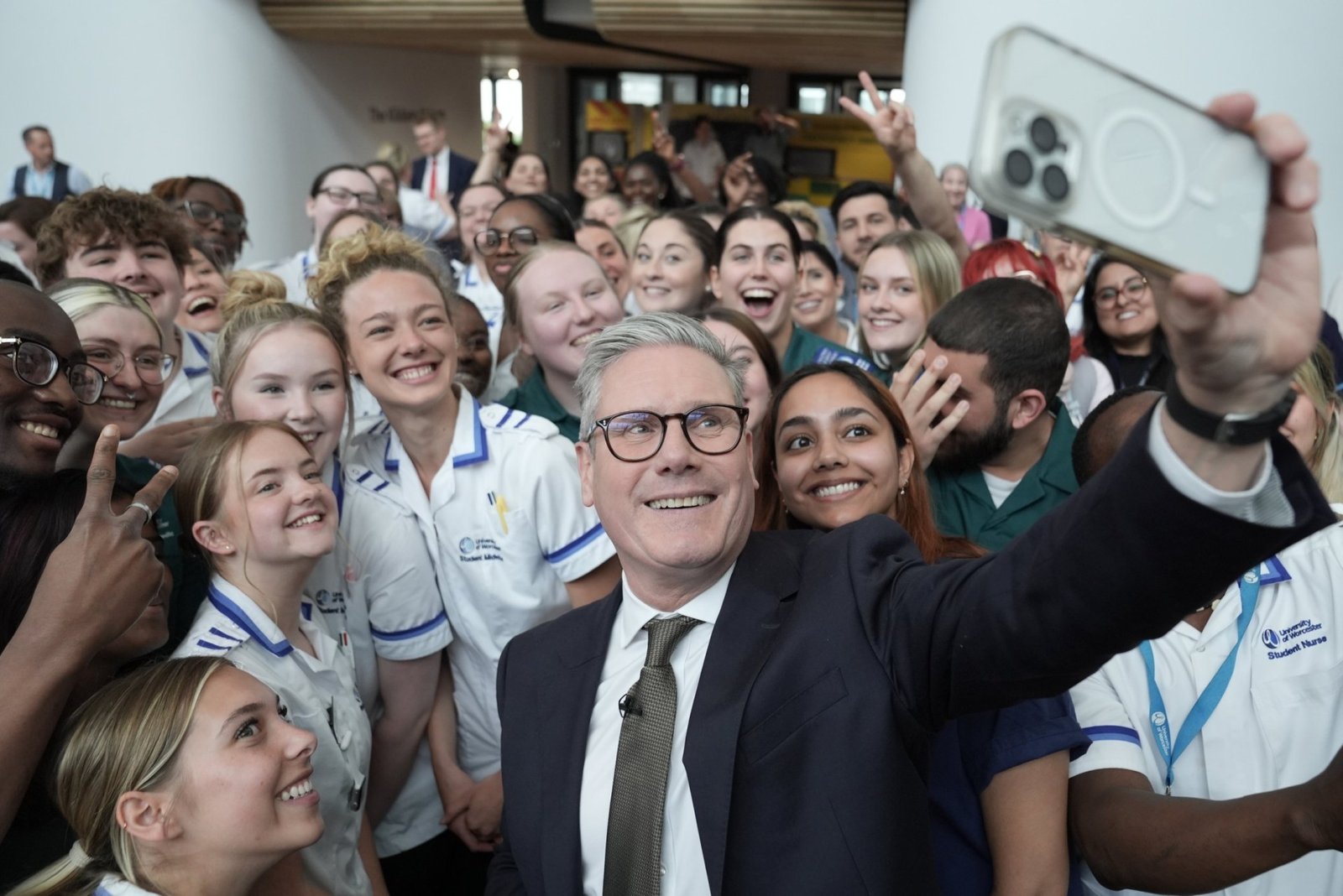
It has only been a short while since Prime Minister Keir Starmer delighted a class of young students with the ‘6-7 dance,’ and now it appears he’s venturing further into the digital realm.
Yes, the Prime Minister is now officially on TikTok – the social media platform known for its viral content, infotainment, and internet trends that often resurface on other platforms like Instagram.
Starmer launched his TikTok presence with a video posted just after 11 a.m., featuring him and his wife, Victoria, exiting the iconic door of 10 Downing Street for the Christmas lights switch-on event held last Monday.
Perhaps aiming to avoid immediate controversy, his introductory message was concise: “TikTok. Follow me.”
The video then included a brief countdown, followed by festive music, the switching on of the Christmas lights by litter-picker Samuel Salamone, and then the video loops back to the beginning.
Unsurprisingly, the initial reactions to the Prime Minister’s TikTok debut were diverse.
Among the early comments, one user suggested the Prime Minister “Do one mate,” although this comment seems to have been removed since.
Other users garnered significant attention by questioning how long it would take for Starmer’s team to disable the comments section, while several commenters called for his resignation.
When questioned about the reasoning behind this move to TikTok, a source from 10 Downing Street stated: “We’re exploring new avenues to communicate our vision for national renewal, reaching people on platforms ranging from TikTok and Substack to traditional media outlets.”
(Indeed, the Prime Minister has also launched a Substack account, aiming to engage a different audience with his inaugural 2,300-word post.)
According to data from Ofcom, 11% of individuals in the UK use TikTok as a source of news. This figure rises considerably to 28% among those aged 12 to 15.
Concerns and Security Measures
However, TikTok is not without its share of controversies. This is likely why Starmer waited 18 months into his tenure as Prime Minister before establishing an account.
The app is currently prohibited on government-issued devices due to security concerns related to its Chinese parent company, ByteDance. Furthermore, the TikTok website is inaccessible on parliamentary Wi-Fi networks.
According to the Prime Minister’s official spokesperson, there have been no changes to this policy, and “security mitigations” are in place for the new TikTok account.
Why TikTok? Reaching New Audiences
The decision to join TikTok reflects a broader strategy to engage with a wider and younger demographic. The platform’s immense popularity, particularly among younger citizens, offers a unique opportunity for political leaders to directly communicate their messages and initiatives.
Youth Engagement: TikTok’s user base is heavily skewed towards younger generations, making it an ideal platform to connect with future voters and shape their perceptions of political issues.
Direct Communication: Unlike traditional media channels, TikTok allows for direct, unfiltered communication between political figures and the public.
Simplified Messaging: The short-form video format of TikTok necessitates concise and engaging messaging, forcing politicians to distill complex policies into easily digestible content.
Countering Misinformation: By actively participating on TikTok, political leaders can directly address misinformation and narratives that may be circulating on the platform.
Potential Downsides and Risks
While the potential benefits of using TikTok are considerable, there are also several potential downsides and risks that must be carefully managed.
Security Concerns: The security concerns surrounding TikTok, particularly its ties to a Chinese company, remain a significant issue. Stringent security protocols are necessary to mitigate the risk of data breaches or surveillance.
Misinformation and Disinformation: TikTok is known for the rapid spread of misinformation and disinformation. Political leaders must be prepared to actively combat false narratives and promote accurate information.
Trivialization of Politics: The platform’s emphasis on entertainment and trends can lead to the trivialization of serious political issues. It’s crucial to strike a balance between engaging content and substantive discussions.
Backlash and Criticism: Any political figure on TikTok is likely to face criticism and backlash from users with opposing views. A robust moderation policy and thick skin are essential.
The Prime Minister’s move to TikTok is a bold step into the evolving landscape of political communication. Whether it proves to be a successful strategy remains to be seen. The ability to connect with younger voters and shape public opinion is undeniable, but the platform’s inherent risks and challenges must be carefully managed to avoid unintended consequences.