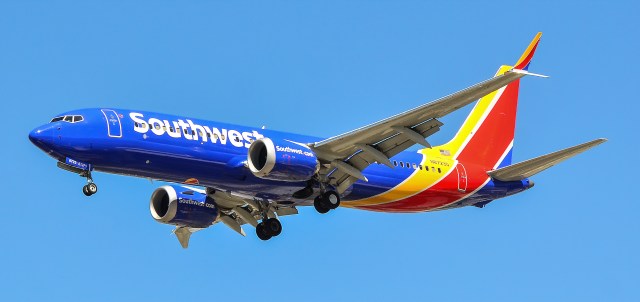
A recent incident involving a Southwest Boeing 737 MAX 8 has captured the attention of aviation authorities in Washington, D.C. The aircraft experienced a “Dutch roll,” a rare and potentially dangerous type of instability, resulting in significant damage that has kept the plane grounded for several weeks. The Federal Aviation Administration (FAA) and the National Transportation Safety Board (NTSB) have launched a thorough investigation into the event to determine the root cause.
The incident occurred on Saturday, May 25, 2024, during Southwest flight WN746, which was en route from Phoenix (PHX) to Oakland (OAK). The aircraft involved, a relatively new Boeing 737 MAX 8 registered as N8825Q and only one year old, was carrying 175 passengers and six crew members. Approximately 40 minutes into the flight, while cruising at an altitude of about 34,000 feet, the aircraft began to exhibit symptoms of a Dutch roll.
Dutch roll is an oscillatory instability characterized by a combination of rolling and yawing motions. It is a phenomenon that most airline pilots rarely encounter outside of flight simulator training, making it an unexpected and challenging situation. Despite the unexpected nature of the event, the flight crew successfully stabilized the aircraft. The flight continued to Oakland Airport, where it landed safely on runway 30 approximately 55 minutes after the onset of the Dutch roll, with no injuries reported.
Post-Flight Inspection and Grounding
Following the safe landing, a detailed inspection of the aircraft revealed structural damage, particularly to components related to flight control. According to U.S. experts, the damage was significant, potentially affecting the backup rudder control system and possibly the tail fin. The backup controller is a critical safety feature designed to provide an alternative means of steering the aircraft in the event of a failure in the primary control system.
The severity of the damage led to the immediate grounding of the aircraft. After remaining in Oakland until Thursday, June 6, 2024, the plane was transferred to Paine Field (PAE) in Washington state. This facility houses Aviation Technical Services, a company contracted by Southwest to perform aircraft maintenance and repairs. As of the latest reports, the aircraft remains out of service and has not carried any passengers since the incident.
Understanding Dutch Roll
Dutch roll is a complex aerodynamic phenomenon in which an aircraft’s tail swings from side to side while the wings simultaneously tilt in opposite directions. The motion is often described as resembling the movements of an ice skater performing a Dutch roll maneuver. Ken Byrnes, an expert in aeronautical studies and the head of the flight program at Embry-Riddle Aeronautical University, explains that this combined rolling and yawing motion occurs when the lateral and directional stability of the aircraft are not properly coordinated.
Byrnes further elaborates: “In Dutch roll, the aircraft experiences a rolling motion primarily driven by the design (dihedral effect) of the wings, while simultaneously yawing due to the adverse yaw effect caused by the sideslip angle. This coupled motion results in a dynamic instability where the aircraft oscillates in both roll and yaw directions.” Aeronautical engineer Dinuwan Galwatta describes the sequence of events: the roll and sideslip initiate unequal lift and increased drag, leading to yaw. The vertical stabilizer attempts to correct the yaw, but can sometimes overcorrect.
Historically, Dutch roll has been a significant safety concern, contributing to several aircraft accidents. However, modern aircraft are equipped with systems designed to mitigate the effects of this instability. John Cox, a former airline pilot and current aviation safety consultant, notes that Boeing 737s are generally resistant to severe Dutch roll oscillations and tend to self-correct if left unmanaged. Most large aircraft, as Byrnes mentioned, incorporate a yaw damper, an automated system that adjusts the rudder to counteract the rolling and yawing motions characteristic of Dutch roll.
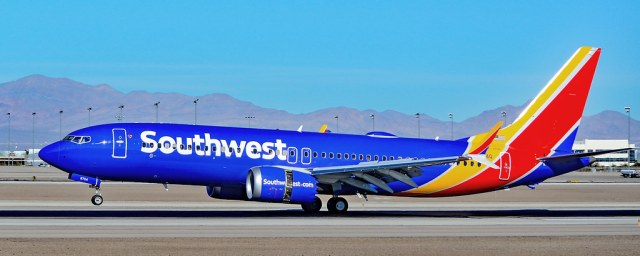
The damage sustained by the Southwest 737 MAX 8, particularly to a secondary power system linked to the rudder and vertical fin, has raised concerns among aviation experts. Robert Sumwalt, an air safety analyst for CBS News, emphasized the seriousness of the situation: “When flight controls move on their own, that can mean trouble; when there’s real damage, it becomes way more concerning.” While the pilots were able to regain control and land the aircraft safely, their success highlights the importance of thorough training and preparedness in handling unexpected flight control issues. The extent of the damage suggests that the incident was more than just routine turbulence or a minor mechanical malfunction.
Crew Observations and Preliminary Findings
The NTSB’s preliminary report provides insights into the events leading up to the Dutch roll, identifying key areas for further investigation. Prior to departure, the pilot noted a maintenance log entry regarding the yaw damper exhibiting signs of overcompensation. Although the issue was supposedly resolved before the flight, the pilot also reported experiencing brief periods of resistance in the rudder controls during taxiing and initial climb, a detail that has gained significance in light of subsequent events.
After encountering some light turbulence during the flight, the aircraft experienced a brief episode of Dutch roll. Throughout this event, the autopilot remained engaged. Both pilots reported that the motion was not severe, and no warning lights illuminated to indicate a malfunction of the yaw damper. The crew discussed the possibility of a malfunctioning yaw damper, as this system is designed to prevent such oscillations.
The pilots then descended to 32,000 feet to further assess the situation. During this descent, the aircraft experienced another episode of Dutch roll, albeit brief. The pilot reported feeling slight movements in the rudder pedals. After observing these anomalies, the crew contacted air traffic control (ATC) and diverted the flight to Oakland, where they landed safely and immediately removed the aircraft from service for a comprehensive inspection.
Maintenance Timeline and Focus of Investigation
A significant finding is that unusual rudder behavior began to manifest on the very next flight following a maintenance check on May 23rd, just two days before the incident. Prior to this check, the yaw damper did not cause any movement in the rudder pedals. However, after the maintenance work was performed, the rudder pedals moved independently whenever the yaw damper was activated. Notably, each instance of Dutch roll occurred while the yaw damper was engaged. Conversely, when the pilots deactivated the yaw damper in flight or operated the aircraft without it under the provisions of the Minimum Equipment List (MEL), the anomalous behavior ceased.
The NTSB’s ongoing investigation is focused on several key areas. A primary objective is to determine the precise timing and nature of the damage to the rudder system. Investigators are exploring the possibility that the rudder system was already compromised prior to the May 23rd maintenance, potentially causing the yaw damper to malfunction. Alternatively, they are examining whether the maintenance itself inadvertently contributed to the problem. The investigation is also delving into the root cause of the yaw damper failure and its direct contribution to the Dutch roll. Data retrieved from the aircraft’s digital flight recorder is expected to provide valuable information about the severity and duration of the instability. However, the cockpit voice recorder only retains two hours of audio, meaning that earlier pilot communications were overwritten, leaving their exact words unclear.
Regulatory Response and Industry-Wide Implications
Southwest Airlines did not notify the NTSB of the May 25th incident until June 7th, nearly two weeks later. This delay is under scrutiny by federal authorities, who are examining the airline’s reporting procedures. The FAA has acknowledged the visible damage to the aircraft and is collaborating with investigators and the manufacturer. The FAA has stated that any further action will depend on the findings of the investigation. Southwest has confirmed its cooperation with the investigation and is providing data as requested. Boeing has largely deferred comment to the investigating agencies and the airline.
This incident comes amid increased scrutiny of Boeing’s manufacturing processes and safety oversight. While Tim Atkinson, a former accident investigator and current consultant, suggests that the long interval without mandatory aircraft inspections indicates that this is likely an isolated event rather than a systemic issue for Boeing, the incident adds to the concerns surrounding the 737 MAX model. These concerns stem from previous incidents such as the Lion Air crash in 2018, the Ethiopian Airlines disaster in 2019, the Alaska Airlines door plug blowout in early 2024, and recent issues on United flights involving stuck rudder controls and runway excursions. Boeing has also noted that the aircraft may have been exposed to strong winds in May 2024 prior to its last flight, reminding airlines to maintain routine inspections after severe weather events.
As the investigation progresses, airlines are awaiting the NTSB’s preliminary report, which is typically released approximately one month after an incident. The findings of this investigation are significant, as they will not only shed light on the specific circumstances that led to the Dutch roll but could also influence future maintenance protocols and potentially impact aircraft design and operation. Given the public’s sensitivity to air safety, the thoroughness of this government review is critical for maintaining confidence in air travel.
The Southwest 737 MAX 8 Dutch roll incident underscores the potential risks associated with unusual flight behavior stemming from a combination of technical issues and maintenance oversights. While the pilots’ skillful handling of the situation prevented injuries, the extensive damage to the aircraft suggests underlying deficiencies in maintenance procedures or post-repair communication. The ongoing investigation into flight logs and service history has the potential to identify specific causes and prevent similar incidents in the future. Beyond this particular event, the incident highlights the importance of continuous vigilance in engineering, aircraft maintenance, and regulatory oversight to ensure the safety and reliability of air travel.