
Sabalenka Dominates Osaka in Historic Roland Garros Night Session
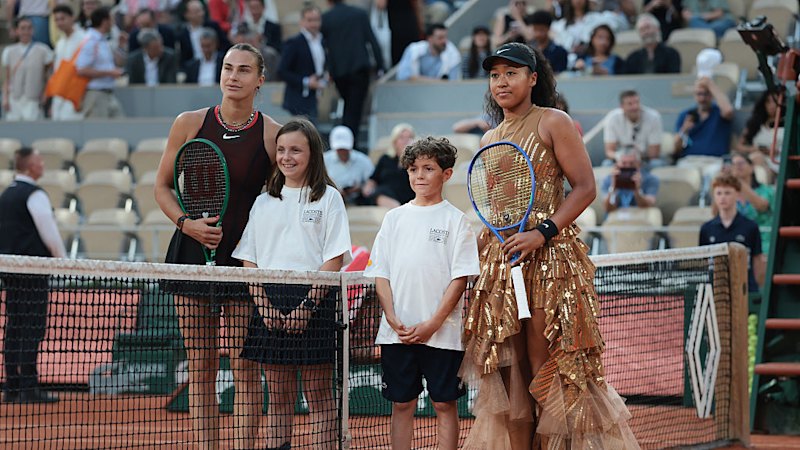
Roland Garros witnessed a landmark moment in women’s tennis as World No.1 Aryna Sabalenka delivered a commanding performance against Naomi Osaka, securing her spot in the French Open quarterfinals. This highly anticipated match marked the first women’s singles fixture to be scheduled in the tournament’s coveted, singular night session in over three years, a decision that felt like a direct rebuttal to any lingering doubts about the rightful place of women’s tennis in primetime.
Sabalenka’s masterful display on Court Philippe-Chatrier saw her defeat the former World No.2, Osaka, in straight sets with a scoreline of 7-5, 6-3. This victory propels the Belarusian closer to her maiden clay-court Grand Slam title, a quest that saw her fall short in the 2025 final against Coco Gauff.
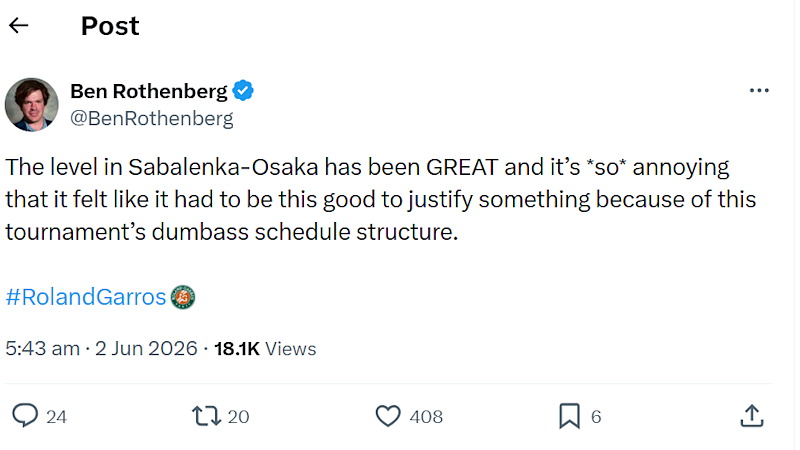
The scheduling of this match itself carried significant weight. For three years, Roland Garros had not featured a women’s contest in its primetime slot, a curious anomaly given that the tournament boasts a woman, former World No.1 Amélie Mauresmo, as its director. Previously, tournament officials had defended this disparity by suggesting that the best-of-three-set format of women’s matches offered insufficient broadcast time for television networks when compared to the men’s best-of-five format. Sabalenka’s impressive victory, achieved in just 1 hour and 27 minutes, certainly provided ample, high-quality content for viewers.
Naomi Osaka herself had previously expressed her disillusionment with the lack of night match opportunities for women at the clay-court Grand Slam, even admitting to ceasing to associate such prestigious slots with the tournament due to their rarity. Her fourth-round encounter with Sabalenka, therefore, represented a significant shift and a welcome return to the spotlight.
A Masterclass Under the Lights
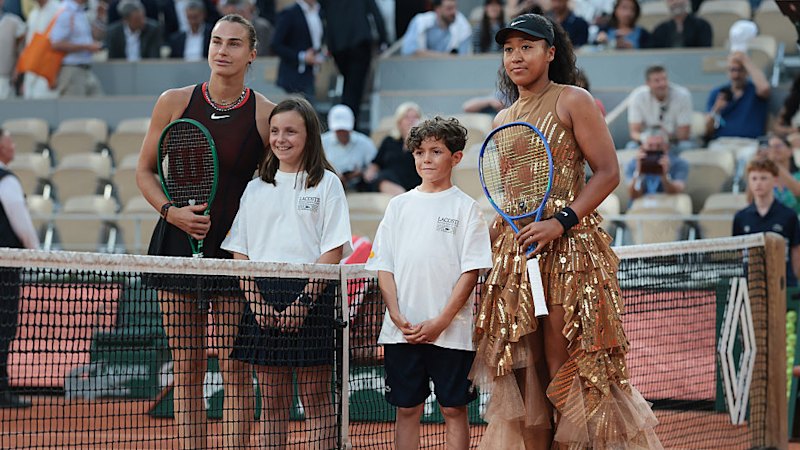
Under the bright lights of the Philippe-Chatrier court, Sabalenka truly shone. She unleashed a barrage of powerful groundstrokes, overwhelming Osaka from the baseline. The match was a captivating spectacle of raw power and high-quality tennis, with both players trading blistering shots that had the crowd on the edge of their seats.
Post-match, Sabalenka acknowledged the difficulty of the encounter. “She’s (Osaka) such a great player, and I always have tough battles against her,” she stated. “She plays super aggressive tennis, and I’m mostly happy with the way I served, and that I was able to put all of that pressure back on her, and I’m happy with the win. It was a very tough one, and it’s amazing to play in the night session in front of you all.”
The Path to the Final
Sabalenka’s next challenge in the quarterfinals will be against the emerging Russian talent, Diana Shnaider. Shnaider advanced to this stage by defeating Madison Keys, the last remaining American woman in the singles draw, in a decisive 6-3, 3-6, 6-0 victory.
The women’s draw at this year’s Roland Garros has been notably unpredictable, with several high-profile players exiting the tournament early. Defending champion Coco Gauff, four-time winner Iga Świątek, and World No.2 Elena Rybakina have all been eliminated. In the wake of these upsets, Sabalenka has solidified her position as the clear frontrunner and the player to beat as the tournament progresses. Her dominant performance against Osaka in such a significant slot only amplifies her status as a serious contender for the Suzanne Lenglen Cup.
The implications of Sabalenka’s win extend beyond her own tournament aspirations. It serves as a powerful statement for women’s tennis, highlighting the compelling narratives and elite performances that deserve to be showcased in the most prominent viewing slots. As the tournament continues, many will be watching to see if this historic night session match marks a turning point in the scheduling of women’s Grand Slam tennis.


