
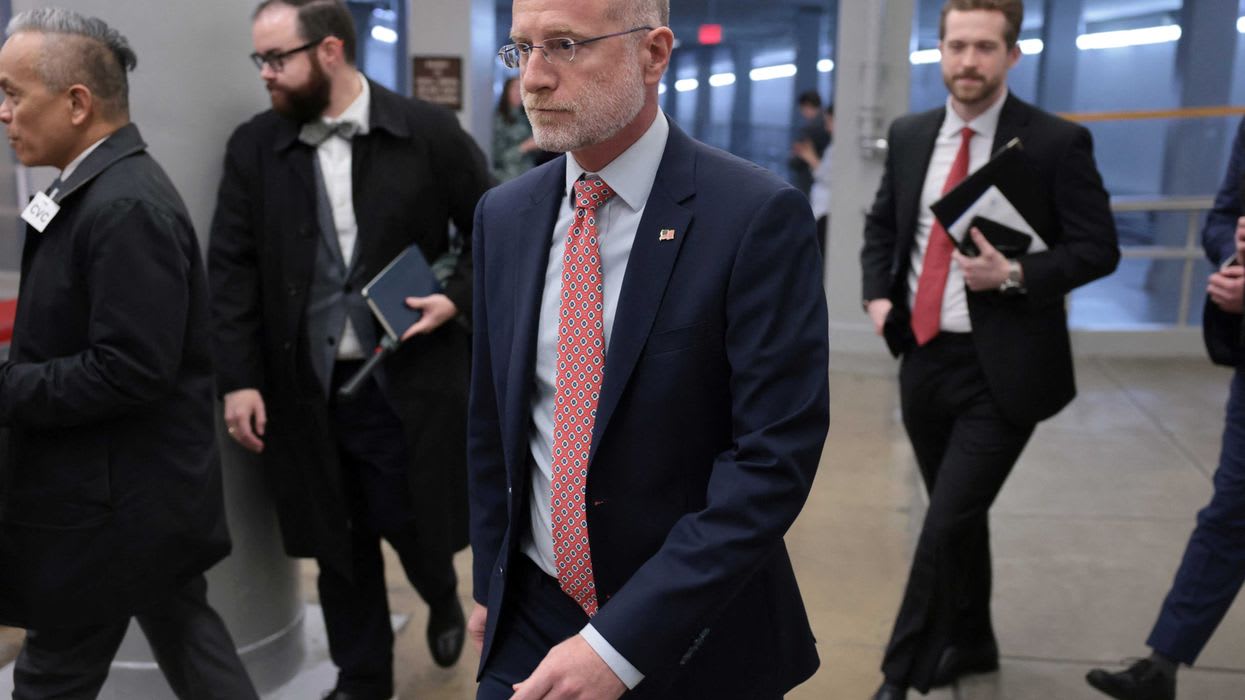
A significant warning has been issued to television broadcasters across the nation, with threats of license revocation looming for those found to be disseminating “hoaxes and news distortions.” Brendan Carr, who previously chaired the Federal Communications Commission (FCC) under the Trump administration, articulated this stern message, asserting that broadcasters have a crucial window to rectify their editorial practices before their licenses are due for renewal.
In a pointed statement, Carr declared, “Broadcasters that are running hoaxes and news distortions – also known as the fake news – have a chance now to correct course before their license renewals come up. The law is clear. Broadcasters must operate in the public interest, and they will lose their licenses if they do not.” This directive underscores a fundamental obligation of broadcasters to serve the public interest, a principle that could have severe consequences if contravened.
Declining Trust and the Public Interest
Carr highlighted a concerning trend of diminishing public trust in traditional media outlets, citing figures that show this trust has plummeted to an all-time low of just 9%. He further noted that many legacy media organisations are experiencing “ratings disasters,” suggesting a disconnect between their content and audience engagement. The FCC chief pointed out that broadcasters have historically benefited from a significant subsidy in the form of free access to the nation’s airwaves. This privileged position, he argued, implies a responsibility to maintain a certain standard of journalistic integrity. Carr suggested that a shift in editorial direction could, in fact, align with the business interests of these broadcasters, implying that a more trustworthy approach could ultimately lead to improved viewership and relevance.
Restoring Public Confidence
The FCC chief framed the issue as intrinsically linked to public confidence in the media landscape. “When a political candidate is able to win a landslide election victory in the face of hoaxes and distortions, there is something very wrong,” Carr stated. “It means the public has lost faith and confidence in the media.” This sentiment suggests a belief that the erosion of media credibility can have tangible impacts on democratic processes and public discourse. The implication is that a media environment rife with misinformation undermines the ability of citizens to make informed decisions.
A Call for Systemic Change
Carr concluded his remarks with a powerful call for systemic change within broadcast journalism, proclaiming, “Time for change!” These comments represent a notable and unprecedented direct threat from a Trump administration official to leverage regulatory authority over media licensing as a mechanism to influence news coverage.
The implications of such a directive are far-reaching, raising questions about the balance between regulatory oversight and freedom of the press. The FCC’s role is to regulate interstate and international communications by radio, television, wire, satellite and cable in all 50 states, the District of Columbia and U.S. territories. Its mandate includes ensuring that broadcast licenses are used in a manner that serves the public interest.
Potential Ramifications for Broadcasters
The warning from Carr suggests that broadcasters will be scrutinised more closely regarding the accuracy and impartiality of their reporting. This could lead to several potential outcomes:
- Increased Scrutiny of Content: Broadcasters may face more rigorous reviews of their news programming during license renewal processes.
- Emphasis on Fact-Checking and Verification: A greater emphasis on robust fact-checking and verification processes is likely to become paramount.
- Potential for Legal Challenges: Broadcasters might explore legal avenues to challenge what they perceive as undue government interference in editorial decisions.
- Shift in Programming Strategies: Some broadcasters might proactively adjust their programming to align with the perceived expectations of the FCC and the public.
The FCC’s power to grant, deny, or revoke broadcast licenses is a significant regulatory tool. However, the exercise of this power in relation to the content of news reporting is a sensitive issue, often debated in the context of First Amendment protections.
Carr’s intervention signals a potential new era of regulatory engagement with broadcast journalism, one that prioritises a perceived restoration of public trust and a crackdown on what is labelled as “fake news.” The coming months will likely reveal how broadcasters respond to this significant warning and how the FCC plans to implement its stated intentions.


