Celia: A Luxury Train Carriage Designed for Unforgettable Experiences
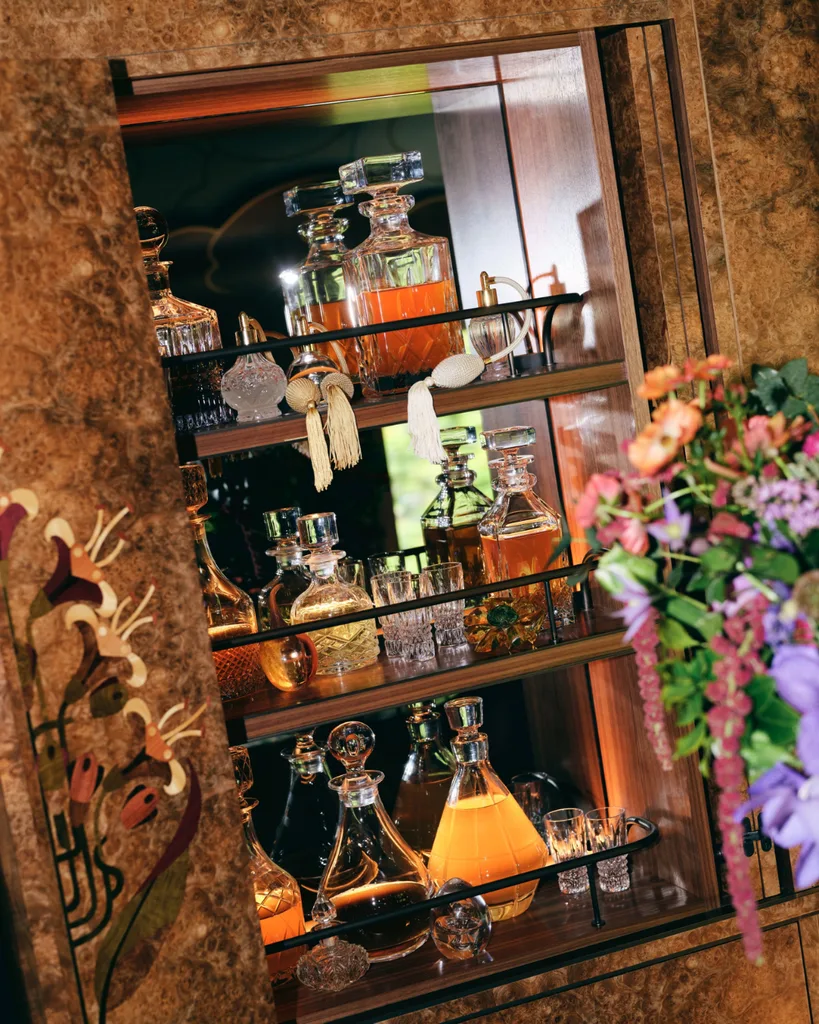
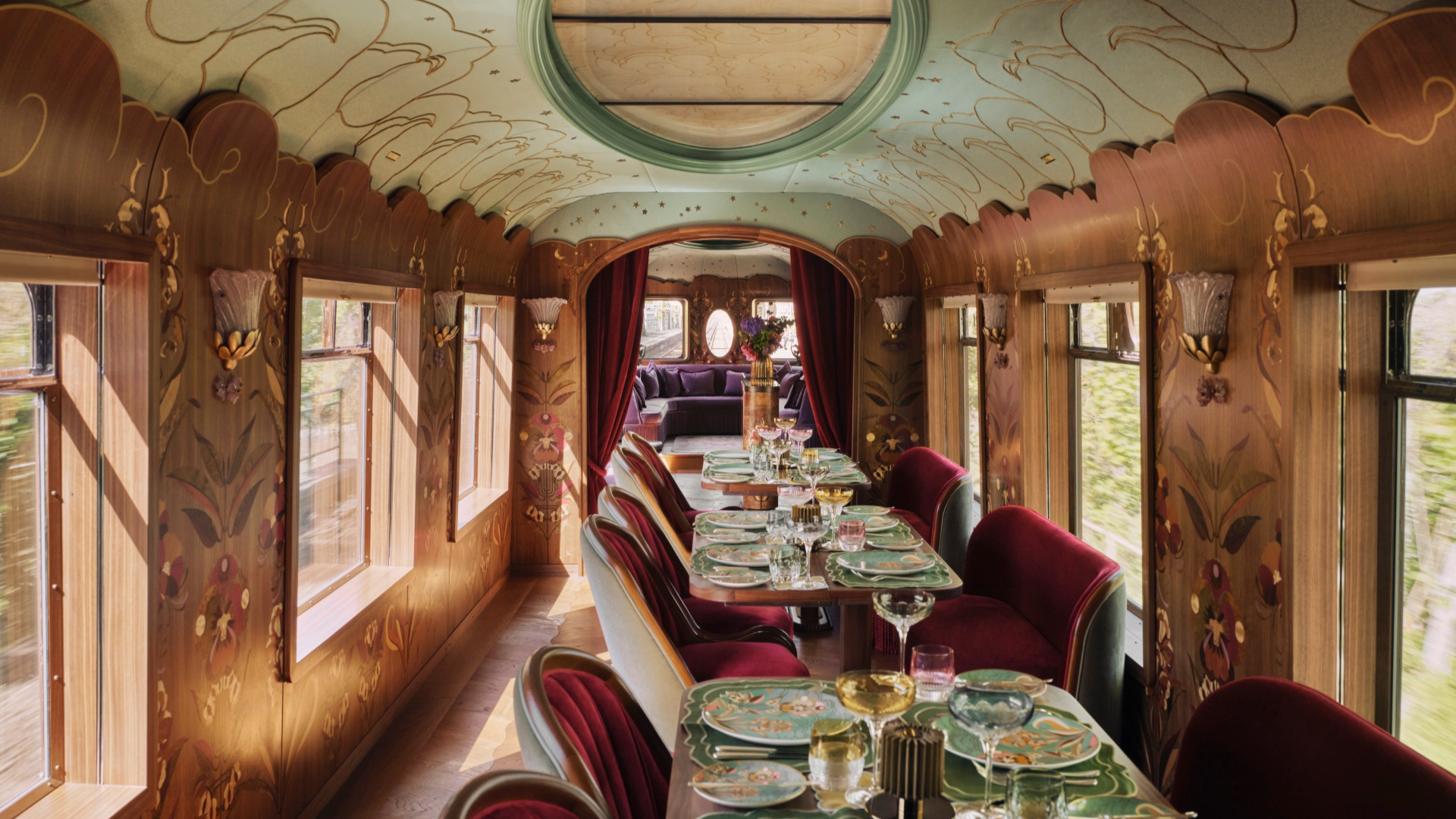
Renowned filmmaker Baz Luhrmann and Oscar-winning costume and production designer Catherine Martin have unveiled their latest masterpiece: Celia, a private dining and event space aboard the iconic British Pullman by Belmond. This isn’t just a train carriage; it’s a meticulously crafted environment designed to inspire creativity, foster connection, and transport guests into a world of glamour and narrative.
Luhrmann and Martin, a creative duo known for their visually stunning and emotionally resonant work, found themselves drawn to the unique proposition of Celia. For Luhrmann, the allure of slow travel, particularly on trains, is deeply ingrained in his creative process.
“I’ve found that any slow journey, particularly on trains and boats, truly inspires my inner creative soul from the moment I step on board,” Luhrmann explains. “The wheels in my ‘imaginator’ start to turn, just as the wheels on a train do in moving us forward through the landscape. I love it. There’s something about that sense of motion, of being carried forward while having the space to reflect, that I find incredibly inspiring. I am a devoted lover of slow travel – there’s really undeniable magic and romance to these train journeys. It’s a form of travel that lends itself to being told in the most evocative and cinematic ways and one that made this project feel like a natural fit.”
Martin echoes this sentiment, highlighting the contrast between modern haste and the deliberate pace of train travel. “Modern life moves at an extraordinary pace; rarely do we fully experience one moment before rushing toward the next. Both Baz and I are deeply drawn to the idea of slow travel, which is something the British Pullman embodies so well.”
A Philosophy of Transformation and Shared Stories
The guiding philosophy behind Celia was to create more than just a static dining venue. Luhrmann likens the carriage to a “moving house,” a space designed to accommodate and elevate a myriad of personal stories and celebrations.
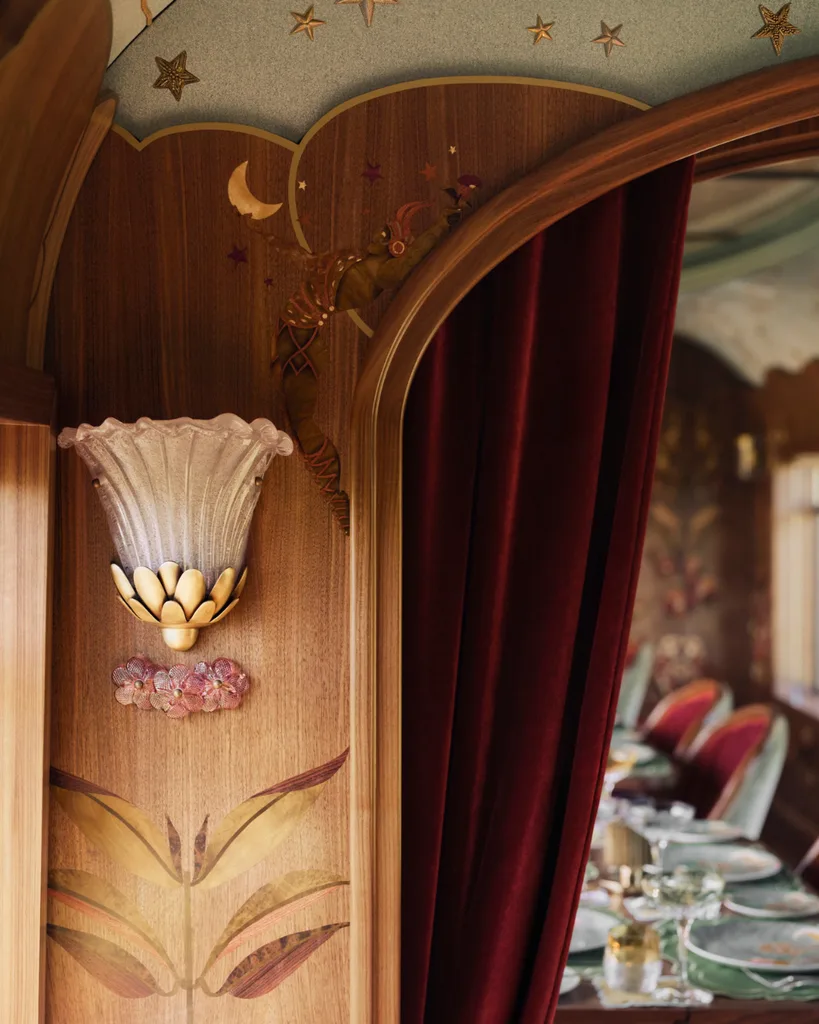
“One of our hopes with Celia was to create something beyond just a dining space or a bar,” Luhrmann states. “While it has the glamorous involvement of both, its real power lies in its flexibility. With the simple closing of a curtain, the car transforms into a performance space: a place where a father might speak at a beloved child’s birthday or engagement, or, when the occasion calls for a bit more fun, somewhere music can be spun. In that way, Celia also echoes the philosophy of a film set, a space designed with the intention to adapt and heighten whatever the traveller’s unique story requires.”
Martin envisions guests immersing themselves in Celia’s narrative. “The interior design of the carriage became a space encoded with Celia’s life story, a world carefully constructed so that the passenger might step inside it and be transported into her universe. I imagine people eating and dancing, arguing and falling in love, taking photographs, celebrating life’s great moments and adventures — all within a world that offers a pause from the chaos of everyday life.”
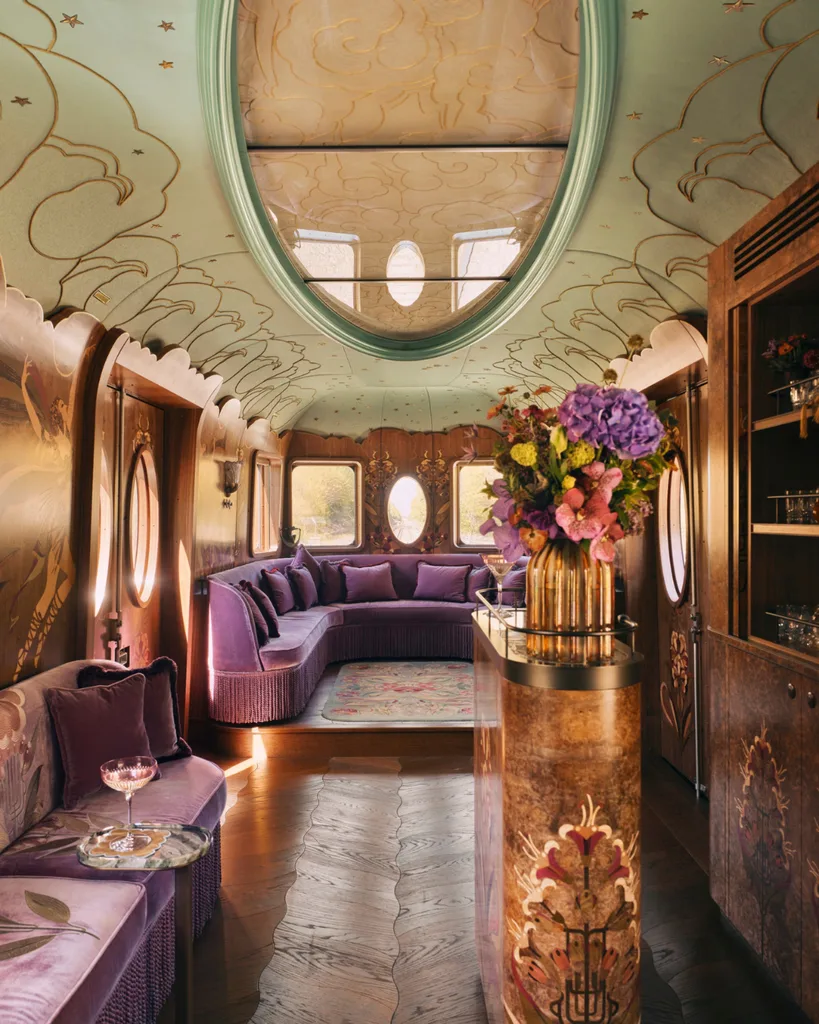
Love and Shakespeare: The Heart of Celia’s Narrative
The narrative woven into Celia’s design centres on the theme of love, drawing inspiration from both Shakespeare’s “A Midsummer Night’s Dream” and the imagined life story of Celia herself. This choice was deliberate, aiming to infuse the experience with romance and a sense of timeless enchantment.
“We’re both devoted lovers of slow travel as there’s an undeniable magic and romance to these kinds of journeys,” Luhrmann explains. “We wanted a story that allowed us to push creativity, luxury, and uniqueness as far as they could go. Enter Celia, our fictitious West End icon of 1932 with a legendary mononym (long before it was fashionable). Our narrative echoes the dynamic of Charles Foster Kane and Susan Alexander (of Citizen Kane), inspired by William Randolph Hearst and Marion Davies. Davies famously had the most glamorous and extravagant things built for her by Hearst, including a private beach bungalow. From the moment someone receives an invitation, or chooses to board Celia, they should be drawn instantly into her world and be swept into the glamorous, mysterious life of the actress for whom the carriage was named.”
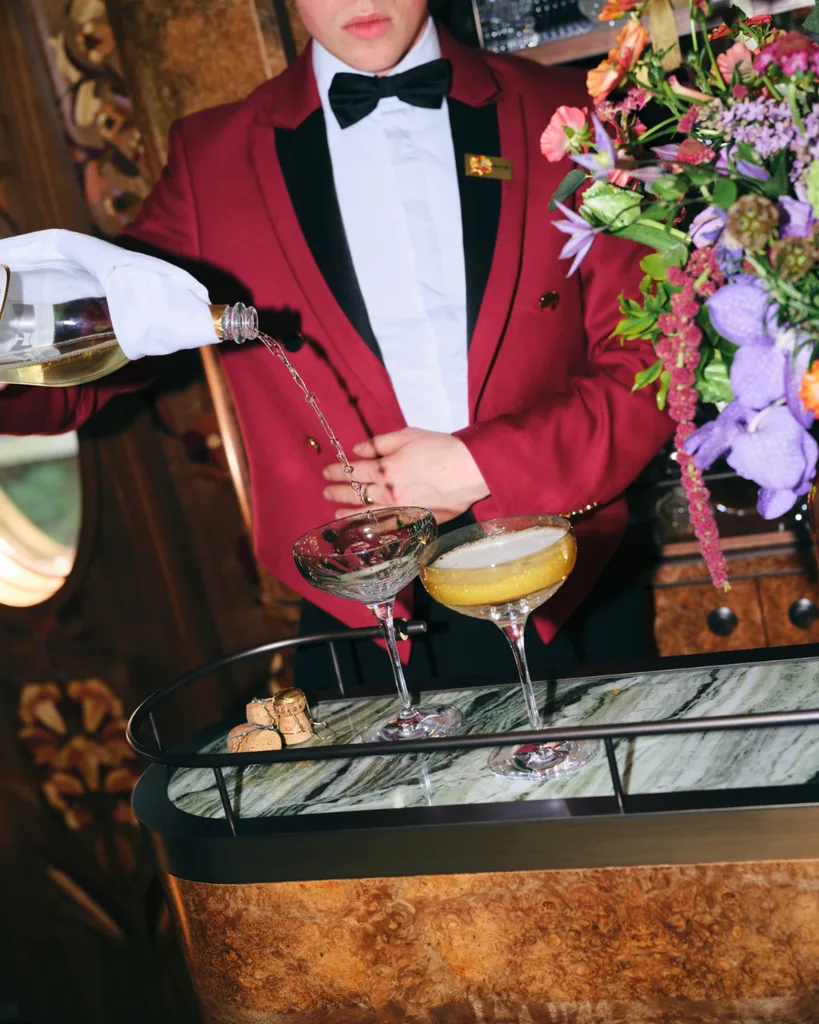
An Unexpected Turn: Shakespeare Over Sleuths
Instead of leaning into the traditional tropes of classic train mysteries, Luhrmann and Martin opted for the vibrant and magical world of “A Midsummer Night’s Dream.” This creative decision was rooted in a desire to tell a distinctly English story with a unique flavour.
“From the very beginning, we wanted to tell a distinctly English story,” Luhrmann elaborates. “Though Celia and her lover are fictitious, she and her circle are inspired by very real people. Another great inspiration was Sir Laurence Olivier, who would often take a Pullman train home after nights at the theatre. This was a starting point for the romance and the world we wanted to evoke. Also, it doesn’t get much more quintessentially English than Shakespeare. Shakespeare is so deeply woven into the British identity and cultural psyche that the intoxicating, effervescent, dream-soaked world of A Midsummer Night’s Dream became the perfect setting for our characters. It’s been a rich expression of British imagination, comedy, and mischief, much like the spirited adventures Celia and her companions find themselves swept up in aboard the carriage.”
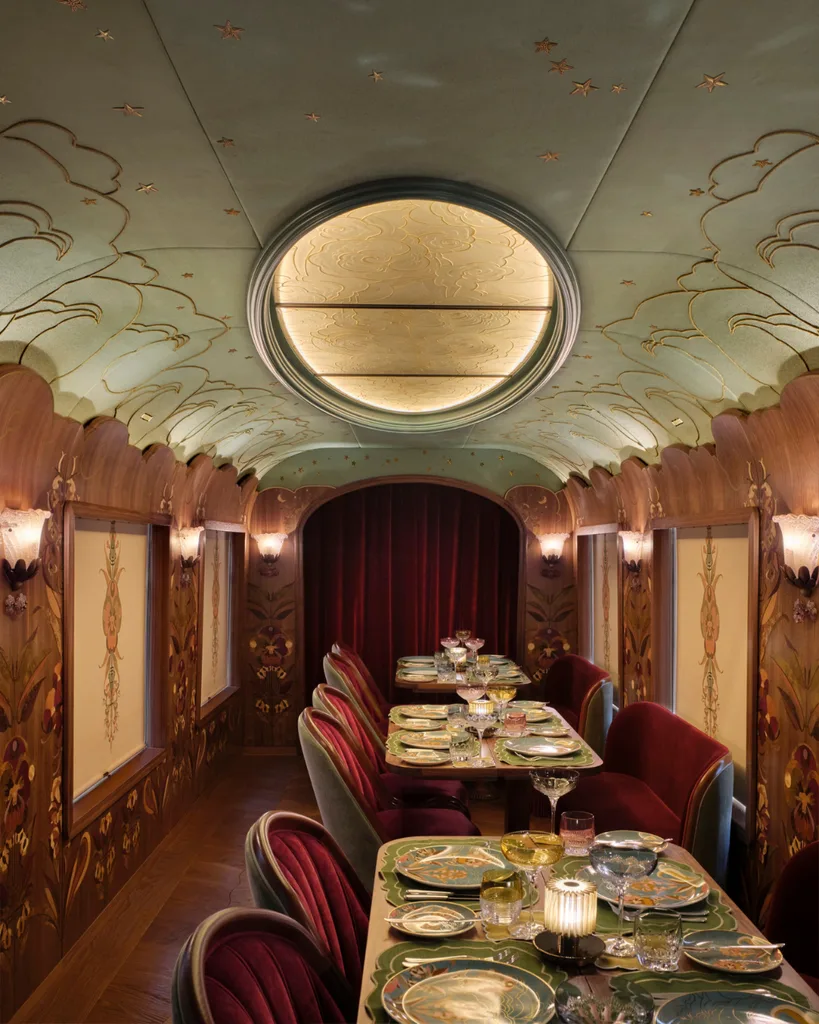
Designing Within Constraints: The Art of Intimate Spaces
The compact nature of a train carriage presented a unique design challenge, demanding a focus on how occupants interact with and experience the space. Luhrmann and Martin approached this limitation as an opportunity for focused creativity.
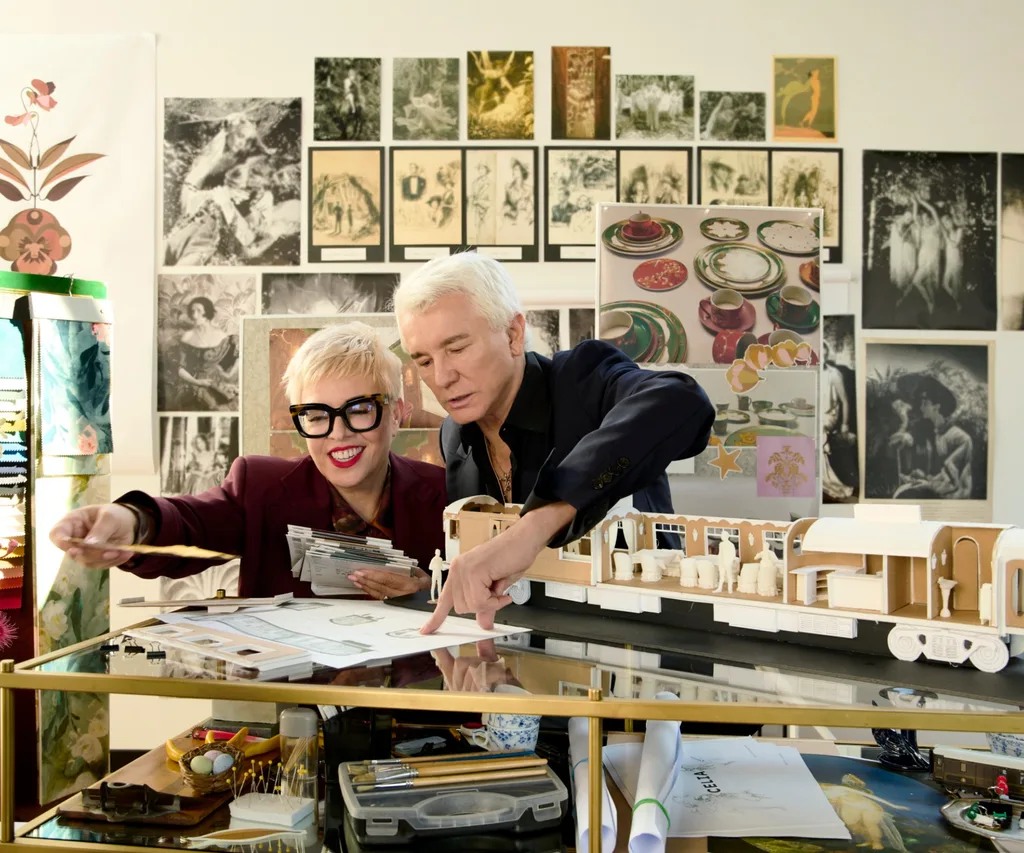
“Designing the interior of a train is fundamentally about how humans inhabit space; that is both the challenge and the thrill,” says Martin. “Like a film, the timeframe is fixed, and the designer’s role is to guide the participant’s perspective within the constraints of a relatively small space. Baz is a master storyteller and visualist. We work closely together to realise the fundamental ethos of any design.”
Martin further elaborates on her design philosophy: “I am particularly drawn to the practical poetry of transformation – the process of taking an idea, or an image, and turning it into a living reality that can be truly experienced.”
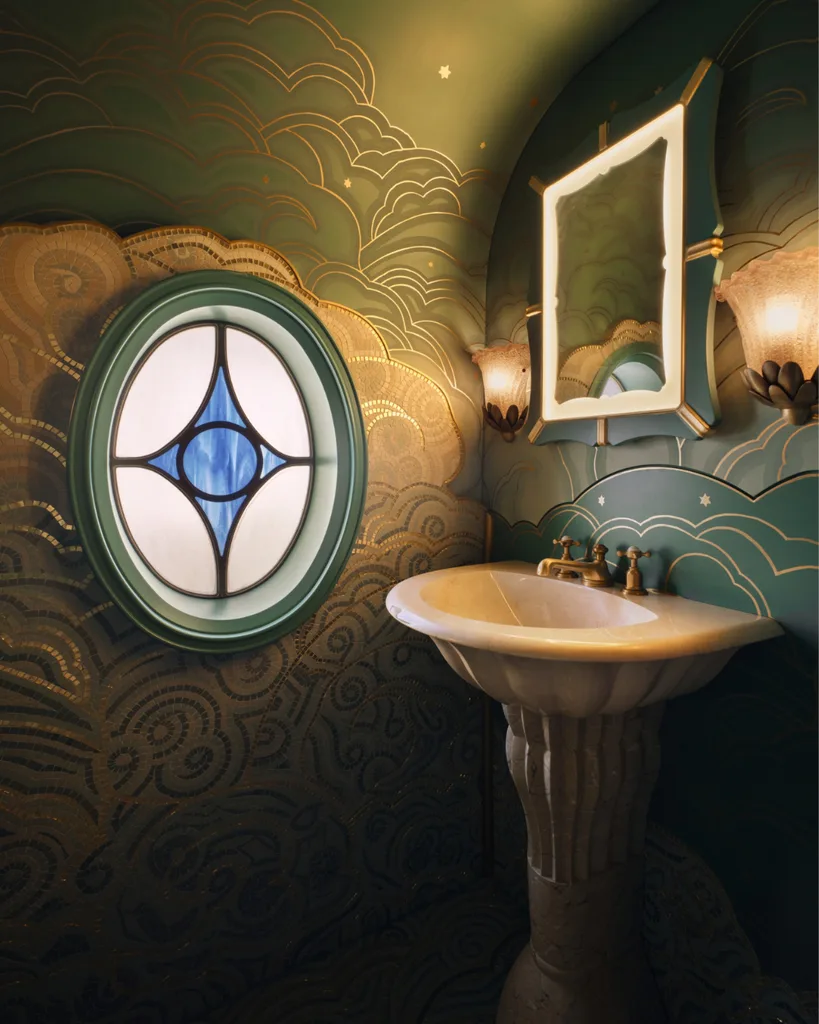
A Two-Year Evolution: From Concept to Reality
The journey of bringing Celia to life spanned nearly two years, a testament to the intricate detail and collaborative effort involved. The concept evolved organically, with the story and design constantly informing each other.
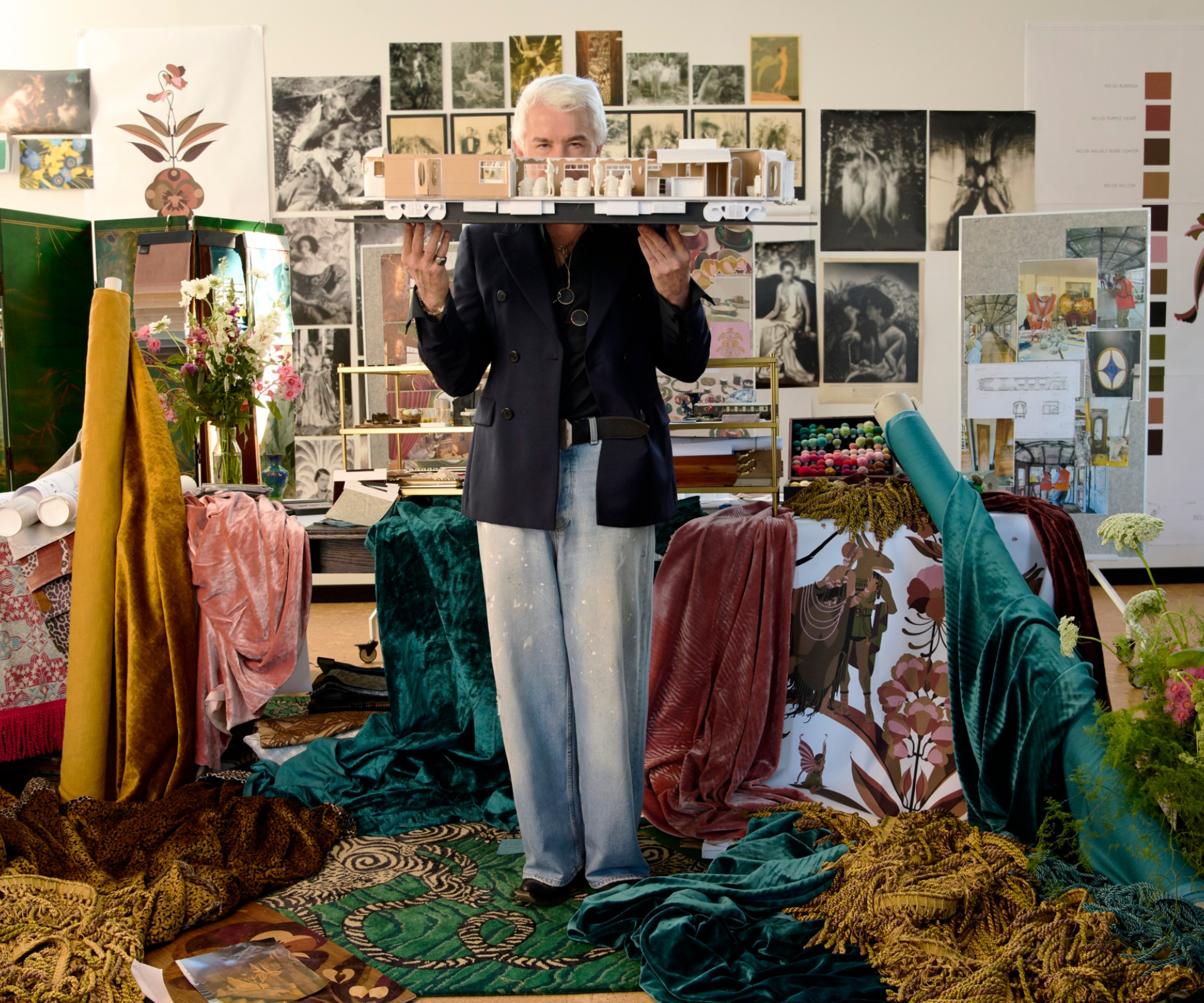
“I tend to start with the story philosophy, but CM is with me from the very beginning,” Luhrmann explains. “I’ll sometimes bring in rough sketches but always bring a lot of inspirational photographs, and together we start shaping the world from there. Once the philosophy is set, then comes the narrative, the story, the writing of the script and the creating the characters. At any moment, we’re able to draw on this foundation, just like we would in a movie, and be guided as to what the visual language choices are. It’s a complete collaboration between CM and me to shape the visual language, which includes everything from a plate to the inlay.”
He reiterates the core purpose of Celia: “One of our hopes with Celia was to create something beyond just a dining space or a bar. While it has the glamorous involvements of both, its real power lies in its flexibility. With the simple closing of a curtain, the car transforms into a performance space: a place where a father might speak at a beloved child’s birthday or engagement, or, when the occasion calls for a bit more fun, somewhere music can be spun. In that way, Celia also echoes the philosophy of a film set, a space designed with intention to adapt and heighten whatever the traveller’s unique story requires.”
A Creative Partnership Forged in Film
Luhrmann and Martin’s decades-long creative partnership has been a cornerstone of their success, and the Celia project further solidified their complementary strengths.
“We work very naturally together, almost in lockstep, as we develop the visual language,” Luhrmann observes. “CM has exceptional strengths, not only in her ability to realise anything that we’ve collaborated on, but in her standalone gift of understanding pattern, fabric, and how things are made. It’s certainly an understanding beyond my comprehension. In many ways we’re two sides of the same coin, but we carry very unique, singular strengths. Our North Star is always the story and the characters, and so too, this is in cinema.”