Calls for Traffic Light Priority for Cyclists Spark Debate on London’s Roads
A proposal to automatically grant green lights to cyclists has ignited a heated discussion on the already tense relationship between motorists and cyclists in Britain’s bustling capital. Lime, a prominent bike hire company, has put forth the suggestion, arguing that such a measure could significantly curb instances of cyclists running red lights, a common point of contention.
Hal Stevenson, Policy Director for Lime, believes that implementing this system in London could be a game-changer. He articulated his stance, suggesting that cyclists should not be left waiting at red signals. This call comes at a time when cycling is experiencing a surge in popularity, now accounting for as much as one in five trips in central London. During peak hours, cycle traffic is even observed to surpass that of cars. However, Stevenson points out that current traffic light timings are still predominantly calibrated for motor vehicles, leading to frequent stops and a less fluid journey for cyclists.
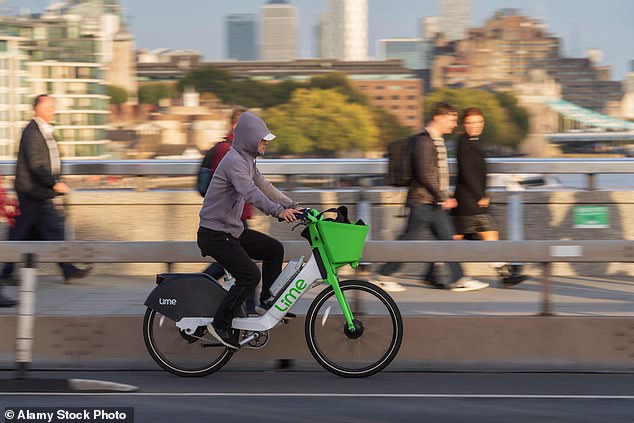
Stevenson highlighted the significant expansion of London’s cycling infrastructure, noting that the city’s cycling network has grown from approximately 56 miles in 2016 to an impressive 267 miles by last year. He views rethinking traffic light sequencing as a logical progression to build upon this success. He draws parallels with leading cycling cities like Copenhagen and Amsterdam, which have successfully implemented “green wave” technology. This system rewards cyclists travelling at a safe and consistent speed with a continuous sequence of green lights, which has been shown to enhance safety, improve rider behaviour, and reduce journey times at a relatively low cost. Crucially, Stevenson suggests this technology could also play a role in mitigating the problem of red-light running.
Industry Pushback and Concerns Over Congestion
The proposal, however, has been met with staunch opposition. Steve McNamara, General Secretary of the Licensed Taxi Drivers Association, has dismissed the idea as “farcical.” He argues that London is already plagued by severe congestion, with traffic moving at its slowest pace in history.
McNamara raised concerns that bike hire companies, with their time-based pricing models, inadvertently incentivise users to take “dangerous risks,” including disregarding red lights, to complete their journeys faster and thus cheaper. He also alluded to what he perceives as a biased agenda within cycling advocacy groups, suggesting that some members of the “white, middle-class cycling lobby” are primarily focused on removing vehicular traffic from the roads altogether.
London’s Traffic Woes Highlighted
Adding weight to the concerns about congestion, a recent report by location technology firm TomTom identified London as the slowest capital city in the world to drive in last year. The analysis revealed that, on average, it took a staggering three minutes and 38 seconds to cover just 0.6 miles in the city centre. This sluggish pace has been partly attributed to the widespread implementation of 20mph speed limits across the capital.
The debate over traffic light priority for cyclists underscores the complex challenges faced by urban transportation systems. While proponents see it as a way to encourage sustainable transport and improve cyclist experience, critics point to existing congestion and safety concerns, arguing that such measures could exacerbate existing problems.
Potential Benefits and Challenges of Reimagined Traffic Flow
The idea of dynamically adjusting traffic signals for different road users is not entirely new. In many cities, priority is already given to emergency vehicles and, increasingly, to public transport like buses. Transport for London (TfL) themselves recently unveiled plans to grant buses priority at all 3,500 traffic lights they encounter by 2030. This existing initiative by TfL lends some credence to Stevenson’s argument that extending priority to other modes of transport is a feasible consideration.
However, the sheer volume of cyclists, particularly in central London, presents a unique challenge. Unlike buses, which often follow fixed routes and schedules, cyclists are a more dispersed and varied group. Implementing a system that can accurately detect and respond to individual cyclists or groups of cyclists in real-time, without unduly disrupting other traffic, would require sophisticated technology and careful calibration.
The potential benefits, as outlined by Lime, are significant:
- Reduced Red-Light Running: By making waiting times shorter or non-existent for cyclists, the temptation to run red lights could diminish.
- Improved Journey Times: Smoother, more continuous journeys would make cycling a more attractive and efficient mode of transport.
- Enhanced Safety: Reduced stopping and starting can lead to fewer accidents, particularly at junctions.
- Encouraging Cycling: A more cyclist-friendly infrastructure can encourage more people to choose bikes over cars, contributing to reduced pollution and congestion.
Conversely, the challenges are equally substantial:
- Technological Complexity: Developing and maintaining a system that can reliably identify and signal cyclists requires advanced sensors and communication networks.
- Impact on Other Traffic: Any system that prioritises one group of road users will inevitably have an impact on others. Careful balancing is needed to avoid simply shifting congestion and frustration.
- Cost of Implementation: While “green wave” technology might be relatively low-cost in some applications, a city-wide system for cyclists could involve significant investment.
- Enforcement and Behaviour: Even with priority signals, ensuring consistent adherence to road rules by all users remains a persistent challenge.
As London continues to grapple with its transportation future, the debate over traffic light priority for cyclists is likely to continue, reflecting the broader societal conversation about how to create more equitable, sustainable, and efficient urban mobility. The experience of cities like Copenhagen and Amsterdam offers valuable insights, but adapting such solutions to the unique context of London will require careful planning, technological innovation, and a willingness to find common ground among all road users.