
Conflicting Messages and Uncertainty in U.S. Policy Toward Iran
CNN anchor Kaitlan Collins highlighted the confusion surrounding President Donald Trump’s approach to Iran, pointing out that his administration has struggled to maintain a consistent message. As tensions escalate in the Middle East, the U.S. is facing growing casualties, and Trump is considering sending ground troops into Iranian territory. However, this decision comes amid conflicting statements from key officials within his own administration.
Collins began by addressing the increasing number of U.S. military personnel returning from the region due to the ongoing conflict with Iran. She also noted Trump’s recent consideration of deploying ground forces on Iranian soil, despite his own history of avoiding military service through a medical exemption. This contradiction has raised concerns about the president’s judgment and the risks he is willing to take with American soldiers.
One of the main issues highlighted by Collins was the lack of alignment among senior officials regarding the mission in Iran. While some officials claim to have clear intelligence and facts, others appear to be operating under different assumptions. This inconsistency has created uncertainty and confusion both domestically and internationally.
Examples of Contradictory Statements
Collins provided several examples of conflicting messages from Trump and his staff:
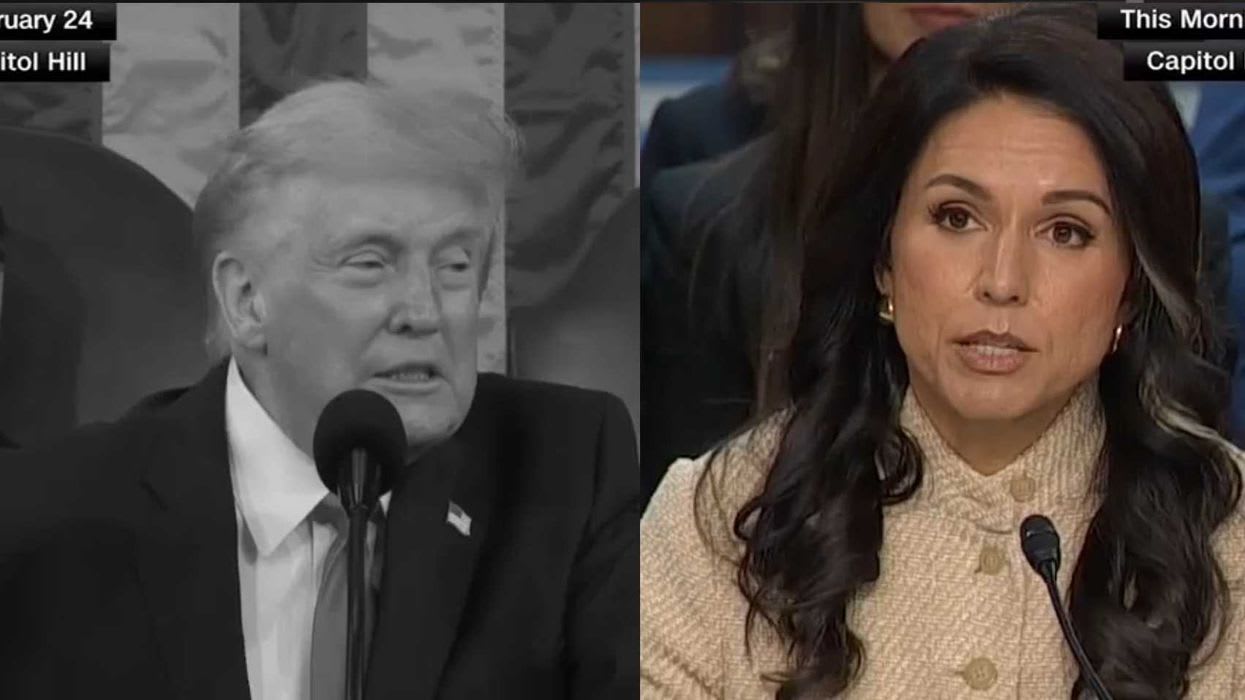
Secretary of Defense Pete Hegseth claimed that the Iranian regime had changed as a result of U.S. strikes, stating that the world is better off for it. However, this statement was quickly undermined by Intelligence Community head Tulsi Gabbard, who said that “the IC assesses that the regime in Iran appears to be intact.”
President Trump asserted on February 24 that “they’re working to build missiles that will soon reach the United States of America.” In contrast, Gabbard later stated that “the IC assesses that Iran has previously demonstrated space launch and other technology it could use to begin to develop a militarily viable ICBM before 2035, should Tehran attempt to pursue that capability.”
Trump expressed shock at Iran’s retaliation following U.S. airstrikes, saying, “They weren’t supposed to go after all these other countries in the middle east. Nobody expected that. We were shocked.” However, this claim was contradicted by John Ratcliffe, director of the Central Intelligence Agency, who admitted to Congress that “Iran had specific plans to hit U.S. interests in energy sites across the region.”
Lack of Congressional Support and International Concerns
Collins pointed out that the decision to attack Iran was made without consulting Congress, despite the imminent threat posed by the country. She noted that the administration did not rally U.S. allies before taking action, which has now become a point of contention. The Strait of Hormuz, a vital shipping route, is now under threat, and energy prices are rising globally as a result.
The situation has also drawn criticism from within the administration. A counterterrorism official recently resigned, claiming that Trump was lied to about the strategy in Iran. Additionally, the president’s approach has been criticized as “military bungling” by some analysts.
Ongoing Challenges and Global Impact
As the U.S. continues to navigate its complex relationship with Iran, the lack of clear communication and strategic coordination has led to growing concerns. The administration’s conflicting messages and unilateral decisions have not only complicated the situation in the Middle East but have also strained relationships with key allies.
With the global economy feeling the effects of rising energy prices and regional instability, the need for a unified and transparent strategy has never been more urgent. The current state of affairs highlights the importance of clear leadership and consistent messaging, especially when dealing with such a volatile and high-stakes issue.


