
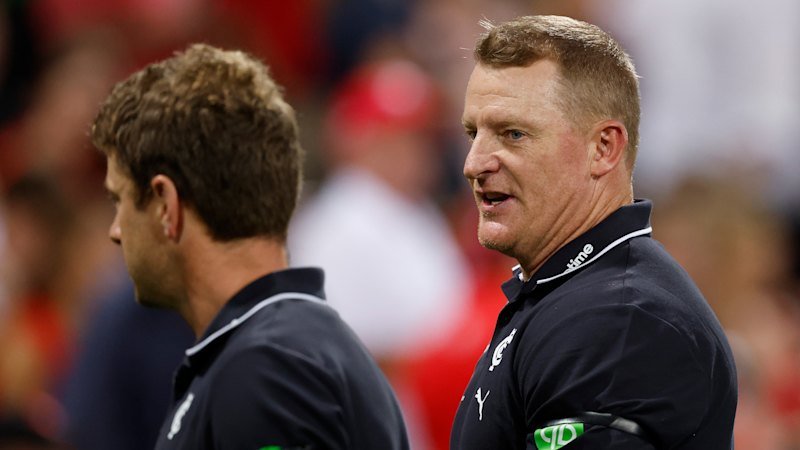
Blues’ Bold Overhaul Tested in Opening Round Thriller
Carlton’s strategic shake-up, a departure from their reliance on marquee talent, faced its sternest test in the opening round of the season against the Sydney Swans. The off-season saw a significant roster overhaul, culminating in the departure of star forward Charlie Curnow to Sydney in October. This move, while potentially unsettling for opponents, was framed as a strategic recalibration for the Blues.
The club’s approach to player management underwent a noticeable shift. Instead of matching offers for key free agents like Tom De Koning and Jack Silvagni, Carlton opted to let them depart. This decision coincided with a deliberate recruitment strategy, focusing on players perceived as more aligned with a “blue-collar” ethos, in contrast to the “star power” often associated with inner-city clubs.
The influx of new talent included Ben Ainsworth from Gold Coast, the aforementioned Swans duo, Campbell Chesser from West Coast, and Liam Reidy from Fremantle. The club also placed significant faith in their third pick in the draft, Jagga Smith, hoping for a more impactful second season after missing his first due to a knee injury. Furthermore, Elijah Hollands was required to demonstrate his commitment to securing a list spot, undergoing a rigorous pre-season assessment.
This series of calculated moves suggested a pragmatic approach, aiming to adjust the club’s trajectory rather than instigate a complete reversal. The opening round clash at the SCG, against Sydney, offered the first real glimpse of this new-look Carlton outfit.
A New Era Dawns on the SCG
For only the third time in their storied history, Carlton fielded a team with seven debutants in their playing group. The side that took the field represented a dramatic transformation, with thirteen changes from their final match of the previous season. This was billed as a clash of philosophies: the industrious, re-energised Carlton against the established star quality of the Sydney Swans.
The early stages of the game suggested Carlton might be on the cusp of an upset. When they extended their lead to 22 points early in the third quarter, a remarkable victory seemed within reach. Charlie Curnow, now in Swans colours, had been largely contained. Carlton’s new recruits were making an impact; Ainsworth and Hayward had already registered goals. Debutant Harry Dean was proving a defensive stalwart, and the Blues held a significant advantage in contested possessions. The Swans’ Isaac Heeney had also just passed a head injury assessment, adding to the shifting dynamics of the game.

Swans Surge: The Turning Tide
However, the momentum of the game shifted dramatically in the middle of the ground and around stoppages. The resurgence was spearheaded by Sydney’s academy products, Isaac Heeney and Errol Gulden, alongside the dynamic draft pick Chad Warner. Carlton began to lose their structure, and while their first-half performance showcased the off-season work, old habits resurfaced. Players were drawn too closely to the contest, and when possession was lost, Sydney players found themselves with ample time and space to exploit the gaps.
The tide truly turned when Curnow kicked his first goal, igniting the home crowd. This moment symbolised Sydney’s ability to leverage class and athleticism, demonstrating the critical role of transition football in the modern game. Carlton, unable to match the Swans’ intensity, appeared to have expended their energy reserves. The impact of thirteen changes became evident as Sydney unleashed a devastating 12-goal onslaught in the third quarter, reclaiming the “premiership quarter” that had once been Carlton’s domain.

Warner’s Brilliance and Carlton’s Future
Crucially, Curnow’s presence would likely have made little difference to Carlton’s fortunes, as the ball rarely ventured past the centre of the ground during Sydney’s dominant third quarter. The true difference-maker was Chad Warner. He displayed superior handling of the slippery ball, a stark contrast to some of his teammates who struggled in the opening term. Warner’s blistering pace and clean skills, combining inside and outside play, highlighted a capacity that Sydney possesses in multiple players.
In contrast, Carlton’s midfield appears to be largely divided between specialist inside and outside players, with Sam Walsh being a notable exception. The team also struggled with handling pressure, leading to unforced errors. While Jagga Smith is expected to develop into a star, the club faces challenges in acquiring similar talent through the national draft, especially with anticipated changes to the bidding system that could make securing high-calibre players more costly.
Sydney’s remarkable third quarter, characterised by goals from centre square plays, line-breaking runs, and precise handballs, saw them achieve a rare feat: kicking 10-plus goals in one quarter and failing to score in another within the same match.

A New Direction and Lingering Questions
Carlton, despite their current limitations in terms of raw power, are clearly embarking on a new direction. Their focus will undoubtedly shift towards acquiring players who can thrive in the fast-paced, dynamic environment of contemporary AFL football. The opening round performance, while ultimately a loss, validated the strategic decisions made in the market.
Sydney has reaffirmed its status as a premiership contender, and for Charlie Curnow, the opportunity to secure the harbour-city premiership that eluded legends like Tony Lockett and Lance Franklin now seems a genuine possibility. Both clubs stand to benefit from the trade, but at Carlton, the fruits of their transformation will likely take time to materialise. This was evident in the post-game exchange between Sydney’s captain Callum Mills and Carlton’s Ollie Florent, where the latter conveyed his thoughts on the Swans’ relentless pursuit of victory.
The Blues’ season has officially begun, but their true transformation as a club commenced with the strategic decisions made last October.


